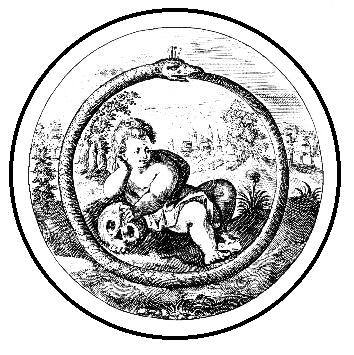
Incarnate


Version 4.0 - Revised GENERICA! Edition
by Stephen Chrisomalis
with assistance from Julia Pope
June 2007


Table of Contents

Chapter 1: Introduction

Chapter 2: Reference
Chapter 3: Rules
Chapter 4: Features
Chapter 5: Orders
Chapter 6: Rituals

Chapter 1: Introduction

Incarnate is a game in which your character is a perfectly ordinary human - with one exception. Incarnates, as they are known, all have access to one or more of their past lives, including its memories, attributes and skills. By channelling the past into the present, Incarnates work towards an abstract goal - their Destiny - while trying to avoid the Frailty that follows them wherever they go. They are merely one variation on a theme that leads from time immemorial - the Primordial, from whence sentient humans emerged - to the present day, and beyond. As such, they cannot be concerned merely with the cadence of their lives, but the larger path towards Destiny - or extinction and annihilation. The inescapable fact of an Incarnate's life is that he is not only himself, but is part of a grand scheme of which he is only trivially in control.

The Incarnate's Life and World

While Incarnates are mystical beings of considerable power, they are also human, and as such are bound up by their human existences and flaws. Incarnates are frequently torn between their mortal lives, homes and families, the unique combination of features that defines them as individuals, and the mystical chain of their past lives that tie them to places and times not fully their own. In this more arcane life, they are bound by their Destiny, the great principle for which they must ultimately strive, but are hindered in this endeavour by their Frailty, which reminds them that though they are part of a mystical union of past and present souls, they are still human souls, with all the weakness and fragility that entails. Most Incarnates, nevertheless, remain strongly connected to their mundane lives, although they are of course never completely unaware of the gulf that separates them from their kith and kin.

In a similar vein, Incarnates are both born and made. The potential to become an Incarnate, along with the Thema of past lives, are acquired from birth. There is no pattern to who may become an Incarnate; it is not inherited or passed down through families, nor does it appear to be inherent in any racial or ethnic group. It is a blessing (or curse) bestowed through unknown means on unsuspecting individuals, and which they carry with them from birth to death. On the other hand, the acquisition of the skills and power necessary to become an Incarnate are learned, often from a mentor. Existing Incarnates sometimes take it upon themselves to seek out young children who may be trained to be Incarnates, but it is difficult to train children in mystical arts with their parents (and school authorities) closely watching. Rather, it is more common for Incarnates to learn their skills as adults, frequently in times of crisis or change - leaving home, the death of a parent, menopause, etc. At these times, individuals are most ready to accept new ways of thinking and to truly start out on a new life. The knowledge required to become an Incarnate can be acquired from a mentor, through self-study or introspection, or through the accumulation of knowledge found in books. A very limited number of Incarnates are reputed to have acquired their powers independently of any outside influence.

An Incarnate's life is not as fraught with peril as that of other Prodigals. While there are some people who see Incarnates as seriously misguided individuals who threaten one or another worldview (scientific, religious or otherwise), this in itself rarely presents a physical danger to the Incarnate himself, though cases have been documented where long-term therapy has convinced Incarnates that they suffer from multiple personalities or similar afflictions. Incarnates are much more likely to be viewed as crazy if harmless kooks than as a threat to the existing world order. In fact, mocking and belittling them is the best method for anti-Incarnate forces to work against them. Incarnates do not like this fact, but on the other hand, it does keep them from receiving undue attention while they do their real work. Many Incarnates are found in New Age or similar religious or mystical circles of humans, either offering their powers for a cause or selling them for a price.
Thema

As an Incarnate, your Thema (pl. Themata) is the receptacle for the memories and abilities of all your past lives. It is the pool from which you obtain all your supernatural power. The Thema is presented and repeated in a string of lives connected in parallel to you, the Incarnate, against the flow of time, just as they are connected in series proceeding with the flow of time. The movement of time through many lives is known as the Fugue of a given Thema. Many Incarnates refer to the individual (usually themselves) seeking knowledge or an ability as the Questionary and the entity providing them as the Provident.

It would be wrong, however, to see the drawing of power from your Thema as actually going backwards in time to channel your past memories and skills. One might ask at what stage of the Provident's life traits are taken from, particularly given that an Incarnate can increase the traits of any of his past lives through experience. A better conception of the situation would be that your past lives are dead, but the memories and skills they had at death (or perhaps those possessed at the height of life) continue to exist in a collective unconscious, which is the Thema. An Incarnate has the ability to draw knowledge or traits from any of these past lives, to use them, and even to increase them, since they exist in the present. The Thema is, under this conception, a bundle of interrelated souls existing only in the present.

What (When) are Past Lives?

If Past Lives are bundles of souls, one might ask what their attributes and skills represent. Certainly, if it represented the past life during old age, the individual might have much lower Physical Attributes than might be expected, but have obtained much more knowledge. If it represented the individual during adolescence, physical abilities and raw energy would be at their zenith, but at the cost of wisdom and experience. Most Incarnate scholars believe that this is an incorrect way to speak about their past lives. Rather, they acknowledge that, while past lives have all of the knowledge they accumulated throughout their entire lives, their Attributes and Skills are but a shadow of their past, representing an idealized version of that individual which the Incarnate may now draw upon. This is in accordance with the notion that past lives exist only in the present (in the Thema), but contradicts the often-held opinion that The Pull (q.v.) operates on the past when Incarnates Channel their past lives' Traits.

Incarnate Demographics

It is generally believed that there is one Incarnate for approximately every 5,000 people worldwide. Of these, 25-30% have either not discovered their powers or are in deep and profound denial about the nature of their abilities. Also, children under 12 are unlikely to recognize their Incarnate powers. While accurate demographic statistics on Incarnates are not available for time periods prior to around 1900, it is generally believed that the ratio of the ordinary populace to Incarnates has been increasing over time, especially since 1750 – possibly as a result of the Enlightenment belief in reason and science. It is also generally believed that Incarnates (and, for that matter, their past lives) are evenly distributed throughout the world geographically. Although the majority of the world's Incarnates are Asian, this can be fully explained by that continent's high population. On the other hand, past lives are not evenly distributed in time; instead, there is a clustering of past lives near the present which results from the fact that most people who have ever lived were born and died within the past 500 years.

History and Time Flow

The flow of time is the central theme of Incarnate. Incarnates are keenly aware of the similarities and differences among time periods even if they have never studied history. Time (as a river, as electrical current, as a wheel, or whatever) is a force that governs human existence. Incarnates, too, are bound by time, just more loosely. Their ability to transcend the boundaries of their body and to pull knowledge and aptitudes from their Thema makes them different from ordinary humans - in fact, it transforms them into meta-humans. At the same time, they are bound to their all-too-human Frailty, and can never truly escape the constraints of the physical world of the present.

History is seen in three ways by Incarnates. Firstly, on a small scale, there is Cadence, the day-to-day activities of an individual. Cadence reflects the actions of a person situated in time. When we think about things that we did ten years ago, we know that we were the ones who did them, but because we have changed so much since that time, we distance ourselves from those actions. Only actions that are seen as having been done by the self as situated in the present or near-present are part of an Incarnate's Cadence. Secondly, there is the Small Cycle, which represents the birth, maturation and senescence of any individual - thus, the entire lifespan as understood by most humans. Incarnates are by no means immune to the perception of 'my life' as leading from birth to death, and the fact that there will be another 'my life' does not make them treasure this one any less. Finally, the Great Cycle represents the turning of lives through time, with life, death and rebirth being the primary forces operating to keep the cycle moving. It is the fact that they are in touch with the Great Cycle that makes Incarnates truly different from ordinary humans.

There are enormous and irreconcilable philosophical debates among Incarnates regarding the nature of time and its passage. Some see time as perfectly linear, while others see time as a grand circle, or as being a false concept entirely. Still others see the cyclical nature of time as having its roots in the similarity of Small Cycles (individual lives) within each Great Cycle of lives (the Thema). For the purpose of this game time may be assumed to have a linear flow from the distant past (the Primordial) to the present and beyond. Just as the world is spherical but we perceive it as flat because its curvature is so large compared to us, time may in fact be cyclical on a grand scale but appear to be linear because our 'horizon' is so vastly distant that it makes no difference to us.

Incarnates and Supernatural Beings

The world of Incarnates is, by and large, a world of mortal men and women. It is not a world where magic, demons and werewolves lurk around every corner, or even in every town. Most Incarnates do not believe in the existence of such supernatural entities, or at least regard them as being very rare. Incarnates themselves do not demonstrate significant supernatural powers – at least not those observable by ordinary humans. Their power is subtle, and thus deniable by skeptics and rationalists. Incarnates, whether of a scientific or mystical bent, do not see their world as one inhabited by hosts of unusual beings or unexplained paranormal phenomena.
The one exception to this rule is that most Incarnates believe in the existence of ghosts or spirits. These poor souls are trapped in the spirit of one Small Cycle even though that body has died. They are in a state of eternal limbo, still emotionally attached to this world. For an Incarnate to become a ghost is one of the greatest tragedies imaginable for Incarnates, for not only are such individuals unable to exit this life, they are unable to recommence the turning of the Great Cycle to permit their Themata to re-enter the world in the future.

Primordial

The Primordial is the time before around 35,000 BC, in the time before anatomically modern homo sapiens sapiens was the primary hominid species on earth. No Incarnate may have a past life from the Primordial. The end of the Primordial marks the dawn of sentience. This juncture, seen by many paleoanthropologists as a “cognitive leap” in which art and symbolism become more frequent, represents the first time that humans were able to perceive time in a sense similar to how we perceive it, and to understand the difference between self and other in a distinct way. The fact that prehuman past lives do not exist is accepted almost universally by Incarnates. It suggests that there is something about sentience / consciousness / rationality / religiosity (take your pick) that distinguishes humanity from all other creatures.

Resolution


The ultimate goal of every Incarnate is to achieve Resolution through continuously pursuing his Destiny and avoiding his Frailty. By fulfilling his Destiny (in game terms, by reaching a Balance rating of 100), the individual transcends human weakness and failings, and is presumed to have achieved great things towards the service of his Thema. Resolution is a glorious time of happiness for the Incarnate; the individual is often exuberantly happy for weeks thereafter. While the individual is rewarded by receiving a Sigil, the effects of Resolution go far beyond the present, or even the individual. Think of achieving Resolution as a notch on a cosmic scorecard that is imprinted on the individual's Thema. Resolution is not “the end” of anything, but it is a significant achievement in the life of an Incarnate. Achieving Resolution is the focus of many chronicles, and many Incarnates' lives.

Tranquility

Tranquility is a time, believed by most to be in the far future, in which all the Incarnates of the world will simultaneously and permanently reach Resolution. No longer will they be bound by human Frailty, and their Destinies will be fully and absolutely achieved. It is also, for some, a time of sadness, for in transcending humanity, Incarnates will almost certainly become inhuman, if not superhuman. Just as a time of accomplishment is almost always followed by a certain feeling of loss and emptiness at having no goal to aspire towards, Tranquility is a double-edged sword. Tranquility has an almost mythical quality about it; whether it can be achieved, or whether it will simply happen someday, is a matter of some debate. A few Incarnates are claimed to have achieved Tranquility for themselves alone, at which time they left this world for, presumably, bigger and better things. These reports are denied by many, who see them as wishful thinking by those who have seen compatriots die while pursuing noble causes related to their Destinies.

Chapter 2: Reference and FAQ


Frequently Asked Questions


What is reincarnation?
Reincarnation is the process by which individuals are reborn into new bodies after death, in most cases losing all memory of their past existence. It is quite distinct from resurrection (the act of rising from the dead). While the reality of reincarnation is questionable in the real world, the Incarnate game world presumes the existence of reincarnation, although few know the real truth behind the matter. Reincarnation is fundamental to various Eastern religions, including, most importantly, Buddhism and Hinduism.

Why and how does reincarnation occur?
There are many different theories. Some people hold that it was ordained by God/Allah/Jehovah, while others believe it to be merely a byproduct of human consciousness. Some believe that the Thema consists of energy fields that are detectable and explainable scientifically, while others think it to be a soul comprised of ethereal or spiritual forces. The theory expressed in Chapter 1 above, that some individuals are part of a superindividual bundle known as a Thema, and that Incarnates are individuals who are aware of this and can channel skills and knowledge from their past lives, is about all that can be said with any certainty.

Does everyone have past lives?
Again, the answer to this depends on who you ask. Some people believe that all individuals are latent Incarnates, but that only a select few ever discover it. Others point out that if this were the case then the world (particularly in regions where reincarnation is widely regarded as true) ought to be teeming with Incarnates. A related theory is that all individuals have past lives, but that only a few individuals are capable of ever becoming Incarnates and recognizing the fact. The third and most pessimistic theory holds that only a select group of individuals have Themata and reincarnate, while the vast majority of humanity is restricted to a single existence. This third theory also implies that Incarnates are something more than human, and is thus rejected by most Incarnates in favour of the theory that each Incarnate is simply a mortal who recognizes his place as part of a multi-human grouping (the Thema).

Will everyone with past lives be reincarnated in the future?
In general, yes, with some exceptions. Some hold that reincarnation is a privilege, not a right, and that only those judged morally worthy will be reincarnated. If this is true, then many (perhaps most) people live only once, and even those who have been reincarnated in the past are not guaranteed future lives. One can also become a Eunuch, an Incarnate who for one reason or another is cut off from having future lives, but this is relatively rare.

Is it beneficial to be reincarnated?
Well, if you remember it, and are thus an Incarnate, it has certain benefits. But there is nothing to distinguish reincarnation as blessing from reincarnation as punishment, except the mindset and philosophy of the reincarnated person. Most Incarnates, except the most pessimistic ones, view their special capacity as a gift, and seek to further their Destinies in order to progress spiritually.

Can people reincarnate as animals?
It is held by some individuals (particularly those acquainted with Eastern philosophy) that this is the case, and there is nothing to disprove the idea in theory. In practice, however, Incarnates do not generally have animal past lives. Large sections of the New Age and pagan religious communities do believe this, however, and it cannot be totally discounted.

Can someone be reborn as a person of a different sex/race/religion?
Yes, emphatically. In fact, it would be quite a peculiarity for all one's past lives to be of the same sex, race and creed as oneself (though it happens). Most Incarnates recognize that there is a slight tendency for individuals to reincarnate as someone of the same basic race, but this is not at all guaranteed. Many individuals suffer great psychological anxiety due to the conflict between their own personality and beliefs and those of their past lives (including touchy matters such as religion and sexual orientation).

Do people reincarnate as famous people?
Sometimes, but not frequently. It is generally acknowledged that past lives are usually above-average individuals, and are thus more likely than average to be famous people of some sort (otherwise, probably 99.99% of all past lives would be perfectly unknown in the modern world). Whether this is because past lives are propelled by their Destinies to perform great acts, or whether because individuals who perform great acts are more likely to have fulfilled their Destinies and thus been reincarnated, depends on one's philosophy. Needless to say, however, the majority of individuals who claim to have such-and-such a famous person as a past life are either a) lying outright (some may not even be Incarnates) or b) have past lives who were familiar with the famous person, thus enabling them to answer questions about them.

How many past lives do Incarnates have?
In practice, Incarnates are able to access between one and five of their past lives throughout history (the super-human entity known as their Thema). This has been true for as long as Incarnates have recorded their abilities, so it is widely assumed that Incarnates have more (possibly dozens more) past lives. If it were otherwise, modern Incarnates would be expected to have more past lives than ancient ones. Some believe that a past life must be notable or possess a certain 'spark' in order to enter the Individual's Thema permanently. Others recognize that high infant mortality in the past may have resulted in many who were simply too young to be reborn. A few hypothesize that some past lives find a way to hide from their future reincarnations after death, thus avoiding becoming trapped in a Thema. There are some Incarnates (and non-Incarnates) who have claimed up to fifty separate past identities, but many of these are provably hoaxes.

What do major religions say about reincarnation?
Of the major religions, Hinduism and Buddhism are most closely linked with reincarnation. Hinduism, while using different terms for Destiny (karma), Thema (samsara), Tranquility (moksha) and past lives (atman), is largely aware of Incarnates and their workings. Buddhism, Jainism and Sikhism, which are all also of Indian origin, are also very strongly oriented towards karmic justice and reincarnation. While orthodox Judaism and mainstream Christianity reject reincarnation today, this has not always been the case. The 3
rd century Christian theologian Origen and, in particular, his later followers, were advocates of reincarnation within Christianity, and although their views were hotly contested, they were not forbidden until the mid-6th century. Similarly, cabbalistic medieval Judaism developed a concept of reincarnation that, while unfavourably received by mainstream scholars, continues to be advocated by unorthodox sects. Heretical Islamic sects such as the Ahl-e Haqq of western Iran and the Khorram-dinan of medieval Azerbaijan have also used reincarnation as a fundamental tenet of their beliefs. Other minor (and largely extinct) religions believing in reincarnation include Manichaeism, Gnosticism, Theosophy, Scientology and Orphism.

What percentage of individuals believe in reincarnation?
In real-world North America, approximately one-third of all people believe that reincarnation is possible, and probably another third would not totally discount it. In the Incarnate world, these figures are somewhat higher. Despite Christianity's general rejection of the concept, the influence of New Age and Eastern philosophies on the belief systems of many Christians has been sufficient to obscure the apparent contradictions between the two. Of course, given the prevalence of reincarnation beliefs in populous countries such as China and India, worldwide belief in reincarnation is very high.

What percentage of individuals really know about Incarnates?
In North America, roughly 1 in 5,000 people is an Incarnate, but perhaps 1 in 20 know specific details about Incarnates and their activities, have met one or two at a New Age convention, or have read extensively about them. There are frequent reports of Incarnate activity in the tabloid media, and the subject receives some academic and journalistic attention otherwise. Of course, these figures are all considerably higher in areas (especially in Asia) where Western scientific rationalism is not pervasive.

Do closely linked individuals tend to reincarnate together in future lives?
It is widely recognized that there is a discernable tendency for individuals who are emotionally linked in life to be reincarnated together (presuming, of course, they are reincarnated at all). In their next lives, the individuals have a chance of being reincarnated in circumstances where they know each other – if not in identical social and emotional roles, then in some other configuration. This is not an absolute law, but merely a tendency that occurs more often than normal. Some Incarnates believe that the reason for this is that Destiny is such a powerful force that its accomplishment depends on the conjunction of emotional forces throughout several lives.

Are people reborn immediately after death?
Not normally. More often, there is an Interlude between death and rebirth, ranging from very short to centuries or even millennia. On average, an Incarnate might expect to be reborn between 100 and 300 years after death. The Path of the Phoenix is a group oriented towards those with very short or negligible Interludes.

Can an Incarnate change his Destiny and Frailty?
No. An Incarnate's Concordance is not only part of him, but part of every life in his Thema; it is an eternal spiritual goal to which he ought to aspire, not merely "another" personality trait. There are a few reported cases of Incarnates who abandon their Concordance entirely in the attempt to find another purpose; however, all such efforts have ended in the individual becoming a Eunuch or else being unable to channel his past lives at all.

How does a person realize that they are an Incarnate, and not a lunatic?
Well, you can never really be sure, can you? No, seriously, most Incarnates go through a phase where they doubt their abilities are real, and some even seek psychiatric help for them. But belief in reincarnation is wide enough, and there are enough Incarnates dedicated to finding more of their kind (see especially Chosen of Yama and Vexillary Society) to avoid the horror of hundreds of incarcerated Incarnates. Most Incarnates have innate experiences first (flashbacks, unexpected channellings during periods of stress), and then are taught by other Incarnates about the nature and use of their powers.

Do Incarnates tend to run in families? Are two Incarnates more likely to have a child who is also an Incarnate?
There is a distinct trend for Incarnates to mate with other Incarnates, and the resulting offspring are indeed slightly more likely to be Incarnates themselves. Whether this is because of some genetic tendency, or simply because Incarnates' children are encouraged to remember and explore their past lives, is a matter for debate. There is certainly no guarantee, however; perhaps one in twenty children of two Incarnates is also an Incarnate, while one in one thousand children of one Incarnate parent has the power. The Pedigree of the Lotus is an Order whose members are concerned with the genetic relationship between themselves and their past lives, while the Guild of Palingenetics is interested in the question from a biogenetic standpoint.

Can Incarnates recognize other Incarnates by sight?
Not really. Each Order of Incarnates has a special symbol which Incarnates can wear in order to communicate their nature and affiliation to others. Normally, however, Incarnates are free to conceal their identities, and there are no reliable ways to identify Incarnates by the five senses alone. Certain magical rituals and other powers do allow one to do so, however, and this is one of the main ways that new (unawakened) Incarnates are found. Of course, there are other telltale signs, such as if a person is possessed by a past life, that may tip an Incarnate off to the nature of some other individual.

Can Incarnates recognize what their Destinies and Frailties are?
Only to the extent that they can recognize patterns of emotion and action in their past lives that are recurrent in themselves. There are certain very perceptive individuals who can discern the true Destiny and Frailty of an Incarnate. But Incarnates don't just go around saying "Hi. I'm Frank, and I have Constancy/Cowardice."

How do you communicate with your past lives?
You are able to communicate with your past lives mentally. Incarnates are presumed to be fluent in the native tongues of all their past lives, and thus can have a conversation with the past life on any aspect of their former existence. Most past lives do not, however, possess self-awareness, and are not able to sense anything about the external world. They exist only in the Incarnate's mind. They are not able to learn from their reborn self, do not tend to change over time, and do not communicate with the Incarnate unless "spoken" to. On the other hand, they are able to remember previous mental conversations that they have had with the Incarnate. Furthermore, because they have no specific motivations or independent will, past lives do not normally lie to the Incarnate.

Is it ever illegal to be an Incarnate?
The basic freedoms of the US Constitution, and the legal frameworks of most other nations, allow Incarnates to practice their activities so long as they are not breaking some other law. In some instances Incarnate-related activities may otherwise constitute criminal offenses, but the right of people to claim that they have past lives does not itself constitute fraud, for instance. Several countries outside the Western world do actively prohibit Incarnate-related religious groups, however (most notably Islamic theocracies under shari'a law).

Glossary of Terms

Chapter 3: Rules

GENERICA!

Incarnate is based on the GENERICA! game system, which is an all-purpose and highly simplified general set of rules designed for use with any game setting. The basic philosophy behind the GENERICA! rules is that a percentile-based, open-ended generic rules system can be easily adapted to a variety of gaming styles and world settings. Below are the basic rules of GENERICA! which you will need to know in order to play Incarnate.

  1. There are three basic aspects, or Traits, involved in your character: Attributes, seven ratings describing your innate physical and mental capacities; Skills, various abilities learned through training, education or practice, and Features, miscellaneous social, physical or supernatural benefits or flaws.
  2. All Attributes and Skills are rated from 1 to 100, and all rolls are made on percentile dice (d%). Low rolls are always good, and high rolls are always bad.
  3. No Attribute or Skill may have a rating higher than 95 (though modifiers may make success automatic in some cases).
  4. No Attribute may have a rating lower than 5, though, again, modifiers can sometimes reduce one's chance of success below this level.
  5. The seven Attributes are fairly self-explanatory. Strength represents physical strength; Agility represents speed and reflexes; Endurance represents health and damage-taking capacity; Perception represents ability to use the senses; Intelligence represents problem-solving and intellectual ability; Charisma represents charm and leadership; Will represents mental and spiritual hardiness. A rating of 50 in any Attribute is considered human average.
  6. Your Strength determines your modifier to damage with unarmed or melee attacks. The modifier is +0 at 50 Strength, with a +/- 1 modifier for every 5% above or below 50. Thus, a 80 Strength gives you +6, but with a 40 Strength your modifier is –2.
  7. Your hit points are 20 plus the appropriate Endurance modifier. As with Strength, the modifier is +0 at 50 Strength, with a +/- 1 modifier for every 5% above or below 50.
  8. General Checks: There are six possible results for any roll: Feat, Excellent, Good, Basic, Fail, and Botch. Your Basic rating for any roll is the rating of your skill, plus any modifiers that apply. Any situational modifiers to a rating apply to the rating itself, not to the result of the roll; positive modifiers are thus always good, and negative modifiers are bad. Almost all rolls are governed by Table 1, which follows below. Roll and compare the result to your Basic rating. The GM may decide that any given action is effectively impossible or may dictate that it is so easy as to not require any roll.
  9. A Feat occurs when you roll lower than 10% of your basic rating. If your basic rating is lower than 10%, you cannot obtain a Feat result.
  10. An Excellent success occurs when you roll higher than 10% but lower than 30% of your basic rating.
  11. A Good success occurs when you roll higher than 30% but lower than 60% of your basic rating.
  12. A Basic success occurs when you roll higher than 60% but equal to or less than the basic rating. A roll of 01 is always at least a Basic success, even if your basic rating is modified below 0%.
  13. A Failure occurs when your roll exceeds the basic rating, but is not high enough to be a Botch. A roll of 00 fails even if you have 100% or higher in your basic rating.
  14. A Botch occurs when you roll very high, and is normally equal to 10% minus your chance of a Feat for that roll. If your modified basic rating is 100% or higher, you cannot Botch a roll.
  15. Resisted and Supported Checks: In many cases, your ability to use an Attribute or Skill is affected by another person's Attribute or Skill (e.g. your Stealth vs. their Perception, your Strength vs. theirs, etc.) In such cases, a modifier may be applied to a roll equal to the difference between the opponent's score and 50, divided by 2 (rounding down). There are two types of modifiers, resisted and supported, both of which are found on Table 2.
  16. Resisted checks are those in which a high rating in one trait reduces the chance of success on some other check. For instance, if you are trying to overbear an opponent with a 70 Strength, your basic rating would be penalized by 10% (70-50=20; 20÷2=10). Resisted checks are often used in combat where the attacker's combat-related skill is modified by the target's Agility.
  17. Supported checks are those in which a high rating in one trait increases the chance of success on some other check. For instance, if two or more individuals cooperate on a task, a supported modifier applies. Supported modifiers are the inverse of resisted modifiers.
  18. Skills reflect your training and/or practical experience. They include such abilities as Medicine, Electronics, Demolitions, Firearms, etc. You may develop skills as necessary to suit your character; a list is provided below. In general, abilities that can be used by untrained or minimally trained individuals should be dealt with using rolls on Attributes.
  19. Each Skill has a limiting attribute, one of the seven Attributes which is relevant to the skill in question. A character may not normally have a higher rating in any Skill than his rating in the limiting attribute for that skill.
  20. If you do not have a needed skill, the GM may choose between two options – to state that it is impossible to attempt that task, or to have you roll on the closest appropriate Attribute at a penalty of at least –25%.
  21. Features reflect some advantage or disadvantage you have due either to innate capacity or life circumstance. While Features do not normally have ratings, they may affect Attribute or Skill ratings. For instance, Intolerance (Clowns) might impose a –20 penalty on social rolls involving clowns.
  22. Combat occurs in the following sequence: Initiative, Attack, Damage. A combat round lasts 10 seconds; anything you do in a round may take no longer than this, regardless of how many actions you have.
  23. Initiative: Roll an Agility check, with the order of attacks going from lowest to highest result. Ties will act simultaneously. You do not need to declare your action until your turn. There are several special results that can be obtained:
  24. Feat: In addition to your action at your place in initiative, you get an extra action at the end of the round in which to attack or do something else. You may perform up to three miscellaneous actions during the round in addition to your attacks.
  25. Excellent: You may do up to three miscellaneous actions this round in addition to attacking.
  26. Good: You may do up to two miscellaneous actions this round in addition to attacking.
  27. Basic: You may perform one miscellaneous action this round in addition to attacking.
  28. Fail: You may not take any miscellaneous actions this round in addition to attacking.
  29. Botch: You may not attack or take miscellaneous actions this round, nor may you apply any Agility bonus you may have to opponents' attack rolls (Agility penalties still apply).
  30. Attack: Roll the appropriate Skill check (e.g. Martial Arts, Melee, Firearms) resisted by the target's Agility, by taking the difference between the opponent's Agility and 50, and dividing by two to obtain the modifier to the roll (see above). A Fail result is a complete miss, while a Botch has some additional negative repercussion (weapon stuck or jammed, struck ally, etc.). Any other result hits and inflicts damage. In any given round, you may take up to two miscellaneous actions instead of attacking.
  31. Miscellaneous actions may be taken before or after you attack, but must be declared on your turn. Such actions are varied and are adjudicated by the GM, but may include the following:
  32. Movement: You may move up to 5 metres in a miscellaneous action at no penalty to attack. A penalty of –5% to your attack roll is assigned for every metre beyond 5.
  33. Draw, Sheathe or Reload Weapon: Any of these actions take one miscellaneous action apiece.
  34. Aim: You may take a miscellaneous action to aim a ranged weapon at a target so long as you have not been attacked in the round. Doing so gives you +10% to your attack roll.
  35. Delay: You may hold your attack and other miscellaneous until later in the round (this takes up one of your miscellaneous actions, however). You may not use this to interrupt someone who has already declared an action.
  36. Active Defense: You may actively defend so long as you have some sort of weapon or shield with which to do so. Active defense gives you +10% to your effective Agility for resisting opponents' attacks.
  37. Damage: The success level of your attack roll determines the amount of damage your weapon deals; each weapon has damage levels for Basic, Good, Excellent and Feat successes.
  38. The Strength modifier (described above) adjusts damage from martial arts or melee attacks.
  39. Armor (if any) reduces the amount of damage inflicted by a given rating between 1 and 30 (see armor descriptions). Armor can often result in damage being reduced to 0.
  40. After applying Strength and Armor adjustments, the damage remaining (if any) is subtracted from the target's hit points.
  41. When you are at 50% or less of your total hit points, you suffer a –10 injury penalty to all checks. When you are at 25% or less of your total hit points, this penalty increases to –20. When you are at less than 10% of your total hit points, the penalty is –30; furthermore, you must make a Will check every round or slip into unconsciousness. When you reach 0 hit points, you are fully unconscious and must make an Endurance check every 5 minutes or die, until you receive medical attention.
  42. For other sorts of damage (electricity, falling, acid, getting hit by a bus), an Endurance check is permitted to try to reduce the amount of damage suffered by a certain percentage: Basic = -10%, Good = -25%, Excellent = -50%, Feat = -90%. A minimum of 1 point of damage always applies, and any success on the Endurance roll reduces damage by at least 1. A Botch may have some additional effect, or may do +50% damage.
Examples (Non-combat)

Joris is attempting to use his Medicine of 70 to diagnose a rare disease his friend has contracted. The GM indicates no modifiers, so a general check is made, and a 28 is rolled. Looking at the chart across the "70" row, this is a Good success. The GM rules that Joris can diagnose the disease and may also have an idea as to possible treatments. If the roll had been a 58 (Basic), perhaps only the name of the disease would have been obtained; if a 78 had been rolled (Fail), he would not have gained any information, and if a 98 (Botch), then the disease might have been seriously misdiagnosed.

Marcia is attempting to use heavy artillery to bombard a distant wall in heavy fog. Marcia has an 80 Artillery score, but the GM evaluates the range and visibility and assesses a total –20% penalty, so instead Marcia's basic rating is treated as 60. Her player rolls a 08, and winces; without the penalties, this result would have been a Feat since 08 is a Feat on the 80 row, but instead it is "merely" an Excellent success. Fortunately, the wall still takes considerable damage.

Winston is attempting to sneak through high grass in heavy armor past a manned sentry tower in broad daylight. His Stealth is 85, but the GM imposes a –25% penalty because of the conditions. Furthermore, since his success is dependent on not being noticed, his roll is modified by the Perception of the guard in the tower, which happens to be 70. This imposes a further –10% penalty (70-20=50; 50÷2=10) to the roll, for a total modifier of –35 to Winston's 85 Stealth (50 total). Winston's player rolls a 72, and shudders as a siren goes off and the rat-a-tat-tat of an assault rifle pierces the air.

Example of Combat

Winston: Agility 80, Firearms 65. Armor: Heavy Kevlar Jacket (20). Weapon (SMG): Basic 3d10 / Good 4d10 / Feat 5d10
Guard: Agility 60, Firearms 40 (spec. Assault Rifle 80). Armor: Combat Jacket (10). Weapon (Assault Rifle): Basic 3d10+3 / Good 4d10+6 / Feat 6d10

Round 1: Winston and the guard roll initiative, Winston gets a 51 (Basic) and the guard gets a 71 (Fail). Winston draws his submachine gun (using his one miscellaneous action). Fortunately, it is already loaded, so he can fire at the guard, rolling a 41. Despite the –5 modifier for the guard's agility, and another –5 assigned by the GM due to range, Winston still gets a Basic success on the 55 (65-10) row of the result chart. He rolls 3d10 for damage as indicated in his weapon description, and obtains a 21. Modified by –10 for the guard's combat jacket, this totals 11 hit points damage. The guard then returns fire. Winston's Agility imposes a –15 penalty to the roll, but the assault rifle's range is sufficient to prevent any penalties, for a total basic rating of 65. The GM rolls a 20 – an Excellent success. Rolling 4d10+6, a result of 34 damage is obtained – ouch! Winston's heavy armor reduces this by 20, to 14 points, but it still hurts.
Round 2: The guard rolls 22 (Good) for initiative, but Winston rolls 98 (Botch) and cannot do anything this round – not even defend against the guard's rifle burst. The guard attacks, now without the –15 penalty from Winston's Agility, using his unmodified 80 rating. Fortunately for Winston, the guard rolls 91 – not a botch, but a clear miss, and bullets skitter off in front of him and a bit to the left.
Round 3: Winston rolls 24 (Excellent) and the guard gets 46 (Basic) for initiative. Winston reloads his SMG, aims carefully and then attacks. He could have done a third action, but there was nothing he wanted to do. He still has a –5 penalty for the guard's Agility and –5 for range, but this is offset by the +10 for aiming. The roll – a 24 (Good) – and with 32 damage, not even the guard's 10 armor points can save him. He takes 22 more points of damage (33 total) and falls from the tower. Winston breathes a sigh of relief just in time to see three more attackers emerge atop the tower, alerted by the sirens. His player moans and prepares for more battle ...

Table 1: Main Result Chart


Rating Feat 10% Excellent 30% Good 60% Basic 100% Fail Botch
00 --- --- --- 01 02-90 91-00
05 --- 01 02-03 04-05 06-90 91-00
10 01 02-03 04-06 07-10 11-91 92-00
15 01 02-05 06-09 10-15 16-91 92-00
20 01-02 03-06 07-12 13-20 21-92 93-00
25 01-02 03-08 09-15 16-25 26-92 93-00
30 01-03 04-09 10-18 19-30 31-93 94-00
35 01-03 04-11 12-21 22-35 36-93 94-00
40 01-04 05-12 13-24 25-40 41-94 95-00
45 01-04 05-14 14-27 28-45 46-94 95-00
50 01-05 06-15 16-30 31-50 51-95 96-00
55 01-05 06-17 17-33 34-55 56-95 96-00
60 01-06 07-18 19-36 37-60 61-96 97-00
65 01-06 07-20 21-39 40-65 66-96 97-00
70 01-07 08-21 22-42 43-70 71-97 98-00
75 01-07 08-23 24-45 46-75 76-97 98-00
80 01-08 09-24 25-48 49-80 81-98 99-00
85 01-08 09-26 27-51 52-85 86-98 99-00
90 01-09 10-27 28-54 55-90 91-99 00
95 01-09 10-29 30-57 58-95 96-99 00
100 01-10 11-30 31-60 61-99 00 ---
105 01-10 11-32 33-63 64-99 00 ---
110 01-11 12-33 34-66 67-99 00 ---
115 01-11 12-35 36-69 70-99 00 ---
120 01-12 13-36 37-72 73-99 00 ---
125 01-12 13-38 39-75 76-99 00 ---

Table 2: Miscellaneous Modifiers

Rating 00 05 10 15 20 25 30 35 40 45 50 55 60 65 70 75 80 85 90 95 100
HP and Damage -10 -9 -8 -7 -6 -5 -4 -3 -2 -1 0 +1 +2 +3 +4 +5 +6 +7 +8 +9 +10
Resisted Modifier +25 +22 +20 +17 +15 +12 +10 +7 +5 +2 0 -2 -5 -7 -10 -12 -15 -17 -20 -22 -25
Supported Modifier -25 -22 -20 -17 -15 -12 -10 -7 -5 -2 0 +2 +5 +7 +10 +12 +15 +17 +20 +22 +25

Character Creation

Character creation relies on a point-based system. Unless your GM indicates otherwise, you have 1000 character points (CP) to distribute among your Attributes and Skills, as well as to set your initial Channel rating, Rituals and the number of your past lives (for which see below). You also have the opportunity to take any number of Features, some of which provide you with extra CPs (Disadvantages) and others which cost CPs (Advantages). The costs for Attributes, Skills, Channel and Past Lives are indicated below, while the costs for Features and Rituals are listed in the appropriate sections.

Rating Attributes Skills Channel
00 --- 0 ---
05 --- 1 ---
10 --- 2 ---
15 --- 3 ---
20 0 4 0
25 5 5 10
30 10 6 15
35 12 7 20
40 15 8 25
45 20 10 30
50 30 15 45
55 40 20 60
60 50 25 75
65 60 30 90
70 70 35 105
75 80 40 120
80 100 50 150
85 120 60 180
90 140 70 210
95 160 80 240

Past Lives

10
250
3100
4150
5200

After making your primary character, you create its Past Lives, with a minimum of one and a maximum of five. You receive 800 points for each past life (possibly modified by certain Features) in order to purchase Attributes, Skills and Features. You do not purchase Channel, Past Lives or Rituals for the past life character itself, nor may you take any Features from the Incarnates or Rapport sections (see Chapter 4). You may not use CP assigned to your past lives on your primary Incarnate character.

Your past lives may be of any race, sex, religion or society, with the provision that they must be human and they must be dead. Each past life should have a well-developed background – while they need not be as fully described as the Incarnate in terms of personal history or possessions, you should be able to answer various questions about their personalities, preferences and quirks. While each past life has the same Destiny and Frailty as your primary character, each has its own unique personality. Personality and social conflicts between the Incarnate and its past lives are common, and can lead to considerable stress on an individual. Perhaps the two are of different religions, or perhaps the Incarnate is prejudiced against the race of one of his Past Lives. These details should all be worked out in general prior to beginning play, though of course you will expand them as your character develops.

In creating your past lives, you may be tempted to assign Attributes, Skills and Features in such a way that they benefit the primary Incarnate character, without regard to their effects on your past lives, or whether they are realistic. Obviously, doing so is very bad role-playing, and your GM may require you to have (or not to have) certain abilities. Your medieval sailor must have at least some skill in Boat Handling, even if you don't ever want to Channel such a skill.

Each past life also has a condition known as Rapport, which reflects its overall power and relationship with the Thema as a whole. The primary Incarnate may take one or more Rapport Features, which do not affect him directly but instead are applied to specific Past Lives. This means that you should assign Features to your primary character before working on your past lives. If you have not assigned any Rapport Features to a past life, its Rapport is "Normal"; other Rapports are indicated by the appropriate adjectives to the Features that apply to it. Examples include Weak, Ornery, Experienced, Self-Aware and Blocked past lives.

Skills

The following list comprises the skills likely to be of use or interest to player characters in a modern game setting. Other skills may be added by the GM or at the request of individual players, should they prove necessary. In general, skills are abilities that require formal or informal training; for abilities that are innate or that require no training, use the appropriate Attribute check instead. Skills marked with an asterisk indicate skills for which you must choose one specific area in which you are proficient; you must take the skill multiple times if you wish to be proficient in multiple areas.

Limiting Attributes

Beside each skill name is listed one of the seven attributes, called the limiting attribute for that skill. Normally, a character's base rating in that skill cannot exceed his/her base rating in the limiting attribute. About 70% of the skills listed below have Intelligence as their limiting attribute, thus making Intelligence a very important attribute for determining a character's skills. Possession of the Aptitude Feature allows you to ignore the limiting attribute for a specified Skill.

Basic Skills

All characters in the game are presumed to have a set of basic skills for which no roll is ever required, and which are so elementary that almost any adult can do them, regardless of training or talent. If there is a valid reason why your character would not have one of these abilities, you should indicate this as a Feature, for which you will receive bonus CP (e.g. Illiterate). Also, note that many 'skills' are easily covered by a relevant Attribute check. Some examples of basic skills are as follows:
- Speak and understand one language with native speaker fluency
- Read and write any language that you speak
- Use basic computer software and hardware
- Do basic arithmetic
- Know about ordinary laws and social customs
- Participate in ordinary athletic activities (e.g. swimming, running, playing tennis)
- Use most basic machines and appliances

Qualifications

The following is a rough description of how skill ratings equate to education, experience, and natural aptitude.

5-20: You are in the process of acquiring the basic knowledge of the field. You probably can't do a whole heck of a lot.

25-35: You have a basic or minimal knowledge of the field. You have perhaps taken a night course or a single university course in the subject, or you have a minimal degree of real-life experience (a summer job, a briefly pursued pastime, etc.). You can do basic things without real difficulty, but even moderately difficult tasks are going to be beyond you.

40-45: You have an incomplete or inadequate knowledge of the field. You have taken a few courses (perhaps a year or so in college), or have a year's experience or so with the subject. Probably most advanced tasks are still beyond you. You are an intermediate amateur, but certainly don't have the ability to be a professional in the field.

50-55: You have a relatively solid basis of knowledge throughout the field. You are an experienced amateur, or alternately, are a novice or poor professional. Very advanced tasks are probably still completely beyond you. You have a couple years of education, have served an apprenticeship, or have some experience in the field.

60-65: You have a strong knowledge of the field. You may have a three or four year education in the field, or a wealth of practical experience. You are a masterful amateur or a fair to average professional. Advanced tasks can be attempted at this level of expertise.

70-75: You have a broad and deep knowledge of the field. This represents decent professional-level ability or astounding amateur knowledge, probably including a complete education (undergraduate plus a year, or a master's degree) in a field along with five years or more of active work. Unless you have Aptitude or are naturally very talented, this is likely the maximum level you can reach in the profession.

80-85: You are a highly skilled professional, knowledgeable and competent in all areas of the field. Not only do you have advanced education (masters/doctorate) or a great deal of natural talent, but you have several years in the field and are constantly improving your craft. You may be the best in a small town or region.

90-95: You are a renowned expert in your field. Not only can you engage in advanced activities with relative ease, but you develop new and innovative techniques. You almost certainly have considerable education and training (the equivalent of a Ph.D). Either you are a natural talent, or you have a lifetime of experience.

Skill LA Description / Sample Tasks
Acrobatics A Perform gymnastics, walk tightropes, leap and tumble.
Acting C Perform on the stage or on camera.
Agriculture I Grow crops, run irrigation systems.
Animal Handling I Know about animals; train, raise and breed animals.
Anthropology I Conduct ethnographic fieldwork; know about cultures and social life.
Appraise P Evaluate the worth of goods and antiques, and detect forgeries.
Archaeology I Conduct excavations; date and identify artifacts; write boring theses.
Archery A Use bows and/or crossbows for hunting or combat.
Architecture I Design and supervise construction of buildings and other structures.
Art History I Appraise and analyse works of art.
Artillery I Use fixed or movable large-scale weapons of war (cannon, torpedo,missiles).
Astronomy I Know about stars, comets and other heavenly bodies.
Bargain C Negotiate prices or deals with other parties.
Biology I Know about various forms of life and organic processes.
Blacksmith I Create tools and other objects from iron or similar hard metals.
Blind Fighting P Use non-visual senses to reduce the disadvantage from fighting in the dark or while blinded.
Botany I Know about or grow plants and funguses, including their medicinal properties.
Brewing/Distilling I Produce alcoholic beverages of any kind.
Bribery C Exchange wealth surreptitiously in return for an illicit favour.
Browbeat S Use the threat of physical force to achieve a desired goal.
Bureaucracy I Know about organizations and organizational behaviour; use the rules of an organization to your advantage.
Calligraphy A Write elaborately and elegantly in a calligraphic style.
Carpentry I Construct buildings and other large objects made of wood.
Carving I Work with wood, stone, or other materials to produce fine detailed work.
Chemistry I Know about, produce, and analyze chemical elements and compounds.
Climbing S Scale cliffs, walls and other difficult surfaces.
Computer I Build and repair hardware; program software; hack into networks.
Cooking I Cook complex meals and design new recipes.
Counsellor C Do social work; be a professional relationship advisor.
Cryptography I Recognize code patterns; use cryptanalysis programs.
Dancing A Dance complex or professional dances.
Debate I Research and present reasoned arguments on a subject.
Demolitions I Use dynamite, plastic explosives, and similar explosive devices.
Dentistry I Extract teeth, make dentures, fill cavities, and torture small children.
Disguise C Physically modify your appearance and mannerisms to disguise yourself.
Drive A Drive disa car in a high-risk situation; participate in a high-speed chase.
Electronics I Operate, build and repair ordinary electronic devices.
Escapology A Escape bonds and handcuffs; get into and out of tight spots.
Falconry I Train birds of prey and use them to accomplish tasks.
Film I Know about cinematic history and techniques; direct or produce a film.
Finance I Invest money sensibly; run the financial operations of a large business.
Firearms A Use pistols, rifles, shotguns, and submachine guns.
First Aid I Diagnose and treat basic illnesses and injuries.
Folklore I Know about myths, legends and folk stories.
Forensics I Apply medical or scientific knowledge to investigative procedures.
Forgery I Create counterfeit documents, currency, and works of art.
Fortune Telling I Use tarot cards, runes, astrology or other techniques to predict the future.
Game Playing I Play games of change, strategy, and skill; cheat at such games.
Genetics I Perform genetic analysis; prepare genetic treatments.
Geography I Know about human and physical geography; make and use maps.
Geology I Know about rocks, soils, and geological formations.
Gunsmithing I Repair and build firearms of all sorts; construct ammunition.
Heraldry I Know about coats of arms, insignia and sigils.
History I Know about major historical events and figures.
Hypnosis W Use hypnotism to recover forgotten memories or implant suggestions.
Instruction C Impart your skills and knowledge to other individuals.
Interrogation W Question prisoners or hostages to obtain information.
Jeweler I Design and create jewellery; cut gems.
Language* I Speak and understand a language other than your native one.
Law I Know about legal proceedings; write a contract; conduct a criminal prosecution or defense.
Leatherworking I Create objects out of tanned animal skins.
Linguistics I Know about the principles of language and speech.
Lip Reading P Use visual cues to understand a conversation taking place out of earshot.
Literature I Know about works of poetry and prose.
Locksmith I Build a mechanical lock; pick keyed locks; open combination locks.
Martial Arts A Use unarmed combat styles (wrestling, boxing, kung fu, etc.)
Masonry I Craft edifices and other structures out of stone, concrete or brick.
Mathematics I Know about and apply higher (scientific) mathematics.
Mechanic I Repair and maintain machines, engines, and devices with moving parts.
Mechanical Engineer I Design and build mechanical devices and other machines with moving parts.
Medicine I Diagnose and treat illnesses and injuries to humans.
Meditation W Enter trances for relaxation, self-awareness and physical benefits.
Melee A Use swords, knives, stun batons, and other hand-held weapons.
Metallurgy I Conduct chemical analysis of metals, or smelt metals.
Meteorology I Know about weather and climate; predict the weather for a region.
Military Science I Know about tactics, military strategy, and basic military history.
Mimicry C Imitate the voice and mannerisms of someone else.
Musical Instrument* C Play one kind of musical instrument.
Navigation I Plot a land, sea or air course; use navigation instruments or environmental cues to avoid getting lost.
Occult I Know about paranormal beliefs, Incarnates, rituals, and occult groups.
Panhandling C Convince people to give you money through begging.
Parachuting I Use various types of parachutes; perform advanced manoeuvres.
Pharmacy I Prescribe medicines; know about and analyze drugs, toxins, and narcotics.
Philosophy I Know about logic, ethics, and metaphysics.
Photography I Take professional-calibre photos and develop film.
Physics I Know about matter, energy, and force.
Physiotherapy I Use massage, exercise and similar techniques to treat injury and disease.
Pilot* A Operate one class of vehicle (e.g. car, tank, submarine, jet).
Poetry I Create poetic works of art; write song lyrics.
Police Procedure I Know about the operations and procedures of police departments and criminal investigations.
Politics I Know about political procedures; use political systems to your advantage; run for election.
Pottery I Make vessels and other wares out of baked clay.
Psychology I Know about the mind and mental illness; treat mental illnesses.
Research I Use databases, indexes, archives, and other information sources.
Ride A Ride horses or other suitable mounts.
Salvage I Scavenge through abandoned or junked goods for valuables.
Scuba A Dive and use SCUBA equipment to move efficiently underwater.
Security I Install and operate security systems; fool security checks.
Singing C Sing professionally.
Skiing A Ski cross-country and downhill proficiently.
Sleight of Hand A Perform minor magic tricks; pick someone's pocket.
Sociology I Know about behaviour, social deviance, and social organization.
Speed Reading P Rapidly read text passages in a language you are familiar with.
Spelunking A Move throughout caves with or without special gear.
Sports* A Play a specified sport at a high amateur or professional level.
Stealth A Move without being seen or heard; hide in cover; use camouflage.
Streetwise C Know about the underworld; locate illegal goods; fit in with low society.
Style C Know about recent fashions and trends; fit in with trendy high society.
Swimming A Swim long distances or in extreme conditions.
Tailor I Make and design clothing; sew by hand or by machine.
Taxidermy I Stuff and mount animals to produce a lifelike appearance.
Theology I Know about religions, belief systems, and religious practices.
Thrown Weapons A Use darts, grenades, and similar thrown weapons.
Torture W Use physical and mental techniques to inflict pain or get information.
Tracking P Trail a person or animal using the physical remains of their presence.
Ventriloquism A Project your voice and speak without moving your lips visibly.
Veterinarian I Diagnose and treat injuries and diseases pertaining to animals.
Visual Art I Draw, paint or sculpt works of art.
Weaving I Use a hand or mechanical loom to weave.
Welding I Use welding torches and plasma welders to join metal objects.
Woodcraft I Survive in wilderness environments with little gear; hunt, fish or trap.
Writing I Write professional fiction or non-fiction prose.

Concordance

All Incarnates, and, to a lesser extent, all mortal humans, are bound by their quest for greatness and yet are tormented by the emotional and spiritual obstacles that prevent them from attaining their highest aspirations. All the past lives of an Incarnate share a single Concordance, for which the Incarnate is responsible for seeking Resolution.
Just as every fugue has its theme, every Thema has its Destiny. Every Incarnate is enmeshed in a moral struggle, of which Destiny is the noblest and highest part. One's Destiny is not merely a personality trait, but a single ultimate goal which one pursues at all costs. Ideally, one's Destiny is an abstract state of affairs; one ought to be able to fill one's Destiny in the sentence, “In a perfect world, _______ would be the ultimate virtue.” In the eyes of many Incarnates, Destiny is even more important than family. Accordingly, it can often lead to tensions between the Incarnate's Cadence (day-to-day life) and the ultimate goals he must pursue in order to reach Resolution. Many Incarnates believe that Tranquility is close at hand, and if they do not fulfill their Destiny, they may be swept away by the changing flow of time.
But Incarnates, like all humans, are mortal and fallible. More to the point, all incarnations of a single Thema share a single Frailty, a negative quality that frequently presents obstacles to the achievement of their Destiny, and in any case is generally a weakness in that character's moral compass. Frailty is despised by all Incarnates, but only in Resolution can there be escape from it, and that inner peace is too often elusive and shadowy. The best that most Incarnates can hope for is to overwhelm their Frailty by actively and vigorously pursuing their Destiny. One's Frailty is a constant presence in one's life, often because it presents a simpler or more comfortable solution to problems. Furthermore, Incarnates often fall prey to their Frailties because in exploring their weaknesses, they are able to grow and learn more about themselves. It is an oft-cited and largely true adage that you learn more from failure than from success; such is the nature of Frailty. In fact, one important way to gain experience points is by undertaking serious acts related to one's Frailty. At any time, the GM may require a successful Will roll if a character wishes to take an action opposed to their Frailty in a situation where it is appropriate.
Under no circumstances may an Incarnate abandon the quest for Destiny for long, for only by pursuit of this elusive goal can the bane of Frailty be eluded. Destiny is the motor which keeps the Fugue in motion, and should an Incarnate be distracted by its Thema's Frailty, or by mundane stresses and concerns, it will sputter and fail. A number of sample Destinies and Frailties are listed herein, but others may be developed at the GM's discretion.

Concordance Conditions for Balance Shift
Adventure Performing a risky undertaking; achieving a truly new experience.
Ambition Pursuing your own goals at any cost to yourself or others.
Anger Acting on your rage without forethought.
Anxiety Being excessively nervous or concerned about a situation.
Aptitude Gaining a new skill or becoming more adept in an old skill.
Arrogance Treating others with condescension and disregard.
Audacity Acting in an aggressively bold manner to accomplish goals.
Austerity Denying oneself pleasure or material gain.
Beauty Creating a work of beauty; inspiring beauty in others.
Bravery Placing yourself at risk to accomplish your goals.
Brutality Using physical force or violence to get what you want
Change Producing a new state of affairs; breaking out of old habits or molds.
Chaos Creating disorder out of an orderly situation
Charity Giving to others without consideration for oneself.
Comfort Creating greater comfort for yourself or others.
Competition Competing or testing oneself against others or against situations.
Complacency Failing to act when conditions warrant it.
Conflict Creating tension or conflict among others (not necessarily physical).
Constancy Maintaining the status quo against the forces of change and chaos.
Corruption Bringing about the downfall of the work of others; corrupting others.
Cowardice Giving in to your fears; avoiding necessary dangers and evils.
Criticism Pointing out flaws in plans or in other people.
Cruelty Acting in an unnecessarily inhuman or harsh way towards others.
Despair Being overcome with grief or sorrow.
Disdain Being openly contemptuous or scornful towards others
Duplicity Telling falsehoods to others in order to gain an advantage.
Duty Fulfilling important obligations to others.
Ecstasy Bringing about truly wondrous bliss or ecstasy in yourself or others.
Faith Holding fast to one's beliefs despite their inconvenience.
Fanaticism Pursuing one course of action single-mindedly and to the detriment of others.
Fidelity Remaining loyal to a group or cause even when it hurts you.
Flattery Praising others for their actions to gain an advantage.
Freedom Producing greater liberation for yourself and others.
Frivolity Treating serious situations in a light-hearted or superficial way.
Greed Acquiring wealth or some other thing at the expense of others.
Harmony Ending tension and conflict among others; bringing about peace.
Hedonism Pursuing self-gratification excessively.
Hierarchy Producing a situation of differential ranking or inequality in the world.
Honesty Telling the truth or exposing lies, even when it disadvantages you or your allies.
Honour Behaving according to a strict code of conduct.
Hope Causing others to have or achieve aspirations or dreams.
Humility Failing to assert yourself or to present your ideas.
Hypocrisy Saying one thing and doing another.
Hysteria Overreacting to situations in a frenzied or irrational way.
Impartiality Treating others fairly and equally even if they don't deserve it.
Indecision Failing to reach a decision on an important matter.
Insensitivity Failing to feel empathy for others when warranted.
Intolerance Failing to consider new ideas or ways contrary to your own.
Jealousy Coveting that which you do not have, or which belongs to another.
Justice Righting a serious wrong; establishing rules or laws for others.
Knowledge Learning new and important information or something about yourself.
Legalism Following the rules or laws to accomplish your goals.
Love Falling in love; renewing your own love; producing love in others.
Manipulation Getting others to do what you want them to do.
Martyrdom Sacrificing oneself or suffering for a cause you regard as important.
Mercy Showing compassion or leniency towards others.
Mirth Creating pleasure or happiness in yourself or others.
Misery Making others miserable; worsening the condition of others.
Naïveté Believing others too easily; remaining ignorant of a nasty truth.
Organization Putting matters into a structure or their proper place
Perpetuity Creating or maintaining something of permanence or lasting value
Perversion Committing seriously harmful or deviant acts against others.
Power Achieving greater authority or control over others.
Pragmatism Using common sense or practical judgement to solve problems.
Pride Holding yourself and your actions in too high regard.
Reason Seeking explanations for things in a rational or orderly fashion.
Recklessness Acting boldly but foolishly; taking unnecessary risks or acting without forethought.
Redemption Bringing yourself or another out of a tainted state.
Renown Achieving greater status or fame among others.
Secrecy Keeping silence or preserving an important secret.
Security Producing conditions of greater security for yourself or another.
Self-Pity Underestimating your own ideas; failing to see your own worth.
Sensitivity Paying close attention to the emotional needs of others.
Servility Obeying others submissively even when it disadvantages you.
Solitude Separating yourself or others from the external world.
Spite Making someone else suffer at the expense of your other goals.
Stubbornness Persisting in your opinions or actions in the face of opposition.
Subtlety Taking the least obvious action possible to accomplish a goal.
Superstition Acting against reason; following superstition over sense.
Survival Preserving your life or safety even at the expense of other goals.
Temperance Avoiding excesses or extreme emotional states.
Transcendence Achieving spiritual union; producing mystical awareness in others.
Vanity Seeking undue or excessive recognition for your actions.
Vengeance Doing unto others as they have done; avenging yourself or another.
Wisdom Acting in a thoughtful and considered manner.

Balance

The degree to which an Incarnate is leaning towards his Destiny or Frailty is expressed by a rating from 0 to 100 called Balance. Whenever a character commits an act related to their specific Frailty, the GM assigns a reduction to his/her Balance rating of between 5 and 30 points; likewise, when an act is in accordance with the character's Destiny, the scales tip the other way and points are added. The GM is free to adjudicate what acts fit with a character's Concordance and whether a particular act is worth any points. In general, acts that involve a major sacrifice or extended effort on the character's part should be worth many points, but acts that 'just happen' or that have little effect on a character's life should be worth few points. It should be easier to lose Balance than to gain it, as a character should have to work to maintain a relatively high Balance rating, while reaching Resolution should be quite difficult indeed. The GM adjudicates all acquisition and loss of Balance, and is free to deny characters who appear to be taking irrelevant actions simply for the purpose of increasing or decreasing the Balance rating.
One of the major uses of Balance is that it is a major factor governing the acquisition of Sigils and Stigmata. If a character's Balance reaches 100 a Sigil is gained, as the character has achieved Resolution. Conversely, if Balance reaches 0, the Incarnate experiences Discord, and gains a Stigma. The base rating for Balance is 50, and a character in this state is said to be at The Fulcrum. A character's Balance returns to the Fulcrum upon achieving a Sigil or Stigma.
Balance can also be used by Incarnates to provide a bonus (though not a guaranteed one) to any roll. At any time, immediately prior to making a check, you may indicate that you wish to "test your Balance" with respect to a particular roll. In so doing, you invest your emotional energy and attention towards a task, hoping that inspiration will help you succeed where raw talent and training might fail. Make a percentile roll and subtract the number obtained from your current Balance rating. The result, if positive, indicates a bonus that you obtain to the roll, while, if negative, there is an appropriate penalty. Regardless of the result, move your Balance 10 points towards the Fulcrum, stopping at 50 if that change would put you past that point.
If you are leaning towards Frailty (balance < 50) you are taking an increased risk of failure because chances are you will roll higher than your Balance. Yet although there is a substantial chance of suffering a penalty on the roll, the advantage to testing your balance in this circumstance is that your Balance increases. Conversely, If you are leaning towards Destiny (balance > 50), your chance of a bonus is high, but the reduction in Balance moves you further from Resolution, and a Sigil.

Example: Dennis is making a new high-security modem, and to ensure his success, wants to test his Balance before making his Computer check. His Balance is currently 77. He rolls 31, and thus gains +46% to the roll (making success guaranteed, and greatly raising his chance of a Feat). If he had rolled a 92, he would have had a –15% penalty. Regardless of the roll, his Balance decreases to 67.

Templates

One of the decisions you will need to make for your character, at least informally, is what his/her important goals and motivations are. Incarnates, by the very fact of their powers, often have unusual perspectives and personality types. As an Incarnate, you are more than just an ordinary human, and by virtue of your powers, your motivations are likely to be very different from those of others. Below is a selection motivation templates to help you think about personal plots, motivations and aspirations for your character. You are under no obligation to choose one of these templates, nor are you restricted to one type alone, as it is possible to have many competing motivations or for your motivations to change as time passes.

Announcer: The world needs to understand the reality of reincarnation, and you are the one to give it to them. Whether through books, speeches or other media, you feel that if the world only understood your nature, everyone would be happier. Of course, other Incarnates may not agree with you, and the ordinary populace may think you are a lunatic.

Beloved: You share a strong emotional bond with a lover (or perhaps a close relative) from another life that has persisted into the present day. If you do not know the person now, your primary goal is to seek him/her out, whatever the cost. If you do know the person, you share an extraordinary bond that transcends time and space.

Censor: You believe that your nature as an Incarnate must be kept secret from others in order to protect you from those who would not understand – possibly including other Incarnates. You work to keep the existence of Incarnates from public scrutiny.

Enlightener: You believe that all humans are Incarnates, and that you have a special mission to awaken them to the higher truth. Part teacher, part prophet, you expose others to the truth of which you have become aware – even though this may offend both humans and your fellow Incarnates.

Fatalist: You are (or feel that you are) destined to repeat the past, and that your life will parallel those of your past lives. You probably have several past lives(as evidence for the fixity of the cycle) and may feel resigned to your fate, though a part of you probably still fights against it.

Historian: You attempt to fulfil activities left unfinished by your past lives, retrieve lost treasures or works of art, or otherwise deal with the present-day remains of your past lives. You see reincarnation as a gift in that it allows you to understand the past better than others.

Impostor: You use your past lives to pretend to be something you are not. You speak languages and use skills in order to pose as something or someone else, perhaps because you are a fugitive, or perhaps because you are simply dissatisfied with your life as it was before you were an Incarnate.

Multiple: You have many past lives and are torn between their desires, interests and preferences. You can often be very confused or tormented by the variety of political, religious, sexual and other opinions floating around in your head. While you may be very tolerant because of this fact, you may also rebel against the multitude of voices in your head, and try to block them out.

Novice: You are still coming to grips with the nature of your powers. You have probably only recently discovered your nature, and may not yet fully believe you are an Incarnate. You must deal with these new experiences and come to grips with your existence and the changes it requires in your worldview.

Penitent: One or more of your past lives were seriously flawed, and you feel a strong need to redeem yourself and them in the present. You work towards goals that will cleanse your soul of the taint of the past, even though the deeds may never be forgotten.

Progressive: You see yourself as the culmination of your past lives, with each improving on the last. Perhaps you aim to achieve spiritual or moral perfection yourself, or at least to improve on the failings of your past before dying. You probably have several past lives, of which the earliest may be quite flawed, indeed.

Puppet: You are a weak Incarnate with a strong-willed past life who uses you for its own purposes in the present – or tries to. You may be especially vulnerable to possession, or may simply always take the course of action your past life suggests. The ordinary dominance relationship established over your Thema is inverted. You probably have only one or two past lives.

Quester: You are on a conscious mission to fulfil your Destiny. Where this goal may be far in the background and the subconscious for others, you know fully that you have a great mission to be accomplished. Even when others stand in your way, you will not be dissuaded from your higher purpose.

Reverent: You believe yourself to be specially chosen by God or some other spiritual entity, and attribute your powers to the workings of religious faith. Your mission is a holy one, and you seek to spread the good word and otherwise promote your religion using your powers.

Savant: You use the skills of one or more of your past lives in order to achieve greatness in some field of activity that you would otherwise be unable to do. You yourself may be quite mediocre, but the abilities of your past life help you get through life. You must deal with the fact that you are in some sense a fraud, and that you will take credit for the actions of someone long dead.

Scholar: You feel a strong compulsion to understand the nature of Incarnates, reincarnation, life and death, through philosophy, theology, or the sciences. Most people don't even recognize the existence of Incarnates, and thus, you will need to strive hard to find the answers you seek. You are unwilling to simply live your life as an Incarnate, but constantly seek to understand the world better.

Separatist: You believe that Incarnates ought to be separated from humans – possibly that they constitute an entirely separate species. Perhaps you believe that Incarnates need their own professionals and institutions to deal with Incarnate problems, or even that they need a homeland to keep them away from humans, who can never appreciate your differences.

Skeptic: You deny that you are an Incarnate not only to others who would not understand, but also to yourself and other Incarnates. Your religious or social upbringing may make you unable to accept your nature, or perhaps you have a different vision of what it all means.

Steward: You see yourself and other Incarnates as the protectors and guardians of humanity. One of your main motivations is to enlighten others through your extensive life experience, and to mediate conflicts between those who cannot see the 'big picture'. You see humans as fundamentally different from Incarnates, but this does not absolve you of responsibility for them, but gives you the added responsibility to guard and protect humanity.

Thema

A Thema is the thread of souls linking the past to the present – and hopefully the future – within any one Incarnate. It is a great source of strength and hope for Incarnates, and represents the intensity and force of their Concordance moving them forward. Unlike Balance, which is destined to return to the Fulcrum each time Resolution or Discord is reached, one's Thema is supposed to gradually grow in intensity, with no upper limit, as one learns more about oneself and acquires new supernatural powers or even past lives. Because Themas can be perceived through an Incarnate's Chroma, or aura, it is a rough way of gauging another Incarnate's power and importance.
One's Thema rating is a basic measure of the strength and intensity of one's Thema. It is based on one's Channel rating, the number of one's past lives, and various miscellaneous Features. Using the chart below, calculate your Thema rating after determining the relevant traits.
The Thema has several uses. Firstly, whenever someone attempts to use a Perception roll to perceive your Chroma, your Thema rating applies an inverse resistance modifier (see Table 2) to the roll. Thus, if you have a weak Thema, you actually gain a sort of cruel benefit in that others will find it difficult to see how weak your Thema really is. Secondly, having a high Thema rating increases the likelihood that one will experience an Epiphany, and reduces the chance of a Surge. Thirdly, a very strong Thema, if recognized, can serve as a measure of respect and importance for Incarnates. The leaders of Orders will often be selected from those who have high Thema ratings, and such individuals enjoy the respect of other Incarnates.

Trait Adjustment
Base Rating 30
Past Lives: 1 -10
2 0
3 +10
4 +20
5 +30
Dual Destiny +5
Dual Frailty -5
Eunuch -50
Sigil +10 each
Stigma -10 each
Fortune +5 / level
Displaced Fulcrum ±5 / level
Chromatic Intensity ±5 / level
Retrovisions +2
Twin Concordance +2
Frequent Fermata -5
Discordant Reprieve +5
Lackluster Destiny -10
Glorious Destiny +10
Eternal Love +10
Weighty Yoke +2
Decoupled Yoke -2
Horrid Flashbacks +2
Incarnate Incarnation +10

Thema Effect(s)
0 Thema is almost imperceptible; many will not believe you are an Incarnate.
10  
20 Very weak Thema
30  
40 Weak Thema
50 Average Thema
60 Above average Thema
70 Very high Thema. +5 to Charisma and related checks with Incarnates who know the strength of your Thema.
80 Superb Thema. +10 to Charisma and related checks with Incarnates who know the strength of your Thema.
90 +15 to Charisma and related checks with Incarnates who know the strength of your Thema.
100 Extraordinarily intense; those using Perception to see your Thema must make a Will check or avert their gaze. +20 to Charisma and related checks with Incarnates who know the strength of your Thema.
150 Tranquility!? Only a handful of legendary Incarnates are rumoured to have achieved this level.

Sigils and Stigmata

Sigils and Stigmata are flip sides of the same coin. Both are rune-like marks, invisible to all but other Incarnates, that magically appear on one's body to represent moral success or failure. These marks are permanently etched onto the Incarnate's Thema, and normally cannot be removed; they are the results of past deeds, and future deeds can bring new Sigils or Stigmata but never erase the past. When an Incarnate achieves some portion of his or her Destiny, a Sigil may be awarded by the GM to represent the achievement. When an Incarnate gives in to Frailty, a Stigma is a physical manifestation of the Incarnate's weakness. The player or the GM should design a runic figure to represent the specific Sigil or Stigma in question. Generally, the GM should permit players (within the principles of game balance) to select their own Sigils or Stigmata taken as Features, but any Sigils or Stigmata acquired during the game should be made to suit the nature of the accomplishment or misdeed. Each particular benefit or drawback may be taken only once. Attributes and Skills may be increased above normal maximums.

The most common way to earn a Sigil is to reach 100 Balance (Resolution). When your pursuit of Destiny far overwhelms your Frailty, you have achieved a moral victory for which the Sigil is the reward. Upon doing so, your Balance immediately returns to the Fulcrum (50). Likewise, achieving a Stigma occurs upon reaching 0 Balance (Discord). You have failed by allowing your Frailty to overcome you, and a permanent Stigma is the appropriate penalty. Again, your Balance is then restored to 50 to allow you another chance to redeem your Thema. There may be other conditions for earning a Sigil, such as making a major personal sacrifice in the cause of one's Destiny, defeating a powerful enemy of one's Order, or completing a major quest. Likewise, an Incarnate who betrays other Incarnates to hunters or similar hostile mortals, who intentionally acts in ways that suppress or work against one's Destiny, or who abandons his Order may receive a Stigma..

Sample Sigils

Sample Stigmata

Channel

In order to acquire useable skills or aptitudes, a flow of energy (or Current) must be set up between the Incarnate and one of its Past Lives. Incarnates are thus able to reach into the store of skills and attributes possessed by a single past life and temporarily draw it into themselves. The ability to Channel traits is available to all Incarnates. Channelling is the most potent force available to most Incarnates. It represents an Incarnate's ability to draw on the forces of the Fugue of his Thema, to reach into the past (against the flow of time) and draw upon otherwise inaccessible abilities.

In game terms, Channel is a percentile rating. At any time, a Channel roll can be made by the Incarnate to draw any Attribute, Skill or Advantage from any of his past lives. Note: All Incarnates are assumed to be able to understand the native tongues of all of their past lives without using Channel. Most Incarnates are able to channel a maximum of two traits at any time, though the Augmented Nexus Feature may be taken that allow for more or fewer traits to be channelled. A Channel roll is modified by the Will score of the past life being channelled as a supported check. A high past life Will provides a bonus to the roll, since it continues to have a strong sense of being, while a weak-Willed past life is far more distant and difficult to Channel.

Rating 15 20 25 30 35 40 45 50 55 60 65 70 75 80 85 90 95 100
Channel Modifier -17 -15 -12 -10 -7 -5 -2 0 +2 +5 +7 +10 +12 +15 +17 +20 +22 +25

The length of time that the Incarnate has access to the trait varies according to the degree of success of the roll achieved, as follows:

Basic   1 minute
Good   1 hour
Excellent   1 day
Feat   1 week

  These times are not exact; the GM should allow some variability so that the Incarnate has enough time to use the trait in a diverse set of actions, but with some possibility of an early or unexpected cessation. Regardless, when this time has elapsed, the Incarnate may make a Will roll in order to 'hold' the Channel for an amount of time equal to that obtained from the initial Channel roll. There is no additional effect for botching this roll.

Yoke
Whenever you channel a trait from a past life, you acquire the majority of its Disadvantages for as long as you hold the Channel. For this time, your personality and that of your Provident are merged, to some extent, as the Current flows within your Thema. Of course, it is irrelevant that your past life had a mortal enemy or a deeply-held secret, so not all Disadvantages will present a difficulty. Moreover, in specific cases, the GM may rule that you are unaffected by a Disadvantage because it is illogical or nonsensical that it should do so. Grotesque, for instance, is the sort of visually-apparent Disadvantage that may not affect you. However, you should not assume that this will be the case for all or most Disadvantages. Normally there is nothing you can do to avoid the Yoke (unless you have Decoupled Decoupled Yoke), but fortunately you may end a Channel at any time, thus freeing yourself from it (unless you have Weighty Yoke).

Inquire

An Incarnate's past lives retain much of the information they knew in their previous existence, and, if asked nicely, can provide it to the Incarnate. At any time, an Incarnate may mentally communicate with any of his past lives, asking it questions about its life and times. The past life will answer as accurately as possible given the extent of knowledge it had at the time of its death. The information instantaneously appears in the Incarnate's head. If the knowledge being sought is basic information about the individual's life, no roll is needed. If specific details or complex information are desired, the GM may require a Will roll from the past life, on the theory that a stronger-willed past life will have more complete memories and will have the force of will to transmit the knowledge to the Incarnate. Other than in the case of a botch, however, the information received should be accurate according to the past life's perceptions. The biases and false beliefs of the past life are relevant, however, for determining how the information may be skewed when presented to the Incarnate.

Flashbacks

One of the first experiences any Incarnate has to suggest his nature is a vivid flashback to a scene from one of his past lives. All Incarnates, regardless of their power level and age, continue to have occasional and normally harmless flashbacks. As he learns more of his powers, an Incarnate acquires the ability to suppress these occurrences, but as it does require one to make a certain effort to do so, and given that the experience is largely pleasant, Incarnates often treasure these moments. These flashbacks are random, uncontrolled vignettes from a past life, though they normally deal with a time when the past life was adult, awake and engaged in non-trivial activities. They normally last a minimum of one minute but can last for up to an hour. During this time, the Incarnate is barely aware of his present-day surroundings and is totally immersed in the past life. Times when an Incarnate is especially likely to have flashbacks include: while dreaming or meditating, while under the influence of drugs, while engaged in mind-numbing activity, or while in a region or circumstance considered favourable by the past life. Flashbacks never (or rarely) occur when the Incarnate is in real danger, while engaged in activities requiring the exercise of mental energy, or while Channelling another past life. At any rate, Incarnates can normally sense a flashback coming on a few seconds before it happens. Note that some Features can affect the severity and nature of one's Flashbacks (see Horrid Flashbacks and Retrovisions).

Possession

While past lives may be dead, they certainly are not all pushovers. Whenever a Channel roll is successful, the GM makes a corresponding check against the Will of the past life being channelled, resisted by your own Will. Nothing happens unless a Feat is obtained. In this (fortunately rare) circumstance, the past life possesses the Incarnate.
While an Incarnate is possessed by one of his past lives, he is, in all respects except for physical appearance, identical to that past life. If the past life doesn't speak modern English, well, too bad. If the past life was a homicidal maniac, well, you had better have an explanation ready. During this time, the Incarnate must watch helplessly as his past life takes over his life. The only thing that he can do is to communicate mentally with the dominant past life, but the past life is under no obligation to listen. The past life is NOT an Incarnate himself. No Channel rolls may be made during periods of possession, and none of the Incarnate's attributes or skills may be used by the past life.
Possession lasts for at least one full scene. At the end of this time, make a Will check to try to regain control. If successful, full control of your own body is restored, while failure means the past life retains control for one more scene. If the roll is botched, not only does the past life keep control for at least one more scene, but you are rendered unconscious and does not know what happens until he regains control. In general, a Will check is permitted every scene to regain control.

Epiphany

An Epiphany is a glorious sensation of reverent oneness with the universe occasionally experienced by Incarnates when Channelling their past lives. It may or may not hold any specific religious meaning for a given Incarnate, but regardless, it is an extremely joyful occasion. An Epiphany is a fundamental 're-wiring' of the Incarnate's brain that permits him to see the world in a new and exciting way. It touches the relationship between an Incarnate and his Thema irreversibly. Whereas a Sigil is a reward for achieving your Destiny – a reward for emotional or spiritual action – an Epiphany is a gift that results solely from your special talents. An Epiphany is the converse of a Surge (see below). Where Sigils normally provide a benefit to the individual Incarnate, an Epiphany benefits the entire Thema
Whenever you achieve a Feat on a Channel roll, immediately make a Check on your Thema rating. If the check fails or botches, no Epiphany occurs, although you still Channel the trait for the maximum duration (1 week). Otherwise, start a tally, adding one if the roll was a Basic, Good or Excellent success, two if it was a Feat. Continue rolling Thema checks until a roll fails or botches, adding to the tally as before. Once a check fails (botches have no extra result), the GM compares the total tally obtained to the chart below, and selects an appropriate Epiphany result for you.

Tally Effect
1 You receive a +10 bonus to all checks for a month.
1 Your past life receives a permanent +10 bonus to the trait you channelled.
1 You receive a mystical flashback related to your Destiny (see the Advantage Retrovisions).
1 You receive a fuzzy prophetic vision detailing events surrounding you in the near future.
1 The next check you make automatically achieves a Feat result.
1 Your Intelligence is increased by 20% for one month.
2 You permanently acquire the trait you Channelled from your past life.
2 You receive a +10 Channel bonus with respect to the past life you contacted (see Consonant Incarnation).
2 Your Thema receives a +5 bonus. (i.e. add one level in the Feature Chromatic Intensity).
2 You permanently gain one of the Advantages of the past life you were atempting to contact.
2 You become sensitive to others' Chromas, receiving a +30 bonus to Perception rolls to perceive Chromas.
2 You become 5 years younger.
2 You receive Feat Enhancement on the Trait you just Channelled (see the Advantage Feat Enhancement).
2 The next time you are due to receive a Stigma, you are Reprieved instead.
3 Your Channel rating is permanently increased by +10.
3 You acquire the ability to hold on to your Channels for a longer time (see Extended Channelling).
3 Your Intelligence is permanently increased by 20%.
3 You acquire the ability to sense danger in your immediate future (see Foreboding Shiver).
3 You no longer get the Disadvantages of your past lives when you Channel them (see Decoupled Yoke).
3 You become especially resistant to Surges (see the Advantage Surge Resistance).
3 You become especially resistant to Possession (see the Advantage Possession Resistance).
4 You acquire the ability to enter into a Reprise state (see the Advantage Reprise).
4 You no longer receive Stigmata, but simply remain at 0 Balance until something occurs to increase it.
4 You become 10 years younger.
4 The past life you channelled becomes self-aware (see the Advantage Self-Aware Incarnation).
5 You are no longer subject to Surges on botched Channel rolls.
5 You receive a permanent +20 bonus to all your Attributes.
5 You gain access to a new and previously unrecognized past life in your Thema.

Surges

A Surge is a massive rush of spiritual energy resulting from a faulty connection between an Incarnate and a past life. Surges are the bane of Incarnates, for no matter how hard an Incarnate may work at fulfilling his Destiny, a single atrocious Surge can have fatal results - or worse. Whereas Stigmata normally are punishments for moral failings related to one's Frailty, Surges affect the very relationship between an Incarnate and his Thema - including all past lives. Many negative features suffered by starting Incarnate characters are the result of botches in the past, and may be treated as such. A Surge is the converse of an Epiphany.
When a botched Channel roll occurs, immediately make a Thema check. If the check succeeds, the botch is negated; treat it as a simple failure. Otherwise, start a tally, adding one if the roll failed, two if it botched. Continue rolling Thema checks until one succeeds, adding to the tally as before. Once a Thema check succeeds, the GM compares the total tally obtained to the chart below, and selects an appropriate Surge result for you.

Tally Effect
1 You suffer a -10 Channel penalty for the next month.
1 You take a blast of electrical damage (10 hp).
1 You fall into a comatose state, and can only wake up on a successful Will check (-10 penalty). Only one such attempt may be made per day.
1 The next check you make automatically achieves a Botch result.
1 You lose all memories of the 24 hours prior to the Surge.
1 You suffer a –10 penalty to all checks for the next month.
1 Your Intelligence is reduced by 20% for one month.
2 You receive a –10 Channel penalty for the past life you were Channelling (see Ornery Incarnation).
2 Your Thema suffers a permanent –5 penalty (see the Feature Chromatic Intensity).
2 You are unable to Channel from any past lives for the next month.
2 You suffer from serious (but curable) Rush Addiction (see the Disadvantage Addiction).
2 You obtain one of the Disadvantages of the incarnation you were trying to contact.
2 The next time you are due to gain a Sigil, you will suffer a Fermata instead.
2 You take a blast of electrical damage (15 hp).
2 You age 5 years in a moment.
3 Your memories from your past lives become hazy (see the Disadvantage Past Imperfect).
3 Your Channel is permanently reduced by 10% (can be bought back with experience).
3 Your Intelligence is reduced by 20%.
3 You take a blast of electrical damage (20 hp).
3 The incarnation you were trying to contact will possess you at random (see The Bitch is Back).
3 You become susceptible to possession by your past lives (see the Disadvantage Possession Prone).
3 You lose all memories of the year prior to the Surge.
4 You become a Eunuch (see the Disadvantage Eunuch).
4 You are no longer able to earn Sigils, and simply remain at 100 Balance upon reaching that level, until something occurs to reduce it.
4 You take a blast of electrical damage (25 hp).
4 The incarnation you were trying to contact becomes Blocked (see Blocked Incarnation).
4 You age 10 years in a moment.
5 You fall into a deep and permanent coma. Only a miracle can save you.
5 The incarnation you were trying to contact takes over your body – permanently.
5 Your Intelligence is permanently reduced to 10.
5 You lose all memories of ever being an Incarnate, and can no longer contact your past lives.
5 You have complete amnesia, and can remember absolutely nothing.

Experience

Experience is awarded at the end of each game session. The normal awards are as follows. Aside from the base award, all points are entirely at the GM's discretion.

Base award 10 CP
Frailty award +3 CP for every 5 Balance points lost due to roleplaying Frailty
Channel award +3 CP for successfully and usefully Channelling a past life during the session
Achievement award +5 CP for achieving a major goal, succeeding in an important mission, or undertaking a dramatic action with major consequences

The system used for assigning and expending experience is fully integrated with the character point system used in character creation. A Feature that costs 20 points during character creation costs 20 CP during play. It costs 30 CP for a skill rating of 65 and 35 CP for a 70, so to increase your rating from 65 to 70 costs 5 CP.

Experience can be expended at the player's discretion to increase or purchase Attributes, Skills, Features, Channel, Past Life and Rituals. The GM should insist that the player demonstrate the plausibility of any given purchase. The conditions for doing so are as follows:

Attributes: Can be increased by 5% if a check has been made since the last time it was increased.
Skills: Can be increased by up to 10% if a check has been made since the last time it was increased. New Skills can be purchased if specifically learned in game (can begin at base rating of up to 25%).
Channel: Can always be increased by 5% in any game session.
Rituals: Must be learned from a mentor or researched in a library.
Past Life: New past lives may not be obtained through the use of CP.
Disadvantages: If appropriate actions have been taken to eliminate a disadvantage, CP may be expended to remove it. In some cases, no CP need be expended if the GM permits.
Advantages: If appropriate actions have been taken to obtain a new advantage, CP may be expended to receive it. In some cases, no CP need be expended if the GM permits.

At the GM's discretion, you may use your CP to increase not only your own traits, but also those of your past lives. To do so, designate a certain number of CP to be subtracted from your total. You then receive twice that number of CP (rounded down) to spend on Attributes, Skills and Features for your past lives. Again, this should only be done with traits for which there is a sensible in-game reason – because the Incarnate has channelled and used the trait in question, for instance.

Chapter 4: Features


Features encompass the quirks, foibles, unusual talents, social connections, and other aspects of a character not covered by Attributes and Skills. Incarnates also have a large number of supernatural Features that relate to their powers, and also a special category of Features known as Rapport, which govern the interaction between Incarnates and their past lives. Features come in two basic kinds: Advantages, which cost CP, and Disadvantages, which provide bonus CP. Some Features may be either Advantages or Disadvantages depending on the level at which they are taken. You are under no obligation to balance CP from Advantages and Disadvantages in making your Incarnate, and may use excess points to increase other traits. If you wish, you may develop new Features to suit your character in collaboration with the GM.

A Administrator 30  
A Alertness 35  
A Animal Affinity 25  
A Aptitude 15  
A Beginner's Luck 30  
A Casanova 25  
A Catastrophic Failure -10 -100
A Direction Sense 10  
A Distance Sense 25  
A Entrepreneur 30  
A Feat Enhancement 20 200
A Frugal 10  
A Illiterate -40  
A Innumerate -20  
A Orator's Voice 25  
A Perfect Balance 25  
A Perfect Pitch 10  
A Polyglot 30  
A Polymath 80  
A Quick Learner 10 100
A Spendthrift -10  
A Technophile 40  
A Technophobe -40  
A Temporal Sense 10  
A Trivia Buff 20  
A Uneducated -35  
A Virtuoso 30  
A Weather Sense 15  
E Blind -100  
E Colour-blind -15  
E Deaf -60  
E Dull Senses -15 -25
E Keen Senses 15 25
E Light Sensitivity -15  
E Night Vision 20  
E Tone-Deaf -10  
M Absent-Minded -30  
M Addiction -10 -40
M Amnesia -10 -50
M Berserker 25  
M Compulsion -15  
M Compulsive Honesty -40  
M Cowardice -40  
M Curiosity -15  
M Death Wish -40  
M Easily Distracted -25  
M Fanatic -30  
M Flashbacks -30  
M Hot-tempered -25  
M Insane -20 -75
M Intolerance -10 -40
M Lazy -30  
M Life's Quest 30  
M Lightning Calculator 15  
M Lone Wolf 15  
M Low Self-Esteem -20  
M Loyal -20  
M Mental Focus 20  
M Missionary -10  
M Nightmares -20  
M Oblivious -25  
M Overconfidence -20  
M Pacifist -50  
M Pathological Liar -25  
M Phobia -10 -40
M Photographic Memory 30  
M Rotten Liar -20  
M Shy -30  
M Skeleton in the Closet -10 -30
M Skilled Liar 20  
M Subordination -20  
M Talkative -15  
M Twisted Worldview -15  
M Vengeance -20  
M Vulgar -15  
P Age -30 -150
P Allergies -10 -50
P Alluring 30  
P Ambidextrous 15  
P Amputee -30 -50
P Behemoth 50  
P Child -40  
P Cold-Blooded -10 -20
P Contortionist 25  
P Crippled -40  
P Death's Door 40  
P Deep Sleeper -15  
P Disease Resistance 15  
P Diseased -10 -75
P Easily Recognizable -10  
P Grotesque -35  
P Inconspicuous 20  
P Light Sleeper 15  
P Lookalike -20  
P Loud -10  
P Mute -60  
P Obese -20  
P One Eye -25  
P Paraplegic -100  
P Short -10  
P Slow Respiration 10  
P Speech Impediment -15  
P Stunning 15  
P Tall -10  
P Thick-skinned 40  
P Thin-skinned -40  
P Toxin Resistance 10  
P Youthful Appearance 10 20
S Alternate Identity 25  
S Archaic Upbringing -25 -40
S Assistants 15 150
S Blackmail Material 10 30
S Contacts 10 25
S Criminal Record -10 -50
S Dependent -30  
S Enemy -10 -80
S Fame 10 70
S Favour 10 40
S Fugitive -35  
S Indebted -10 -30
S Influence 15 60
S Mentor 20  
S Reputation 15 75
S Second-class -25  
S Secret Hideout 20  
S Stateless -15  
S Title 10 30
S Wealth -30 90
U Demonic Rage 40  
U Foreboding Shiver 30  
U Hexed -10 -100
U Library 15 75
U Phantom Menace -40  
U Precognition 20 320
U Reaper's Raincheck 50 150
U Spiritualist 40  
U Unlucky -75  
I Anachronism -30  
I Augmented Nexus 20 60
I Chromatic Intensity 15 75
I Concealed Chroma 20  
I Decoupled Yoke 35  
I Destiny's Eyes 20  
I Discordant Reprieve 20  
I Displaced Fulcrum 25 100
I Dual Destiny 25  
I Dual Frailty -25  
I Eternal Love 0  
I Eunuch -25  
I Extended Channelling 35  
I Fortune 20 100
I Frequent Fermata -20  
I Glorious Destiny 40  
I Horrid Flashbacks -40  
I Lackluster Destiny -40  
I Mentor 15 60
I Past Imperfect -60  
I Pesky Psychiatrist -20  
I Possession Prone -40  
I Possession Resistance 40  
I Relic 15 75
I Reprise 50  
I Retrovisions 35  
I Rite Dependence -35  
I Scandalized -15  
I Sigils 25 75
I Stigmatized -25 -75
I Sunder Current 15  
I Surge Prone -75  
I Surge Resistance 35  
I The Beast Reborn 40  
I Trance Blackout -50  
I Truncated Channelling -35  
I Twin Concordance 60  
I Visible Chroma -40  
I Weak Nexus -40  
I Weighty Yoke -40  
I Withdrawal Pains -30  
R Blocked Incarnation -50  
R Consonant Incarnation 20 100
R Experienced Incarnation 20 100
R False Incarnation -50  
R Famous Incarnation 10 100
R Incarnate Incarnation 100  
R Modern Incarnation 15  
R Ornery Incarnation -30 -150
R Self-Aware Incarnation 50  
R Studious Incarnation 30  
R The Bitch is Back -60  
R Weak Incarnation -20 -100

Abilities

Administrator: You are exceptionally skilled at organizing others to perform a task. Whenever you are coordinating two or more other individuals who both have a skill (you must also have the skill in question), you can add a +15 bonus to your supported check, based on the individual with the highest basic rating. Furthermore, if there is anyone in the group who has less than a 50 rating (thus applying a supporting check penalty), the penalty does not apply. Obviously, there are many tasks that cannot benefit from joint participation (pole vaulting, blind fighting, etc.), for which this Feature provides no benefit.
Cost: 30 CP

Alertness: You have exceptionally keen reflexes and perceptive abilities that prevent you from being surprised. You gain a +15 bonus to initiative checks as well as to Perception rolls that involve a sudden or surprising situation.
Cost: 35 CP

Animal Affinity: You get along particularly well with non-human animals. Mosquitoes will tend not to bite you, guard dogs will react neutrally to your presence, and that rampaging rhino may even calm down. You receive a +10 bonus to all relevant skills (Ride, Animal Training, Zoology, etc.).
Cost: 25 CP

Aptitude: You have a natural gift or knack for some Skill that lets you go much further in your training than you otherwise might. Choose any one skill; you may then purchase any rating in that skill at the normal cost, regardless of your rating in that skill's limiting attribute. Having an Aptitude also lets you exceed your initial rating limitation for the Child feature for the skill in quesiton. You may take this Feature multiple times to apply to a number of Skills.
Cost: 15 CP

Beginner's Luck: You have the remarkable ability to succeed at anything you try – at least the first time. Whenever you are undertaking a specific action for the first time (building a ship-in-a-bottle, playing tennis, doing calculus, etc.), you gain a +30 bonus on your check. Note that, if the check is for a skill you do not have, you may suffer other penalties to reflect your lack of knowledge and training; you can't win a chess tournament just because of this Feature. Your 'first time' bonus counts, at most, for one day, after which time you receive no benefit.
Cost: 30 CP

Casanova: You are remarkably good in bed. This has no in-game effect for the most part; however, those who know of your skill may react more positively (or negatively) towards you than they would otherwise. You must have at least a 60 Agility and Charisma to take this Feature.
Cost: 25 CP

Catastrophic Failure: When you're bad, you're awful. You are especially prone to catastrophic error in a single Skill in which you have a base rating of 50 or higher. Maybe when things start to get wrong, you get flustered, or maybe you try to fix minor mistakes and make the whole project a disaster. Whatever the case, your chance to Botch is double normal, and is at least 2% no matter how high your skill is. You may choose Catastrophic Failure for one skill for a 10 CP bonus, or for all skills for a 100 CP bonus (but not otherwise for multiple skills).
Bonus: 10 / 100 CP

Direction Sense: You have an innate sense of direction and cannot become lost so long as you travel on your own two feet. Using a vehicle will negate this ability. You can't tell north from south or east from west with this ability. It is an innate knowledge and can't be defined by compass points.
Cost: 10 CP

Distance Sense: You have a remarkable sense of perspective and the distances between objects and people. You can judge the distance between any two objects very accurately, which might help in visual art, construction or other spatially-oriented pursuits. More importantly, you receive a +5 feature bonus to all ranged attacks.
Cost: 25 CP

Entrepreneur: You have a good head for business. You receive a +10 feature bonus to the following skills, provided that you have them: Appraise, Bargain, Accounting, Finance and Bureaucracy.
Cost: 30 CP

Feat Enhancement: You get fantastic results far more often than others, and frequently transcend the ordinary. For 20 CP, you may choose one Skill for which your chance of obtaining a Feat is doubled to 20% of your basic rating rather than 10%. You may take this Feature multiple times to apply to different skills. For 200 CP, this bonus applies to all Attribute and Skill checks.
Cost: 20 CP (one skill) / 200 CP

Frugal: You are exceptionally cheap, and spend the minimum possible for purchases, or avoid them altogether. You probably live a very spartan existence without a lot of fancy material possessions, and even when you do spend money, you spend the least possible. Presuming that you have the Wealth Feature, your monthly disposable income is one level higher than it otherwise would be. Furthermore, whenever you are faced with multiple choices of expenditure (i.e. three classes of airline ticket) you must choose the least expensive option unless you make a successful Will check.
Cost: 10 CP

Illiterate: Normal characters are assumed to be literate unless otherwise indicated. You, for whatever reason, are functionally illiterate. While you are probably able to read stop signs and write your name, the world of the written world is otherwise closed to you.
Bonus: 40 CP

Innumerate: You have difficulty with basic arithmetic, and higher mathematics is far beyond you. You are extremely likely to commit basic errors when working with numbers larger than ten. Perhaps you think of operations such as division as being mystical arts. You may not purchase the skill Mathematics, and your checks on Accounting, Bargain, Finance, Appraise, Astronomy and Gambling suffer a –20 feature penalty.
Bonus: 20 CP

Orator's Voice: You have a remarkably mellifluous vocal tone (possibly supernatural) that makes you especially persuasive to others. You receive a +10 bonus on any checks where the tone and quality of your voice is relevant to your success.
Cost: 25 CP

Perfect Balance: You have an innate sense of balance far exceeding the human norm. It is extremely unlikely that you will fall or lose your footing completely in any situation where others might do so. This does not permit you to violate the laws of physics or common sense, however; an attempt to cross Niagara Falls on a tightrope blindfolded in a windstorm would not automatically succeed. You must have at least a 50 Agility to take this Feature.
Cost: 25 CP

Perfect Pitch: You have the musical talent of 'perfect pitch', which allows you to distinguish different musical tones very easily. You receive a +10 bonus to the skills Music and Singing to reflect this innate capacity.
Cost: 10 CP

Polyglot: You have a natural knack for learning languages in general. You pay 20% fewer CP to acquire or increase your rating in any Language skill (as if you had Quick Learner for all languages) and are not limited by your Intelligence as to your rating in Language skills (as if you had Aptitude for all languages). There is a minimum cost of 1 CP to increase any Language skill.
Cost: 30 CP

Polymath: You may not be an expert in any subject, but your life experiences have given you a little bit of knowledge about a variety of things. You have an effective 25% rating in all Skills of which you have knowledge without having to spend the appropriate points. However, you do not get high-tech Skills if you have never been exposed to them (if you come from a tribal society, for instance), and do not know languages that you have never encountered, for instance. This Feature cannot be used to gain greater than a 25% base rating; if you want to train in any skill, you must pay the full experience cost.
Cost: 80 CP

Quick Learner: You have a knack for learning new things and advancing much more rapidly than your peers through the stages of mastery of a discipline. For 10 CP, pick any one Skill; you pay 20% fewer CP to learn it initially and 20% fewer CP to increase your rating thereafter. For 100 CP, this benefit applies to all Skills. There is a minimum cost of 1 CP to increase any skill.
Cost: 10 CP / 100 CP

Spendthrift: Money runs through your hands like water; you can't seem to go anywhere without spending something, and you always spend more than you have to on purchases. While you may have lots of great and expensive stuff, you are probably in considerable debt unless you are independently wealthy. Presuming that you have the Wealth Feature, your monthly disposable income is one level lower than it otherwise would be. Furthermore, whenever you are faced with multiple choices of expenditure (i.e. three classes of airline ticket) you must choose the most expensive option unless you make a successful Will check.
Bonus: 10 CP

Technophile: You are exceptionally good with mechanical, electrical, and electronic devices. You receive a +10 bonus to the following Skills, if you have them: Computer, Hacking, Electronics, Robotics, Mechanic, Cybernetics, Fusion Engines, Mechanical Engineer, and Ship Systems.
Cost: 40 CP

Technophobe: You are not good with mechanical, electrical and electronic devices; alternately, perhaps they just don't like you. You suffer a –20 penalty to any check where your success depends on the successful use of such a device or understanding of its operation. This includes all checks on skills like Computer, Electronics, and Mechanic, but also may include specific checks on Skills like Photography and Research. It does not apply to checks for using firearms or basic (point-and-click, one-touch button) machines.
Bonus: 40 CP

Temporal Sense: You have an uncanny ability to know both what time it is at any given time and how much time has elapsed since a given event, even in the absence of any clues. A successful Perception check will tell you what time it is, within 15 minutes, or how much time has passed since an event, within 5% of the total elapsed time.
Cost: 10 CP

Tone-Deaf: You have completely no musical ability and lack the ability to distinguish pitch. You may not take the skills Singing or Musical Instrument initially, may never take the Aptitude, Quick Learner or Virtuoso features for those two skills, and and must pay two times the CP cost to acquire or raise them thereafter.
Bonus: 10 CP

Trivia Buff: You are a remarkable storehouse of irrelevant information and obscure knowledge. You may make an Intelligence check at any time to remember some useless detail or fact about any area of expertise, even one in which you have no skill or training. This Feature does not let you actually do anything, nor does it give you any extensive knowledge relating to any subject.
Cost: 20 CP

Uneducated: You have received only a rudimentary education, having dropped out of high school (or earlier). You may or may not be functionally illiterate (see the Disadvantage Illiterate). You may not begin play with any Skills that require high school or a higher level of education (e.g. Psychology, Accounting, Criminology, etc.). Furthermore, you suffer a –10 penalty on any Attribute or Skill checks where learned knowledge is required.
Bonus: 35 CP

Virtuoso: You are remarkably proficient at a single domain of activity, but are mediocre at other sorts of things. You receive a +30 feature bonus to any one skill you choose, and also receive the benefits of the Aptitude feature for that skill, but suffer a –5 feature penalty to all other skills you have. This Feature does not affect your attributes or attribute checks in any way. You may not take this Feature multiple times.
Cost: 30 CP

Weather Sense: You have an exceptional intiutive ability to determine the general weather in your region for the next 24 hours. You may ask to make a Perception check to evaluate how the weather will be (with a -30 penalty if you wish to do so while indoors). The GM should also allow you a Perception check at least 15 minutes before any unusual weather phenomena (tornadoes, hurricanes, flash floods, hailstorms, etc.).
Cost: 15 CP

Perception

Blind: You are entirely unable to see, and automatically fail Perception rolls relating to vision. In unfamiliar situations, you suffer a –20 penalty to many Agility rolls due to your inability to see your surroundings.
Bonus: 100 CP

Colour Blind: You are unable to distinguish colours. This is not simple red-green colour blindness, but rather a total lack of colour vision, so that you see the world in many shades of grey.
Bonus: 15 CP

Deaf: You are entirely unable to hear, and automatically fail Perception rolls relating to hearing. You may have difficulty communicating verbally with others, and, at the GM's discretion, suffer –10 to checks involving verbal communication.
Bonus: 60 CP

Dull Senses: You have exceptionally poor sight, hearing, smell, taste or touch. You suffer a –20 penalty on all Perception checks relating to that sense.
Bonus: Smell, Taste, Touch 15 CP; Sight, Hearing 25 CP

Keen Senses: You are exceptionally perceptive in one of the five senses (sight, hearing, smell, taste, touch). Choose one of these five senses; you receive a +20 bonus on Perception checks relating to that sense.
Cost: Smell, Taste, Touch 15 CP; Sight, Hearing 25 CP

Light Sensitivity: You are particularly affected by bright lights and by sudden shifts in light intensity. Whenever you are in bright sunlight, a spotlight, or similar circumstances, you suffer a –20 penalty to all Perception checks due to your inability to adjust your eyes.
Bonus: 15 CP

Night Vision: You have remarkable night vision. You suffer no penalties to Perception rolls in conditions less than total darkness, although you are still completely blind when there is no light whatsoever.
Cost: 20 CP

Mental

Absent-minded: You are extremely forgetful, and are always losing valuable things or missing important appointments. In order to represent this fact, firstly, the GM will not remind you of things you are supposed to be doing. Furthermore, if you ever try to remember specific information (names, dates, places, etc.) other than basic personal information about yourself, you must make a Will check in order to focus your memory.
Bonus: 30 CP

Addiction: You are addicted (physiologically or psychologically) to some substance or behaviour. The amount of points this Feature is worth is dependent on the dangerousness of the substance or behaviour, the ease of obtaining or fulfilling the addiction, and the severity of penalties for failing to do so. These penalties can range from having a –10 penalty to all checks until the addiction is satisfied to having uncontrollable and possibly fatal seizures. Most addictions must be partaken daily.
Bonus: sex +10 CP, coffee +10 CP, tobacco +15 CP, alcohol +20 CP, prescription pills +20 CP, cocaine +30 CP, heroin +40 CP

Amnesia: You have forgotten a large portion of your life before a certain point (perhaps due to an injury, or maybe a psychological trauma). You may possibly remember your name or a few details, but everything else is lost to you – probably permanently, unless you receive special treatment. Sucks to be you. Even worse, you may have done things or have Features that you may not know about. This Feature is what GMs dream about when thinking of ways to torment their players.
Bonus: 10 CP (fuzzy recollections of a period of one to five years)
Duration Bonus: +15 (five years or more), +30 CP (entire life)
Severity Bonus: +10 (total absence of memory)

Berserker: You have the ability to willingly enter a berserker rage when in dangerous situations, especially combat. While you are going berserk, you receive a +30 bonus to your Strength, Endurance and Will ratings, and a –30 penalty to Intelligence and Perception checks. Also, you may not flee a conflict in progress. Worse, even after the danger is over, you must make a successful Perception check to realize that the madness is over, followed by a Will check to come out of the berserk state.
Cost: 25 CP

Compulsion: You have an unusual psychological compulsion to do something – steal, wash your hands, and so on. You must perform this action frequently (GM discretion). You may make a Will roll once per day in order to resist your compulsion briefly, but it cannot be totally overcome without psychiatric treatment.
Bonus: 15 CP

Compulsive Honesty: You cannot knowingly tell a lie without extraordinary measures. In order to knowingly lie or distort the truth, you must make a Will check at a –30 penalty. Because you lie so infrequently, you are also very bad at it, and others receive a +20 feature bonus to Perception checks to detect your falsehood (see Rotten Liar). Of course, this does not prevent you from unintentionally lying or distorting the truth, or simply from saying nothing. However, asking others to lie for you is out of the question.
Bonus: 40 CP

Cowardice: Like it or not, you're a chicken. Your craven spirit gets the best of you in situations where you are (or think you are) faced with danger. You must make a Will check in any situation where your life is potentially at risk or else either freeze up or run away in fear (depending on the circumstance). This includes any combat situation, but also covers situations such as walking across a flimsy bridge over a river, or engaging in negotiations with the Mafia.
Bonus: 40 CP

Curiosity: You have an insatiable desire to see what's around the next bend, open that locked chest, and generally to reveal mysteries. Whenever you are faced with a mystery or unknown situation, you must make a Will check in order to avoid investigating it immediately, regardless of the consequences.
Bonus: 15 CP

Death Wish: You have a deep-seated (quite possibly subconscious) psychological desire to be severely injured or killed, possibly because of mental illness or simply because you are a daredevil. You are not necessarily a masochist in the literal sense, but in dangerous situations you will tend to place yourself in harm's way. You suffer a –20 penalty to any check which, if failed, has a substantial risk of causing you serious injury or death.
Bonus: 40 CP

Easily Distracted: You have a short attention span, and find your mind wandering. You find it very difficult to focus on any task for longer than 10 minutes. You must make a Will check every 10 minutes in order to stay focused on any extended task.
Bonus: 25 CPs

Fanatic: You are single-mindedly devoted to a single political, religious or social cause, so much so that anyone who gets in your way enrages you. You suffer a –30 penalty to Charisma checks relating to those whom you know to be opposed to your cause. Furthermore, should such an individual openly challenge or insult you, you must make a Will check or become so enraged as to break down entirely, assaulting them verbally and/or physically.
Bonus: 30 CP

Flashbacks: From time to time, you experience strong sensory hallucinations relating to a past trauma or the use of narcotics. Much worse than mere nightmares or momentary flashes of recollection, these flashbacks range in duration from five minutes to an hour or more, occur while you are awake, and often in stressful situations or in response to specific triggers.
Bonus: 30 CP

Hot-tempered: You are fiery or irritable, and anger easily. Whenever you are in a situation that angers or displeases you, the GM may require you to make a Will check or else explode violently at the object of your anger – by yelling, throwing things, or even (if the stimulus is severe enough) through physical attacks.
Bonus: 25 CP

Insane: You suffer from some sort of incurable and quite serious mental illness (not a simple phobia, addiction or neurosis). Schizophrenia, homicidal mania, and dementia are appropriate, as are any other mental problems considered serious enough by the GM. The GM must judge how serious any mental illness is to determine the value of this Feature.
Bonus: 20 – 75 CP

Intolerance: You have a strong dislike or even a hatred for something – such as laziness, immersion in water, or even a whole race of people – that is difficult to overcome and colours how you view any such thing. You will react negatively in the presence of this thing; if it is a person, you suffer a –10 penalty to Charisma checks for every level you have in this Feature; if a situation, you will avoid the situation unless you make a Will check (-10 penalty for each level in this Feature). The GM has final discretion as to what things can be the objects of your intolerance for the purposes of this Feature.
Bonus: 10 CP / level (max. 4 levels)

Lazy: It's just not worth getting out of bed for most things, you think. Whenever two or more choices of course of action are available, you must make a Will check in order to take any course other than the path of least resistance – whatever requires the least effort, which will often be simply doing nothing. Only if inaction is clearly a substandard option will you be cajoled into action.
Bonus: 30 CP

Life's Quest: You have some sort of great goal that you will work tirelessly to accomplish (convert the heathens, restore your dead father's honour, crush capitalism, prove that 'the truth is out there', etc.). You have enormous spiritual and emotional reserves to allow you to pursue this goal tirelessly. Any checks directly relating to the accomplishment of your goal receive a +15 feature bonus.
Cost: 30 CP

Lightning Calculator: You are extremely adept at doing arithmetical calculations in your head very quickly. You receive a +10 feature bonus to the skill Mathematics, if you have it, and also receive a +30 bonus to any Intelligence checks involving rapid calculation.
Cost: 15 CP

Lone Wolf: You just don't play well with others. You do your best work on your own, and when other people are there to mess with your business, there tend to be problems. You suffer a –15 feature penalty to all checks in which you are engaged in a cooperative venture with others.
Bonus: 15 CP

Low Self-Esteem: You have a poor self-image and believe yourself to be a lowly, pathetic person. You estimate the likelihood of your success at all but the most basic and routine tasks to be half what they actually are. In fact, your low self-esteem has a self-fulfilling aspect, as you suffer a –10 feature penalty to any check at which you do not expect to succeed.
Bonus: 20 CP

Loyal: You are intensely loyal and trustworthy, and do not break oaths and promises lightly. In order for you to renege on your word, violate a contract or promise, or similarly betray someone, you must make a Will check at a –20 penalty. Even if you succeed, you suffer a –10 penalty to all other checks for a week to reflect the fact that your betrayal will weigh heavily upon you.
Bonus: 20 CP

Mental Focus: You are able to focus your attention on the task at hand, ignoring all distractions and intervening stimuli when you want to. Any situational penalties to checks due to distraction are eliminated, and you may complete any extended task in 10% less time due to your efficient habits.
Cost: 20 CP

Missionary: You are devoted to the cause of converting others to some particular religion, philosophy, ism, or activity (e.g. Pentecostalism, vegetarianism, Martha Stewart). You tend in most conversations to bring this up at least once, and if you have access to some media outlet or public pulpit must actively attempt to bring others around to your view. In certain circumstances, this may cause you to suffer a penalty of between –5 and –20 on Charisma and Charisma-related checks.
Bonus: 10 CP

Nightmares: You are frequently tormented by haunting nightmares. Whenever you have a particularly powerful nightmare, the GM may assign a feature penalty of –10 to your checks throughout the next day. The GM should describe especially horrid nightmares in detail, perhaps even leading you to confuse the dream world with reality.
Bonus: 20 CP

Oblivious: You're off in your own little world. All Perception rolls are made at a –20% penalty, though you have no particular difficulty in sensing anything once it is pointed out to you. If you indicate that you are making an active effort to pay attention, you may make a Will roll; if successful, you may ignore this penalty for about 10 minutes.
Bonus: 25 CP

Overconfidence: You have an inflated sense of your own abilities and worth. When estimating the likelihood of success at any task, you exaggerate your chances by at least 20%. You suffer a –20 penalty on any check relating to perceiving flaws in anything that you do or failings on your part.
Bonus: 20 CP

Pacifist: You avoid combat and physical confrontation at all costs. You will not participate in actions that endanger the lives of innocent people or that is likely to result in violence, and will try to stop such activities through non-violent means. You must make a Will check to attack anyone (even in self-defense).
Bonus: 50 CP

Pathological Liar: You compulsively lie and deceive other people. Honesty just doesn't come naturally to you. You probably don't even notice that you're doing it, as small falsehoods creep into practically every statement you make. In order to avoid lying and deception for one scene, you must make a Will check at a –20 penalty.
Bonus: 25 CP

Phobia: You have a serious and irrational fear of some fairly common thing or circumstance (flying, dogs, enclosed spaces, etc.). When faced with the object of your fears, you must make a Will check in order to remain close to an object or to undertake an action you fear. Failure normally means that you will make every effort to escape the situation. The penalty to this roll is –10 for every level you take in this Feature.
Bonus: 10 CP / level (max. 4 levels)

Photographic Memory: You have the remarkable ability to remember nearly anything you have ever seen or heard. If you wish to recall any event, make an Intelligence check; if successful, you remember the event accurately; a Good success or better will allow you to recall the event with perfect clarity. You must have an Intelligence of 50 or greater to take this Feature.
Cost: 30 CP

Rotten Liar: You couldn't lie your way out of a paper bag; you stammer, twitch or just can't put untruthful words together in an unconvincing way. Perception checks made to detect your deceptiveness gain a +20 feature bonus to reflect your inability. You may not take this feature in addition to Compulsive Honesty; you should take one or the other, but not both.
Bonus: 20 CP

Shy: You are particularly awkward and out of place in social situations, particularly those involving many people. You suffer a –5 penalty to Charisma and related checks, plus an extra –5 penalty for every ten people in the vicinity listening to you, to a maximum penalty of –30.
Bonus: 30 CP

Skeleton in the Closet: You are involved in some sort of scandalous secret that, if revealed, could cause you considerable concern. It could be a crime that you committed in the past, a betrayal of a friend, or any other sufficiently serious secret. The value of this Feature is at the GM's discretion, depending on the nature of the secret.
Bonus: 10-30 CP

Skilled Liar: You are very glib and adept at telling lies, and find ways to convince others of your veracity. Whenever you are being deceptive or untruthful, any Perception check to detect your deceptiveness suffers a -20 feature penalty, making it less likely that you will be caught. You cannot take this feature along with the feature Compulsive Honesty.
Cost: 20 CP

Subordination: You are emotionally subordinate to some specified individual or group to whom you are close (your mother, your boss, the Church, etc.). You find it nearly impossible to resist the requests, demands and commands of that person / people, even when they are unreasonable or contrary to your interests. You must make a Will check at –30 in order to do so.
Bonus: 20 CP

Talkative: You just can't stop talking, you damn chatterbox! Whatever the subject or the occasion, you have something to add. You tend to interrupt people to expound your own position, fill in gaps in conversation with any old nonsense, and others generally find it difficult to get you to end conversations. It takes you 10% longer to accomplish any task in which other people are involved, since you are distracting yourself and others with chatter. In certain circumstances, this may cause you to suffer a penalty of between –5 and –20 on Charisma and Charisma-related checks.
Bonus: 15 CP

Twisted Worldview: You see the world through a very different perspective than most people. Perhaps you were raised to believe that physical contact with others makes one dirty, or that books are the tool of the Devil. Regardless, those to whom you reveal your quirky beliefs will view you as odd, and you suffer a –10 penalty to Charisma checks when interacting with them.
Bonus: 15 CP

Vengeance: Somebody done you wrong, and now you're out to make them pay for it. You are obsessed with evening the score. In order to avoid taking the opportunity to immediately avenge yourself when it arises, you must make a Will check at –30. Even if successful, you must work towards your goal on a regular basis, or the GM may require further Will checks.
Bonus: 20 CP

Vulgar: You are rude, crude, and obnoxious. You curse, belch, fart, make rude comments, or otherwise lack even a basic sense of social propriety. You must make a Will check to avoid issuing such crudities in any given scene.
Bonus: 15 CP

Physical

Age: Despite the advances of modern technology, humans remain subject to the ravages of age, though to a lesser extent than in the past. At the same time, age is a source of life experience and knowledge. While it is unlikely that a character would age significantly in the course of any campaign, the age at which your character starts play may affect his/her attributes. The Age rating represents this fact, granting middle-aged and elderly characters extra character points to be spent as they desire, but at the expense of their Physical Attributes. If you are making an character who is older than 40, you MUST take the appropriate rating of Age. Your attributes may go below 25 by means of aging, but be warned that lowering an Attribute to 0 will result in your character being unplayable. You MAY use the bonus CP from this Feature to 'buy back' lost Attribute points, if you wish.
Age Bonus CPs Penalties
41-55 30 -5 Strength, Agility, Endurance
56-70 60 -10 Strength, Agility, Endurance
71-80 90 -15 Strength, Agility, Endurance
81-90 120 -20 Strength, Agility, Endurance
91+ 150 -25 Strength, Agility, Endurance

Allergies: You are seriously allergic to some substance. Whenever you come into contact with this substance, you have a strong physical reaction (hives, difficulty breathing, swelling, or even death). Mild allergies (mild irritation or sneezing) do not count for this Feature, nor do allergies to rare substances (uranium, coral). You must confer with the GM as to the number of bonus CPs you may take for this Feature.
Bonus: 10 CP (moderate allergy to an uncommon substance)
Rarity Bonus: Common (bee stings, alcohol) +10, Very Common (pollen, cotton) +20
Severity Bonus: Serious (dizziness, swelling) +10, Deadly +20

Alluring: You are especially attractive and seductive. People of the opposite sex tend to find you appealing even when you're not trying to seduce anyone. This gives you a minimum +5% bonus to Charisma and related checks when dealing with adults of the opposite sex and correct sexual orientation in non-hostile situations, and up to 20% should you choose to roleplay the full effects of your seductive ability. However, it can also cause many problems, especially if the affected individuals' significant other is watching.
Cost: 30 CP

Ambidextrous: You are equally adept with using either hand to perform tasks. You suffer no penalties for using weapons or tools with your off-hand. You must have at least a 50 Agility to take this Feature.
Cost: 15 CP

Amputee: You are missing one or more appendages, either as the result of an accident or a genetic deformity, or at least the appendage(s) in question are totally withered, paralyzed and useless. You suffer a –20 penalty to any roll requiring the use of the appropriate body part. A character missing a foot or leg will suffer serious movement penalties, and a character missing a hand or arm is going to have other difficulties. You still get the bonus CP even if you have prosthetics that reduce these penalties somewhat.
Bonus: Hand: 30 CP each; Arm: 50 CP each; Foot: 30 CP each; Leg: 50 CP each

Behemoth: You are an enormous person, both in height and breadth. People tend to avoid you on the street, and you always stand out in a crowd. You receive a +10 feature bonus to both your Strength and Endurance. Optionally, you may also take the Features Tall or Obese, and it is entirely possible that you are both.
Cost: 50 CP

Child: You are a child under the age of 14. Although you may have the life experiences of several lives within your mind, no one takes you seriously, and you suffer all the social impediments typical for those of your age (you can't vote, work, drive, drink, smoke, etc.). You are almost certainly physically smaller than adults (though you should not take the Feature Short to represent this; this bonus is included herein). Furthermore, you may not begin play with any skills higher than a 50 rating, and, at the GM's discretion, may be excluded from skills requiring adulthood or advanced education (e.g. Alchemy, Heavy Weapons, Psychoanalysis).
Bonus: 40 CP

Cold-Blooded: You are particularly intolerant of cold or hot temperatures (or both). You suffer a –15 penalty to all checks when the ambient temperature is less than 5° C (40° F) or greater than 30° C (85° F). The wearing of unusual clothing does not affect these penalties.
Bonus: 10 CP (either hot or cold) / 20 CP (both hot and cold)

Contortionist: You are very flexible - probably double-jointed. You can escape from bonds, slip through narrow cracks, and otherwise manipulate your body in ways that others cannot. You receive a +10 bonus to the Acrobatics and Escapology skills, as well as any other checks where this talent is relevant.
Cost: 25 CP

Crippled: One or both of your legs are permanently injured in a way that restricts your movement. You suffer a –20 penalty to all checks relating to movement, and also to your Agility for the purpose of determining whether an opponent hits you.
Bonus: 40 CP

Death's Door: You may go down, but you will not go gently into that good night. Whenever you are injured down to 0 hp, you fall unconscious but do not die, but instead remain at that level for at least 24 hours and possibly much more (at the GM's discretion). Of course, eventually, you will die if you do not receive medical attention (if only through dehydration). At the GM's option, an Endurance roll may be required every 24 hours (with a cumulative –10 penalty each day) in order to remain alive.
Cost: 40 CP

Deep Sleeper: You are an exceptionally deep sleeper. While it is easy for you to get a good night's sleep, you require at least 9 hours of continuous sleep to be fully rested. If you do not get this much rest, you suffer a –5 penalty to all checks for the next day. Furthermore, if you are awakened suddenly, you suffer a –15 penalty to all checks for one hour thereafter until you shake off your grogginess.
Bonus: 15 CP

Disease Resistance: You are especially hardy and resistant to diseases of all sorts. You have a +20 bonus to Endurance checks that determine your susceptibility to disease and your resistance to diseases you may already have. You may not take the Feature Diseased if you have this Feature.
Cost: 15 CP

Diseased: You suffer from some sort of incurable disease. This could range from having serious acne scars all over your face (perhaps a –10 penalty to certain Charisma checks), to having cancer and having only six months to live. Tough luck, eh? The GM should adjudicate what sorts of penalties apply for your specific ailment, as well as the bonus CPs applicable.
Bonus: 10 – 75 CP

Easily Recognizable: There is something distinctive about your appearance that makes you easily identifiable and memorable, even to people who have only met you once. Perhaps it is a distinctive scar, a large patch of hair on your face, or extremely large feet. Whatever it is, it should be visible or apparent when you are fully clothed. This Feature may not be combined with other Physical Features that make you easily recognizable, unless you also have some additional mark, scar, or visible irregularity.
Bonus: 10 CP

Grotesque: You are hideously ugly. Even though you might be a nice person inside, people will tend to react to you with revulsion and distaste. You suffer a –20 penalty on Charisma checks with those who do not know you well, but gain a +20 bonus to Intimidation checks, if you have that skill.
Bonus: 35 CP

Inconspicuous: Your appearance is bland or unremarkable, making it difficult for others to identify you readily. You may not take Features such as Tall, Behemoth or Grotesque, and should be of average height, weight, and hair colour. Others suffer a –20 penalty on any checks to identify or locate you (in a crowd, in a police line-up, etc.)
Cost: 20 CP

Light Sleeper: You are an exceptionally light sleeper. It may be difficult for you to get a good night's sleep, but you only need 6 hours of rest per night. Furthermore, if you are awakened suddenly, you may instantly react with full alertness.
Cost: 15 CP

Lookalike: Somewhere out there is someone who looks just like you. While this person may be your long-lost twin, he or she may simply look like you coincidentally. You are frequently mistaken for this person (and vice versa), which is often extremely annoying and may even result in serious consequences if your lookalike is a criminal or celebrity. This feature may only be taken once.
Bonus: 20 CP

Loud: Your voice is resounding, bellowing or shrill. While you may be able to attract the attention of others with your vocal powers, you also attract attention when having an ordinary conversation, making it easy for others to overhear you, and even your whispering voice is at an audible level.
Bonus: 10 CP

Mute: You are unable to use your voicebox, or at least unable to form coherent words. You can communicate through writing or sign language, if you are able. This Feature should only be taken after careful consideration, since it requires remarkable patience and roleplaying ability.
Bonus: 60 CP

Obese: You are quite obese, so much so that it affects your physical health. You likely weigh at least 50% more than an average individual of your sex and height, and possibly as much as 200% more. You receive –10% to all Endurance and Agility checks, as well as checks for Agility-related skills.
Bonus: 20 CP

One Eye: You have lost one of your eyes. You have no peripheral vision on your blind side and have minimal depth perception. You suffer a –20 penalty to any checks involving either of these two abilities.
Bonus: 25 CP

Paraplegic: You are incurably paralysed or severely limited in movement below your waist. You thus require crutches, or more likely a wheelchair, in order to get around. You should only take this Feature if you are quite willing to accept the consequences restricting your mobility.
Bonus: 100 CP

Short: You are especially short (5'2" or shorter for women, 5'5" or shorter for men). As a result, you have difficulty in situations that pose little difficulty to others. You are at least 20% slower than your peers, you cannot see through crowds, and may suffer other disadvantages. On the plus side, you may be able to hide more easily.
Bonus: 10 CP

Slow Respiration: You are skilled at reducing your rate of respiration to far below that possible for most humans. You may hold your breath for three minutes before requiring an Endurance check, or, if you desire, you may reduce your respiration rate to one-half normal, delaying the effects of toxins on your body to twice the normal rate.
Cost: 10 CP

Speech Impediment: You have a stutter, severe lisp, or similar difficulty speaking that interferes with verbal communication. You suffer a –10 penalty to checks where verbal clarity is important (speeches, teaching, etc.). You should roleplay this Feature whenever possible.
Bonus: 15 CP

Stunning: You are astonishingly beautiful. Unlike the Alluring Feature, which gives you exceptional ability in social relations, you may be treated well for the first five minutes of any relationship, and many people may want to get to know you better, but once they meet you, there is no guarantee of any special connection with them. Nevertheless, you are able to get certain advantages from your physical beauty.
Cost: 15 CP

Tall: You are particularly tall and ungainly (at least 6' for women and 6'6" for men). You may have difficulty fitting into small spaces and are constantly ducking to avoid low-hanging objects, and you probably have to have your clothes tailored. People will tend to notice you, and you certainly stick out in crowds. While you do not gain any of the benefits of characters possessing the Huge Size Feature, you do have the ability to see over crowds, and you can reach high places that others cannot.
Bonus: 10 CP

Thick-Skinned. For some reason, you are less prone to physical injury than others. You take 2 fewer points of damage from any attack (minimum 1 point).
Cost: 40 CP

Thin-Skinned: For some reason, whether low pain tolerance or some biological proneness to damage, you are more easily injured than others. You take 2 extra points of damage from any attack.
Bonus: 40 CP

Toxin Resistance: You have exceptional resistance to natural and artificial toxins (including alcohol and drugs). Endurance checks made to resist the effect of natural or artificial chemicals on your body receive a +20 bonus.
Cost: 10 CP

Youthful Appearance: You appear to be somewhat younger than your actual (biological) age. While you do not gain any physiological benefits, you can pass for someone 10%-30% younger than you actually are.
Cost: 10%: 10 CP, 20%: 15 CP, 30%: 20 CP

Social

Alternate Identity: You have a secret or alternate identity, including an alias, and divide your life between these two identities. This is not a mental illness, but a conscious effort to keep the two halves of your existence separate for some reason. Your secret identity is completely unknown except to individuals whom you specify (or those who learn of it in-game). If your identity should come to be revealed publicly, you should remove this advantage.
Cost: 25 CP

Archaic Upbringing: You were born into a place with limited technology (20th century maximum, perhaps even earlier!). At the lower level of this Feature, you are not permitted to begin play with any skills that were basically nonexistent prior to 1950 (e.g Computer, Genetics) and if you later decide to learn them, you must pay 1.5 times the CP cost to acquire them. At the higher level of this Feature, you may not begin play with any Industrial Age or scientific skills whatsoever (e.g. Science, Pilot: Car, Firearms) and must pay two times the CP cost to acquire them thereafter.
Bonus: 25 or 40 CP

Assistants: You have a group of lackeys, servants, retainers, employees, protégés or other subordinate individuals to assist and aid you. These individuals are generally not powerful or influential, but they are quite close to you, both geographically and personally. You do not need to pay them out of your own pocket (if they are employees, they are presumed to be paid by your company or institutional affiliation), but they may ask you for favours, which you can refuse at your own discretion. In return, assistants will perform tasks within their job description and capabilities. You should detail your assistants at least minimally, although they do not need to be fully fleshed out during character creation. You can gain or lose assistants as the game progresses depending on their treatment or other in-game circumstances.
Cost: 15 CP each (max. 10)

Blackmail Material: This Feature is the converse of Skeleton in the Closet. You have witnessed or otherwise acquired knowledge that others want to keep secret. The value of this Feature depends on the importance and secrecy of the information in question (GM discretion). You do not actually have to blackmail the person in question, but you have the ability to do so if you wish.
Cost: 10 – 30 CP

Contacts: You have specialized contact with an individual or individuals who have influence in some domain of activity. These individuals should have the Influence feature for one of thirteen domains (Legal, Media, Religious, Political, Elite, Corporate, Police, Military, Underworld, Academic, Occult, Medical, Transportation). Your contact is not simply someone who you know, but is favourably disposed towards you and generally inclined to assist you in matters relating to that domain. The cost of this Feature varies according to the level of Influence possessed by the Contact. You do not need to possess Influence for a given domain in order to purchase Contacts for that domain.
Cost: Minor 10 CP; Moderate 15 CP; Major 20 CP; Dominant 25 CP

Criminal Record: You have been convicted of a felony offense or offenses for which you been punished. The consequences follow you around, however, particularly if your crime was serious, and thus where your case may have been widely publicized. You may have to report to a parole officer or fulfill certain conditions of probation. The CP bonus of this Feature depends on the seriousness of the crime and the length of time since your punishment.
Bonus: 10 – 50 CP

Dependent: You are responsible for the care of another human being (an elderly parent, a child, a disabled relative, etc.) who requires regular care. You must devote both time and resources to helping this individual. The GM may torment you with pleas for assistance or otherwise restrict your activities due to the demands of your dependent(s).
Bonus: 20 CP

Enemy: You have earned the enmity and loathing of some individual or group. Your enemy will seek to thwart you when appropriate, and may even seek your death. You must decide how exactly your enemy came to oppose you, and how far he/she/they will go to get you. Then the GM will torment you endlessly. The CP for this Feature depend on the enemy's number, power level and the intensity of hatred. If the Bavarian Illuminati are out for your blood, you're in for a lot of trouble for your 80 CP.
Basic Bonus: 10 CP (minor enemy, one individual only, with moderate animosity toward you)
Power Bonus: +10 major enemy, +20 dominant enemy
Number Bonus: +10 small group (2-5 individuals), +20 large group (6+)
Animosity Bonus: +15 major animosity, +30 severe animosity

Fame: You have some degree of fame in your mundane activities or day job. Fame encompasses both the frequency of familiarity (how many people know you) and the area over which you are known (local, regional, national, international). Furthermore, some people (authors, scientists) are often only known by name, and only by a small segment of society, while others have almost universal name and face recognition. The mayor of a medium-sized town might take the first level of Fame, while Brad Pitt or Michael Jackson would probably have the highest level.
CP Degree of Fame Name Recognition
10 Local legend 1-5%
20 Regional figure 6-10%
30 State or provincial personage 11-29%
50 National hero 30-59%
70 International superstar 60%+

Favour: You owe or are owed a favour by someone you know. It is up to you to determine the degree of the favour owed, who the other party is, and the circumstances that led up to the debt. Many favours are not easily paid off, and those to whom a debt is owed have a nasty habit of showing up at the most inconvenient times, calling in the mark. Be forewarned …
Cost/Bonus: 10 CP minor favour, 20 CP moderate, 30 CP major, 40 CP colossal

Fugitive: You are a fugitive, usually from the law, but possibly also from some other organization, for serious crimes or some other reason. The GM will torment you with the possibility of capture at every turn.
Bonus: 35 CP

Indebted: You owe a substantial amount of money to one or more parties. It is highly probable that they are trying to track you down, and if they find you, you will be harassed and perhaps even threatened until you repay the debt. The amount of the debt and the nature (and moral character) of your creditor must be determined in consultation with the GM.
Bonus: 10 – 30 CP

Influence: You have influence over a single domain of activity, and can obtain information or persuade others to do things that benefit you. You must choose one of thirteen domains (Legal, Media, Religious, Political, Elite, Corporate, Police, Military, Underworld, Academic, Occult, Medical, Transportation) over which you have control. You have some sort of control over this domain in terms of policies and advantages. Basic information and services can be obtained for free (so long as the privilege is not abused), although bribes, favours or coercion may be necessary in order to achieve more substantial ends. The cost of this Feature varies according to the degree of control desired over that domain, which may reflect both the amount of power you can wield and the region or number of people over which you wield it. This Feature may be taken multiple times to indicate control over many different domains.
Level Cost Examples
Minor 15 CP Local radio personality (Media); Exclusive country club member (Elite)
Moderate 30 CP Appeals court judge (Legal); Hospital board chairwoman (Medical)
Major 45 CP Chief of detectives (Police); Important lobbyist (Political)
Dominant 60 CP Catholic archbishop (Religious); President of Harvard (Academic)

Reputation: You have a significant reputation among your fellows – for better or for worse. On the one hand, you may have accomplished great deeds or be known for your great wisdom. Alternately, you may have done some nasty things or be otherwise tainted by scandal. This feature is a rough guide to one's renown within society, but also has important in-game effects. You gain +/- 5% to checks for the Charisma attribute or Charisma-based skills for every level of Reputation when interacting with individuals who know who you are.
Cost/Bonus: 15 CP / level (max. +/- 5 levels)

Second-class: You are an obvious member of a low-status social group, and suffer negative repercussions because of it. Perhaps you are a slave or a member of an untouchable caste, a member of a despised ethnic minority, or simply a homeless person down on his luck. Regardless, you suffer a –20 penalty to all Charisma checks with the majority of the population due to the stigma attached to your low status.
Bonus: 25 CP

Secret Hideout: You have a place that is yours alone, and that may be very difficult to reach. It may be small or large, but should be more or less exclusive to you. Of course, it is entirely possible that your secret may be found out.
Cost: 20 CP

Stateless: You are one of an ever more numerous group of people who hold no citizenship. Perhaps the state you once belonged to no longer exists, or perhaps you have never held citizenship. While this may sometimes have advantages, it means that you have no official status and no right to return home, because you have none.
Bonus: 15 CP

Title: You have a rank, title, professional credential or other standing in the community. Examples include military officer, professor, priest, doctor, congressman, judge, mayor, knight, or noble. The CP cost for this Feature varies according to the title, as do the benefits, which include bonuses on many Charisma checks varying from +5 to +30, depending on the situation. Note that to obtain other benefits frequently associated with such titles, such as wealth and influence, you must take other relevant Features.
Cost: 10 – 30 CP

Wealth: You have to live somehow. Your Wealth represents your income and lifestyle, which is presumed to be Upper Lower class unless you take this Feature. It incorporates basic expenses, and leaves you with a monthly disposable cash allotment to spend on non-essentials (restaurants, sports tickets, vacations, etc.). If you like, you may increase your monthly income to one level higher than your social class by reducing your lifestyle to that of one level lower than your social class. Note that you must maintain your income level by working or having some specific means of obtaining your funds, or else your income level will drop.
CP Social Class Monthly Cash Notes
-30 Lower Lower 0 As Middle Lower, plus homeless!
-10 Middle Lower 50 Roach-infested basement apartment, fried Kraft Dinner every night
0 Upper Lower 100 Beaten-up used car, non-roach-infested apartment
10 Lower Middle 300 Duplex or large apartment, used car, cable TV
20 Middle Middle 1000 House, yearly vacation, new car, computer
30 Upper Middle 3000 Pool, two new cars, cottage, no mortgage on house
50 Lower Upper 10000 Sports car, maid/tutor, Armani suits
70 Middle Upper 30000 Several servants; can live off investment income
90 Upper Upper 100000 Mansion, trophy spouse, etc.


Supernatural

Demonic Rage: You are able to enter a state of supernatural rage, during which your actions other than to kill and maim are almost uncontrollable. It takes a full minute to enter the rage, at which time you gain +40 to your Strength, Agility and Endurance (no maximum). Each round, if you wish to avoid taking an action other than attacking any nearby individual by whatever means is immediately available, you must make a Will roll. Allies will be attacked if no enemy is available, though you may choose to attack a more distant enemy rather than a nearby friend. The rage does not end until you are rendered unconscious or dead, or until you make three Will checks in a row on three separate combat rounds.
Cost: 40 CP

Foreboding Shiver: Once in a while, you get a weird sensation just before something really bad is going to happen in the immediate future (within the next 24 hours, usually). You don't know what exactly is up, and can't automatically stop it from happening, but may be able to get yourself and loved ones out of harm's way. The GM will indicate for you to make a Will roll; if successful, you get the idea that something bad is about to occur and what general kind of occurrence will take place. If you get a Feat on this roll, you get specific information about the nature of the occurrence.
Cost: 30 CP

Hexed: You are subject to some sort of mystical curse or prohibition. It is up to you to determine, in conjunction with the GM, the exact nature of the curse and its value in CP. For instance, a hex that gave you –20 to all checks on Valentine's Day would probably be worth only 10 CP, one that prevented you from crossing running water perhaps 40 CP, and one that caused people to bleed at your touch up to 75 CP or more. Be warned – hexes may seem like an easy way to get extra CP, but they have a nasty way of coming back to haunt you.
Bonus: 10 – 100 CP

Library: You possess or have access to a substantial library of material relating to Incarnates that aid you in acquiring the training and knowledge needed to advance your skills. A library is most often a collection of tomes and papers, but may also be a CD-ROM database or any similar body of lore. Whenever you trying to learn or increase the rating of a mystical Skill (Meditation, Hypnotism, Occult, Astrology, Fortune Telling) or to learn Rituals, the number of CP required is reduced by 10% for every level you have taken in this Feature.
Cost: 15 CP / level (max. 5 levels)

Phantom Menace: You are haunted by a restless spirit who, for some reason, sees fit to torment you at every possible opportunity. Perhaps you knew him/her in life and did something to warrant this post-mortal vengeance, or perhaps you were just the unlucky soul to be found by the ghost. It has at least a few minor powers that it can exercise against you, such as giving you bad dreams or making eerie noises; however, unless they have the Spiritualist Feature, you are the only one who can see or hear it. It is likely that the ghost does not travel around with you everywhere, but may haunt your residence or workplace.
Bonus: 40 CP

Precognition: This Feature is a special talent that in many respects resembles a Skill with a limiting attribute of Perception (minimum rating of 25). At any time, you may request to make a Precognition check with a specific question in mind, and if it is successful the GM provides you with some sort of clue or answer to your question, which represents your character's best guess. A Fail provides a vague or uninterpretable answer (or no answer at all), while a Botch provides intentionally misleading information. This Feature may only be taken with GM permission, and may not be taken in conjunction with Abilities features such as Quick Learner, Virtuoso, Aptitude, Catastrophic Failure, or Feat Enhancement.
Cost: Four times the normal CP for a comparable Skill rating

Reaper's Raincheck: You have the uncanny and perhaps supernatural ability to get out of otherwise deadly situations. Whenever you suffer a fatal injury or other circumstance causing your death, you may 'cash in' a level of this Feature in return for saving your life (though you are probably still critically injured or diseased, you will not die from this specific event). Then again, hey, who needs this, since you're just going to be reborn anyway? …
Cost: 50 CP / level (max. 3 levels)

Spiritualist: You are attuned to the world beyond, and can detect the presence of spirits and even speak to them if you wish. A successful Perception roll is required in order to see a ghost. Note that many of the restless dead do not particularly treasure company, and in fact may be quite hostile to you. If you make a successful Charisma check, you may call ghosts to you from the immediate vicinity (line of sight), though, again, they are not compelled to speak with or aid you.
Cost: 40 CP

Unlucky: Some folks were just never meant to succeed. You are one of them. For whatever reason, bad things happen to you. Once per game session, the GM elect to have one of your checks automatically fail. Alternately, some nasty circumstance or event that does not involve a roll may occur. Whatever the case, this is a very dangerous Feature, and should only be taken with extreme caution.
Bonus: 75 CP

Incarnate

The following Features may only be taken by Incarnates.

Anachronism: Your past lives affect you in such a way that you find modern technology, and customs in general, to be foreign and confusing. Your checks when undertaking strictly modern tasks suffer a –15 penalty. This includes most tasks involving Drive, Firearms, Pilot, Computer, Medicine, Science, etc. You may not take the Features Modern Incarnation or Technophile if you take this Feature.
Bonus: 30 CP

Augmented Nexus: Whereas most Incarnates have the ability to channel only two traits at any time, you are skilled at thinking in parallel and dividing your attention among multiple tasks. For every level you take in this Feature, you are able to channel one additional Trait, so that at level three, you can channel five Traits simultaneously. You must still make separate rolls to channel each, of course.
Cost: 20 CP / level (max. 3 levels)

Chromatic Intensity: Your Chroma is stronger or weaker than it otherwise would be due to an exceptional quality in your Thema. You receive a +/-5 modifier to your Thema rating for every level in this Feature, thereby increasing or decreasing your chance of Epiphanies and Surges.
Cost/Bonus: 15 CP / level (max. 5 levels)

Concealed Chroma: Your Chroma, the supernatural aura that identifies you to other Incarnates, is invisible. On the plus side, it is impossible to use Perception to perceive your Sigils, Stigmata, or other aspects of your Thema. On the other hand, some Incarnates may not believe you are an Incarnate at all, but instead regard you as a Medium. You may not take the Disadvantage Visible Chroma if you have ths Feature.
Cost: 20 CP

Decoupled Yoke: While others are burdened by the Disadvantages of their past lives while they are Channelling, for some reason, you are relatively free of such impositions. When you channel a past life, make a Will check; if successful, you do not get any of the appropriate Disadvantages of that incarnation. You must make a new roll each time you channel a trait from an incarnation. You cannot take Weighty Yoke if you take this Feature.
Cost: 35 CP

Destiny's Eyes: You are much more sensitive to the Chromas of your fellow Incarnates. You receive a +20 bonus to all Perception checks to perceive Chromas.
Cost: 20 CP

Discordant Reprieve: You are able to resist the perils of Frailty by avoiding Discord. Whenever you reach a 0 Balance and would normally receive a Stigma, make a Will roll at a –30 penalty. If you succeed, you do not receive the Stigma but are Reprieved, and are simply restored to your Fulcrum as normal. If you achieve a Feat, you receive a Sigil instead of a Stigma.
Cost: 20 CP

Displaced Fulcrum: Your Fulcrum is displaced one way or the other, making it easier for you to fall into Discord or bringing you closer to Resolution. Your Fulcrum is increased by 5 for every level you take as an Advantage, and decreased by 5 for every level you take as a Disadvantage. Your Balance returns to the level of your Displaced Fulcrum every time you reach Resolution or Discord.
Cost / Bonus: +/- 25/level (max. 4 levels)

Dual Destiny: An Incarnate with Dual Destiny has two Destinies that allow him to gain Balance. All incarnations of the character's Thema will, of course, share this Feature, because all incarnations of one's Thema must have the same Destinies, but only the Incarnate himself, and any past incarnations who are also Incarnates, must pay for this Advantage.
Cost: 25 CP

Dual Frailty: Your Thema suffers from two rather than one shared weakness. You should select two distinct Frailties, each of which results in losing Balance. You are able to gain the Frailty experience bonus for losing a Balance for either Frailty. All your past lives also share these two Frailties, but do not receive extra points for it.
Bonus: 25 CP

Eternal Love: One of your past lives shared such a deep love with another person that the bond has been sustained even after death. Now, you experience a passionate love for the reincarnation of that person in the modern world. You receive a +10 Thema bonus to reflect the strength of your love throughout the ages. Unfortunately, this Feature is a two-edged sword; there is no guarantee that the person will love you, and the person may not be an Incarnate(!), and thus may not go for all this nonsense. Your love is so deep that, regardless of your relationship with the person, you must aid your love when he/she is in need of assistance, and will not listen to criticism of him/her.
Cost: 0 CP

Eunuch: For some reason (likely botching a Channel roll or being subject to some sort of curse), you are a Eunuch - you have past lives, but will not have any future lives. Your Fugue will end at the termination of your life, your Thema will be extinguished, and Resolution will be beyond you. The main in-game effect of this Feature is that it applies a –50 penalty to your Thema rating. Eunuchs who die with much of their work unfinished sometimes become wraiths. This Feature may never be abandoned using experience points, and there is no known way to reverse this condition. You may not possess the Features Vox Futuri or Future Incarnation if you are a Eunuch.
Bonus: 25 CP

Extended Channelling: You are able to sustain Channelled traits for longer than most people. If you achieve a Basic success on a Channel roll, you must only make a Will roll every hour to sustain it; if you achieve a Good success, only once per day, with an Excellent, only once per week, and with a Feat, only once per month. Your actual Channel rating is unaffected, and failures and botches on Channel rolls are unaffected.
Cost: 35 CP

Fortune: Some folks are just born lucky. Your connection to your Thema is strong, so much so that your Destiny practically begs to be accomplished, and thus you are gifted with a knack for coming out of any bad situation unscathed. Things just seem to click at certain times, and you can do no wrong. In game terms, for each level of Fortune you have, you may reroll one failed or botched action per game session. You must immediately declare that you are using your Fortune after making your initial roll, at which time you reroll it. If your second roll is in fact worse than the first (a botch instead of a mere failure), you may take the better of the two rolls. You may not reroll for any action more than once, nor can you reroll for any successful action in order to try for a better success.
Cost: 20 CP / level (max. 5 levels)

Frequent Fermata: You are haunted by “false resolutions” of your Destiny, wherein you find it difficult to achieve Resolution by acting in accordance with your Destiny. Whenever you would normally receive a Sigil, make a Will roll at a –20 penalty. If it is unsuccessful, you do not gain a Sigil, but are nevertheless restored to your Fulcrum as normal. If you botch the roll, you gain a Stigma instead of a Sigil.
Bonus: 20 CP

Glorious Destiny: Your Destiny practically begs to be accomplished. Actions that lead you emotionally and spiritually upward have a greater effect on your Destiny. In game terms, any actions that increase your Balance give you half again as many Balance points as they otherwise would. This does not affect points gained from testing your Balance.
Cost: 40 CP

Horrid Flashbacks: While all Incarnates have unpleasant flashbacks from time to time, most or all of your flashbacks tend to be quite nasty. Not only is their subject matter depressing, disturbing or grotesque, but you are unable to rid yourself of them by making a Will check; you must simply ride them out. Afterwards, you suffer a –10 penalty to all checks for a week, after which time you may make a Will check every week to rid yourself of the feeling of dread resulting from the flashback. You will experience at least one horrid flashback per story, and possibly more.
Bonus: 40 CP

Lackluster Destiny: Your Thema is simply not that strong, and your Destiny not that great. You receive only half as many Balance points for any relevant Destiny-related action. Balance points gained through testing your Balance are not affected.
Bonus: 40 CP

Mentor: Most Incarnates do not come by their skills innately, but are instructed by another Incarnate, usually but not always of their Order. Incarnates with this Feature remain in particularly close contact and good favour with such an individual. In addition to acting as a Contact in the Occult realm (see Contacts), you may use them to make the acquisition of skills and powers easier. Whenever you are trying to learn or increase the rating of Intelligence-based Skills, to increase your Channel rating, or to learn new Rituals, the number of CP required is reduced by 5% for every level in this Feature, so long as you train with your mentor. The Mentor must possess the skill in question at a higher level than your present rating in order to successfully teach you. To impart particularly difficult knowledge, the GM may require the Mentor to make a successful Instruction roll, or may require an extended period of training.
Cost: Minor: 15 CP; Moderate: 30 CP; Major: 45 CP; Dominant: 60 CP

Past Imperfect: Your past lives always seem to get mixed up and confused. Whenever you wish to Inquire your past lives for information, there is a 50% chance that the information received will be faulty in some way. Furthermore, whenever you Channel a Trait, if the past life's Will roll for possession fails or botches, the trait channelled is different than the one you intended (Taxidermy instead of Firearms, for instance).
Bonus: 60 CP

Pesky Psychiatrist: Whether at your own instigation (you were confused about your flashbacks from past lives) or your friends' and family's (it's for your own good, son), you have been or continue to be a psychiatric patient. Your shrink will tend to stop by, talk about your multiple personalities, and otherwise be a pain in the ass, often at the most inappropriate times.
Bonus: 20 CP

Possession Prone: You are especially susceptible to being possessed by your past lives when you Channel traits. Your past lives' Will checks for possession gain a +50 bonus, making it 5% more likely that they will achieve a Feat and take control of you. Furthermore, your Will checks to regain control each scene if you actually are possessed suffer a –20 penalty.
Bonus: 40 CP

Possession Resistance: You are exceptionally resistant to your past lives' attempts to take over your body and possess you. Whenever one of your past lives' Will rolls for possession is a Feat and thus indicates possession, you receive an immediate Will check; if successful, you maintain control and avoid possession entirely. You also receive a +10 bonus to future Will checks to regain control of your body should you actually be possessed.
Cost: 40 CP

Relic: You possess some material remnant of one of your past lives, some item or article that held some special symbolic importance to it. Not only is it likely an item of considerable value, but it also aids you in Channelling one specific Skill from that past life. For each level of the Relic, you receive a +10 bonus on rolls to Channel the skill most closely associated with the item in question, and a +5 bonus to any checks when using the skill itself. For instance, a three-point abacus might provide a +30 bonus to channelling that past life's Finance, and a +15 bonus to Finance checks. You may pick the item in question and the past life and skill to which it applies. In general, the value of a relic depends on the importance and value of the item to the past life. Beethoven's first tuning fork would be worth 10% on Music, while the piano on which he composed the Moonlight Sonata might be worth 50%. This Feature may be taken multiple times.
Cost: 15 CP / level (max. 5 levels)

Reprise: You occasionally experience a remarkable sense of déjà vu in which events from past lives are repeated in your own, giving you a chance to react more swiftly and accurately to the situation. Once per session, you may make a Channel roll to enter such a state. For the next hour, you are assumed to be in a Reprise, and you have a +20 bonus on all rolls for actions (excluding Channel rolls) during that time.
Cost: 50 CP

Retrovisions: While all Incarnates have flashbacks, yours are particularly relevant to the Destiny shared by you and your past lives. The GM will occasionally amuse/torment/befuddle you with scenes from your past lives that provide clues regarding your current goals or significant aspects of your past life's existence. You will receive at least one retrovision per storyline, and possibly more. Although you cannot control when you receive retrovisions or their content, you can cancel them if you wish by making a successful Will roll.
Cost: 35 CP

Rite Dependence: You have been visiting too many gypsy fortune-tellers. Accordingly, you have become unable or unwilling to contact your past lives without performing some minor rite, such as calling out to them vocally, looking into a crystal ball, or chanting and humming in a meditative trance. Regardless of the specific rite, it should be obvious to those looking at you, and should take at least 15 seconds to perform. You suffer a –30 penalty to Channel rolls unless you use such a rite.
Bonus: 35 CP

Scandalized: At some point in the past, you have revealed to mortals (other than your immediate family and close personal friends) your belief that you could communicate with past lives. You are now occasionally tormented by tabloid journalists, amateur historians, Shirley MacLaine, and others wishing to make use of your talents. Other Incarnates generally view your actions with distaste, though it is possible that your revelation was accidental.
Bonus: 15 CP

Sigils: You or one of your past lives undertook important tasks related to your Destiny. Accordingly, you have been granted one or more Sigils, permanent marks upon your Thema that give you prestige in Incarnate society as well as providing some bonus. Unlike Sigils acquired during play, you may choose which Sigil(s) you wish, subject to GM approval. Characters may begin with a maximum of three Sigils at the beginning of play. See Sigils and Stigmata for more details.
Cost: 25 CP each (max. 3)

Stigmata: In the past, you have committed serious deeds against your Destiny, or have become overwhelmed by your Frailty. In punishment for your failure, you have been branded with one Stigma for each Stigma you take. Choose the appropriate number of Stigmata from the list (see Sigils and Stigmata) in consultation with the GM.
Bonus: 25 CP each (max. 3)

Sunder Current: You are easily able to cancel any or all of your active Channels at a moment's thought. You do not need to make a Will roll to cancel an extant Channel, and can cancel any or all of the Channels that you have going at once.
Cost: 15 CP

Surge Prone: You are particularly prone to Surges that result from botching Channel rolls. You are considered to have one 'tally' against you before making your first Will roll to resist a botched Channel, and thus will always suffer a Surge in such a circumstance. This is an extremely dangerous Disadvantage and has been known to shorten one's life expectancy considerably.
Bonus: 75 CP

Surge Resistance: You are especially adept in resisting Surges caused by botching Channel rolls. You do not suffer the usual –30 penalty to your Will check following a botched Channel roll, thus greatly reducing the chance that you will suffer a botch and also reducing the severity of any botches that do occur.
Cost: 35 CP

The Beast Reborn: You are able to channel the powers of a being other than your human past lives – an animal whose existence is tied up in your Thema. Once per game session, you may make a Channel roll (effective Past Life Will of 50). If successful, you gain +20 to your Strength, Agility, Endurance and Perception, and –20 to your Intelligence and Charisma. You tend to act bestially, speaking in short phrases and sentences and generally avoiding social contact. All skill checks involving modern technology (Firearms, Computer, etc.) suffer a –20 penalty while you are in this state. Like any channelling, it may be cancelled by making a successful Will roll.
Cost: 40 CP

Trance Blackout: Whenever you are Possessed by one of your past lives, you have the unfortunate tendency to pass out entirely, leaving your incarnation alone and free to act without you having any knowledge of what it did once you return. The length of Possession is not affected by this disadvantage.
Bonus: 50 CP

Truncated Channelling: You have no difficulty Channelling, but you have a problem holding on to already-established Channels. You are unable to make a Will roll to retain an established Channel, and must re-Channel the trait if you wish to continue using it.
Bonus: 35 CP

Twin Concordance: Somewhere out there, beneath the pale moonlight, you have a twin Incarnate - one who shares your Destiny and Frailty. Your Thema split at some time in the past, and you and your twin share at least one past life, and your Themata remain intertwined. Your twin could be your confidant, mentor, lover, or friend, but will almost certainly be inclined to assist you in whatever way possible. You may at any time make a Perception check to know whether your twin is asleep or awake, their direction and rough distance from you, and their general emotional state. Whenever your twin is in danger, the GM will roll a Perception check; a success tells you they are in danger, while an Excellent success or better will allow you to know the exact nature of the danger. Moreover, you are able to channel your twin's Traits as if he/she were a past life, during which time you acquire their Disadvantages. However, whenever your twin channels your traits, you may not use the trait in question for as long as it is channeled!
Cost: 60 CP

Visible Chroma: Most Incarnates do not exhibit any physical sign that they are channelling their past lives. You, on the other hand, are surrounded by a dull aura of light – your Chroma - whenever you are Channelling a trait. This will certainly draw attention to your odd behaviour if you Channel in public. Optionally, you may select some other visible or auditory sign that you are Channelling.
Bonus: 40 CP

Weak Nexus: While you have no problems making single connections with your Providents, making subsequent connections is difficult. Unlike most Incarnates, who can channel two Traits at any given time, you are only able to channel a single Trait.
Bonus: 40 CP

Weighty Yoke: You are heavily burdened by the weaknesses of your past lives. Unlike most Incarnates, who gain their past lives' disadvantages only for as long as they are channelling Traits, you retain all such disadvantages until you make a Will check. If you botch the Will roll, at the GM's discretion, you may permanently acquire one of the disadvantages. If you fail, you must wait at least 24 hours before re-rolling.
Bonus: 40 CP

Withdrawal Pains: Upon the cessation of Channelling (either voluntarily or involuntarily), you suffer considerable discomfort from nausea, headaches, depression, or a similar ailment. This ailment lasts for an amount of time equal to the amount of time you were Channelling your past lives, during which time you suffer a -10 penalty to all checks. If you resume channelling, the pains stop, but upon ceasing channelling once more, the amount of time left over from the first instance is added to the second channelling (so you will have to pay up eventually). Channelling more than one trait at the same time has no additional effect on you. This Feature is particularly nasty when combined with Addiction (Rush).
Bonus: 30 CP

Rapport

Note: While these Features are taken by the Incarnate, they apply to specific past lives, not to the Incarnate himself. Unlike most Features, some of those listed below may be taken multiple times, so long as they are applied to multiple incarnations. Rapport Features cannot be acquired or discarded without a very good in-game reason.

Blocked Incarnation: One of your incarnations cannot be accessed by you at present. Either it was once accessible, but became blocked through a Surge or similar circumstance, or you have been affected by some sort of magical curse, or you have never been able to access it (but are aware of its existence). Whatever the case, you are entirely unable to Channel or Inquire this past life. Removing this Disadvantage is normally only accomplished through the completion of a dangerous quest of some sort. This Disadvantage may be combined with any other Rapport feature, with the exception of Weak Incarnation and The Bitch is Back. Optionally, the Blocked Incarnation may be developed entirely by the GM, so that even the player does not know any details about it.
Bonus: 50 CP

Consonant Incarnation: You are particularly attuned to one of your past lives, as you share the same goals and outlook. All Channel rolls with respect to this incarnation are made at a +5 bonus for every level you take in this Feature. This Advantage may be taken multiple times, and may be taken in conjunction with any other Rapport Feature.
Cost: 20 CP / level (max. 5 levels)

Experienced Incarnation: One of your past lives was particularly adept. In making this character, you may have 50 extra CP per level of this Advantage. This Advantage may be taken multiple times, and may be taken in conjunction with any other Rapport Feature, with the exception of Weak Incarnation.
Cost: 20 CP / level (max. 5 levels)

False Incarnation: One of your past lives isn't real, though you believe it to be. You should make up a past life (strong or weak, famous or mundane, it doesn't matter), which you believe to be part of your Thema, but which never existed. This incarnation is in addition to those given by your Past Life rating, thus giving you an extra apparent incarnation. This Disadvantage must be roleplayed carefully, as it is basically a form of mental illness. While you are not expected to attempt to Channel it on a regular basis, you must make every effort to act as if you really possessed the incarnation in question – you fully believe that you have the ability to channel that person. This disadvantage may be taken more than once and may be combined with any other Rapport feature, except that no points need be expended to take extra Rapport Advantages for the false incarnation, and no points are gained for taking extra Disadvantages for it. After all, it's only in your mind! Option: At the GM's discretion, the specific Incarnation that is the false one may be concealed from the player prior to the start of play, so that which one is the fake incarnation must be discovered over time.
Bonus: 50 CP

Famous Incarnation: While most past lives are people whose lives have long been forgotten, one of your incarnations is a figure of considerable historical importance. You must take this Advantage to have a past life who left a (great or small) historical legacy that continues to the present. You have access to particularly important knowledge regarding a particular period of time, possibly including great secrets that remain mysterious to historians even today.The exact point cost of the Advantage is determined by the GM, but should equate roughly with the individual's Fame Feature, as measured by modern knowledge of the person. Hitler and Napoleon both would be of the maximum cost, while a barely known Roman senator would only cost 10 CP. This Advantage may be taken multiple times, and may be taken in conjunction with any other Rapport Feature.
Cost: 10 – 100 CP

Incarnate Incarnation: One of your past incarnations was an Incarnate himself. Make an 1000 CP Incarnate character as normal, with the exception that, for obvious reasons, the character's Past Life rating must be that of the Incarnate, minus the number of intermediate steps (“generations”) between the two Incarnates. This character may not be the earliest incarnation in the Incarnate's Fugue (or else he would not have any past lives of his own). Past Lives common to both you and the Incarnate Incarnation should share Experienced, Famous, Weak, and Self-Aware rapport features, if applicable. On the plus side, generating Current between two Incarnates is much easier than doing so between an Incarnate and a mortal. All Channel rolls with regard to this past life receive a +10 bonus. This is a very complex Advantage and should only be taken with GM approval. It may be taken only once, but may be combined with any other Rapport Feature with the exception of Consonant Incarnation and Weak Incarnation.
Cost: 100 CP

Modern Incarnation: One of your incarnations is particularly recently deceased, probably within a few years of your birth. Accordingly, he/she has a much greater capacity to deal with the modern world than most past lives, and his or her knowledge and Abilities will likely be much more relevant than those of past lives from antiquity. This incarnation is essentially unrestricted with respect to what Abilities it may have. This Advantage may only be taken once, but may be combined with any other Rapport Features.
Cost: 15 CP

Ornery Incarnation: One of your incarnations is particularly boorish and ill-tempered, or perhaps just doesn't like you. For whatever reason (and you should develop some sort of plausible reason), you suffer a –5 penalty to all Channel rolls per level in this Disadvantage when attempting to contact this incarnation. Furthermore, if the past life's Will roll for possession succeeds but does not achieve a Feat (which would result in Possession), it can refuse to grant you a trait unless you also make a successful Will roll. This Disadvantage may be taken multiple times, and may be combined with any other Rapport Features.
Bonus: 30 CP / level (max. 5 levels)

Self-Aware Incarnation: Most past lives remain silent and passive unless you are Inquiring them for knowledge. You are blessed (or cursed) with a past life who is talkative and fully aware of its surroundings, including receiving sensory information from you. It can contribute information to you spontaneously and react to your surroundings as if it were a little person inside your head. Of course, since being an imaginary person in someone's brain isn't all that great, a self-aware incarnation may be rather grumpy at times. This Advantage may be taken multiple times, and may be combined with any other Rapport Features.
Cost: 50 CP

Studious Incarnation: One of your incarnations keeps on learning, long after its death, and is constantly improving its traits. Whenever you get experience, the past life receives 1 CP for every CP you gain, which may only be used towards improving its attributes and skills. This Advantage may be taken multiple times, and may be combined with other Rapport Features except Weak, Blocked, or Ornery Incarnation.
Cost: 30 CP

The Bitch is Back: One of your incarnations likes to drop into your body every so often. This possession is treated like a random form of Possession that lasts for at least 24 hours, and sometimes as long as a week. At least once per story, and probably more, the GM will inform you that this incarnation has come into the present and assumed control of your body. While this past life is in control, you are not the Incarnate you thought you were. This Disadvantage may be taken multiple times and may be combined with any other Rapport Features except Blocked Incarnation.
Bonus: 60 CP

Weak Incarnation: One of your past lives was quite weak. For each level in this Disadvantage, the incarnation receives 50 fewer CP during character creation. This Disadvantage may be taken multiple times for multiple incarnations, but may not be combined with Experienced , Studious, Incarnate, or Blocked Incarnations.
Bonus: 20 CP / level (max. 5 levels)


Chapter 5: Orders


While some Incarnates discover and develop their powers on their own, without significant contact with others of their kind, others are affiliated with an Order. Orders are largely philosophical institutions, holding to certain viewpoints, customs and symbols. The choice whether or not to join an Order, and which Order to join, is more or less freely made by each Incarnate. In general, Orders are relatively independent although they keep in contact wherever Incarnates are plentiful. It is not generally possible to be a member of more than one order simultaneously, though one may abandon an affiliation in favour of a more suitable one. It is not unheard of for an Incarnate to pose as a member of a different Order than his own to gain some advantage. Some Orders have special rites or mysteries by which they can distinguish members from non-members.
Joining an Order does not present any particular advantages or disadvantages to an Incarnate other than social ones associated with others' reactions; however, a number of recommended Archetypes, Abilities and Features accompany each Order's description below. In general, an Incarnate can expect to receive bonuses in social interactions when dealing with members of his Order, and may expect reasonable assistance from them, particularly if he/she has high levels in the Status background.
The Orders below represent the most prominent and important Orders in North America in 2030, but there are hundreds of Orders worldwide.

Austere Order of Oxen (Aurochs, Oxen)
Symbol: Yoke
Founded: 1395, Ireland. Founded by the Blessed Neil Clancy, a heretical monk who wandered Ireland preaching redemption through confession of the "sins of the past mind".
Philosophy: I am responsible not only for myself, but for my entire Thema, which is my soul entire. If my incarnation commits a sin, I have sinned. If my Thema is imperfect, I am imperfect, and must work to remedy these flaws. Each Stigma I bear is a reminder of my past failures and the need to improve the whole rather than simply its parts.
Location: Ireland and other areas inhabited by Irish Catholics, and, to a lesser extent, Christianized parts of the Third World. Major temples in Dublin, Boston, and Sydney.
Notes: Membership is primarily Catholic with many Irish adherents, but is at least nominally non-denominational.
Recommended Skills: Meditation, Theology, Torture
Recommended Features: Weighty Yoke, Consonant Incarnation, Displaced Fulcrum
Allied Orders: Hesternalists
Opposing Orders: Order of Damocles

Canonic Ensemble (Canons)
Symbol: Lyre
Founded: 1650, Münster, Holy Roman Empire (now Hanover). Its formation coincided with the Peace of Westphalia at the conclusion of the Thirty Years War, and consisted of a handful of German, Spanish and Dutch Incarnates trying to preserve the fragile peace in Europe.
Philosophy: The world is a magnificent symphony, and its inhabitants must act in harmony if Resolution is to be reached. Music is the ultimate symbol of man's progress and consciousness, and is the primary tool for Incarnates to express their common heritage. I must pursue peace where there is conflict, and preserve peace where there is harmony.
Location: Western Europe, South America, non-Anglophone North America. Major centres include Brussels, Philadelphia, Montreal, La Paz, Geneva, Trieste.
Notes: Largely Christian, but with both Protestant and Catholic membership in all regions. Heavily involved in United Nations and other peace-oriented groups. For the past century, the Ensemble has heavily promoted multilingualism as a peacemaking tool.
Recommended Skills: Music, Singing, Language, Counsellor
Recommended Features: Perfect Pitch, Orator's Voice, Eternal Love
Allied Orders: Vexillary Society, Pedigree of the Lotus, Prelapsarians
Opposing Orders: Order of St. Elmo

Chosen of Yama (The Chosen)
Symbol: Mandala
Founded: 1966, New York City. Inspired by Indian philosophies and the counterculture movement, this small American order is a blend of East and West unified under a progressive and harmonious view of the world.
Philosophy: I am an Incarnate, awakened to the mystery of rebirth which is the right of every man, woman, child and animal. All are Incarnates in principle, but only a few have the spiritual strength to recognize it. My life is a product of the actions of all my past lives, just as the moral value of my life will determine the worth of my future. The concept of karma governs past, present and future. Nirvana, or Tranquility as you call it, is my greatest quest, and only through attaining spiritual perfection will I achieve it.
Location: North America. Major holistic learning centres in New York City, Boston, Los Angeles, Toronto.
Notes: Growing swiftly in the West with the introduction of Hindu reincarnation mythology and karmic concepts into New Age philosophy.
Recommended Skills: Instruction, Meditation, Astrology
Recommended Features: Scandalized, Pacifist, The Beast Reborn
Allied Orders: Folk of the Tree
Opposed Orders: Society of Ouroboros, Order of the Forfex, Clan of the Wheel

Clan of the Wheel (The Black Tong)
Symbol: 8-spoked wheel
Founded: 1892, San Francisco. Initially founded by immigrant Chinese labourers seeking to re-invent ancestral traditions and social organization in their new home, and now expanded to other ethnicities who share the Clan's philosophy.
Philosophy: Reincarnation is a privilege granted by Yen-Wang-Yeh, the Great Judge. I am here because he has found my past lives to be worthy of re-entering the Wheel of Transmigration. As an Incarnate, I see my past lives' strengths, and can see where I fit in with them. Power and wealth are nothing if I cannot prove myself worthy at the end of the Small Cycle. If I fail, my Thema will end; thus, I must not fail.
Location: North America. Major shrines in San Francisco, Seattle, Honolulu, Vancouver.
Notes: Remains a small and isolationist order, with meetings conducted in Mandarin only.
Recommended Skills: Meditation, Poetry, Law, Martial Arts
Recommended Features: Experienced Incarnation, Reprise, Weighty Yoke
Allied Orders: Hesternalists
Opposed Orders: Chosen of Yama

Extemporists (Nazarenes)
Symbol: None
Founded: 1975, Paris. "Founded" by Marius Nazaire, a "French" "philosopher" who "leads" this rather fragmented "group" based on the theories of French postmodern or deconstructivist philosophy.
Philosophy: What is "time"? You speak of it as you would the air you breathe, or the books you read. Reason and science, no matter how refined, can only obscure its true nature with frail human language. Your notion of continual progress towards Tranquility is naïve, force-fed to the weak-minded by industrial capitalists in to extort their – and your - complacency. You see hope? I see nothing but a world where nothing ever changes, where authority overwhelms thought.
Location: Major university settings in the US, Canada, France, Britain and Germany. Primary communes found in New York, Paris and Berlin.
Notes: Growing in popularity among Western university-educated Incarnates, especially young and disaffected arts students.
Recommended Skills: Philosophy, Deception, Debate, Literature
Recommended Features: Vox Futuri, Frequent Fermata, Discordant Reprieve, Eunuch
Allied Orders: Gödelians
Opposed Orders: Gnomonic Order, Potamic Order

Folk of the Tree (Elderfolk)
Symbol: Eradicated (uprooted) tree
Founded: 1890, London. A group of indigenous peoples from Africa, North America and Polynesia gathered to counteract British colonialism and forestall the end of native reincarnation traditions.
Philosophy: I dance the Elder Dance; I sing the ancient songs. You think that just because my forefathers did not write, they had no wisdom. But l speak to my forefathers, and know what they know. You speak of "progress" as if it were a cure for all illnesses. But the earth and the spirit world care little for change. By maintaining my connections to the traditions of my forefathers, I keep their memory within me.
Location: United States and Canada, areas under British colonial rule. Major houses include Winnipeg, Phoenix, Nairobi, Auckland, Honolulu, and Lagos.
Notes: Open to all regardless of ethnicity or language. Heavily involved in indigenous rights movements in the English-speaking world.
Recommended Skills: Woodcraft, Herbalism, Hunting, Folklore
Recommended Features: Hexed, Illiterate, Spiritualist, Animal Affinity
Allied Orders: Potamic Order, Chosen of Yama
Opposed Orders: Pedigree of the Lotus

Gnomonic Order (Gnomonics)
Symbol: Sundial
Founded: 1320, Constantinople. An Orthodox group with strong monastic overtones created in late Byzantine times as a tool for the dissemination of historical information to the West.
Philosophy: I am the keeper of time and the guardian of the Pendulum of Life. Time is a precious treasure; it ought to be kept in its proper way. To measure time is to accept one's place in history. I accept my place in history, and in so doing, become one with the cosmos. The Cadence of regular daily activity, the Small Cycle of every life, and the Great Cycle of history, repeating itself in a great spiral, are all the same. We must recognize the parallels between this life and past ones, and learn from them.
Location: Very strong in countries bordering the Black Sea, among Orthodox countries and those with strong monastic traditions. Primary temples in Tblisi, Sofia, Bucharest, Odessa, Sparta, Bologna, New York and Toronto.
Notes: Members include many Orthodox Christians, but also historians and the like interested in preserving and recording the course of time.
Recommended Skills: Meditation, Instruction, Theology, Astrology, History, Antiquarian
Recommended Features: Anachronism, Reprise, Mental Focus, Possession Prone
Allied Orders: Potamic Order
Opposed Orders: Gödelians, Extemporists

Gödelians
Symbol: Moebius strip
Founded: 1935, Heidelberg, Bavaria. Originally a group of Jews and radicals working in German-language universities, this group consists of well-educated mathematicians, physicists and philosophers.
Philosophy: For too long, we have theorized our powers in a fundamentally mystical way. But this is only because the nature of Newtonian reality is insufficient to explain reincarnation. I see time as a concept outside of formal logic, involved in fractal geometry, hyperbolic topology, and chaos theory. I view such a possibility as a remarkable testament to the power of physics and mathematics to explain chaotic patterns and to theorize magic itself. In so doing, I have moved beyond the concept of magic, into a new and exhilarating paradigm. Time is my tool, with connections between events and lives cross-cutting the mundane flow of history that some so naively presume to be all that there is.
Location: German nations, America, Japan, Korea, with scattered groups in Western university settings. Major units include Boston, Los Angeles, Chicago, Tokyo, Seoul, Dusseldorf, and Leipzig.
Notes: Members tend to be religiously reformist or agnostic and tend to be educated, especially in the exact sciences and philosophy. German Jews in diaspora countries are one notable ethnic group, though the high level of education needed results in an ethnically diverse group.
Recommended Skills: Computer, Mathematics, Physics, Astronomy, Research
Recommended Features: Lightning Calculator, Aptitude, Curiosity, Obese
Allied Orders: Guild of Palingeneticists, Extemporists
Opposed Orders: Gnomonic Order, Potamic Order
Guild of Palingenetics (Palingeneticists)
Symbol: Gears within a gear
Founded: 1730, London. Founded along the same lines as many other Enlightenment academic societies of Western Europe and America, aimed at studying reincarnation in a scientific framework.
Philosophy: Some say our powers will always be clouded in arcane mystery. I say they're not trying hard enough! I aim to use reason and experiment to test my hypotheses, and to share my findings, if not with the entire world, then at least with the Guild. There is a reasonable explanation for everything, so long as we keep our minds open to new possibilities. To do otherwise is to abandon ourselves to New Age hocus-pocus. In future years, people will look back at folks like me and recognize the service I've done. And even if it never happens in my lifetime, that will be good enough for me.
Location: Worldwide, mainly universities in the US, UK and Western Europe. Research centres located in Baltimore, Providence, San Diego, Cambridge, Edinburgh, Moscow, Poitiers, and Berlin.
Notes: Unlike their allies, the Gödelians, Palingeneticists tend towards the life sciences, the social sciences, and occasionally engineering. They are very ethnically diverse, though Westerners predominate.
Recommended Skills: Biology, Psychology, Anthropology, Sociology, Research
Recommended Features: Influence (Academic), Absent-Minded, Oblivious, Easily Distracted, Shy
Allied Orders: Gödelians
Opposed Orders: Society of Ouroboros

Hesternal Society (Hesternalists)
Symbol: Waning crescent moon
Founded: 1420, Paris. Originally founded by Renaissance French Incarnates looking to Rome and Greece for a model for a better future, its philosophy has become twisted to one of inevitable decline over time.
Philosophy: I have been given a great gift – the gift of powerful past lives to guide me in these troubled times. For it is clear that, if the end of the world is not near, then we are at least in great decline. It is said by some that these things cycle, and that one day the world will be a better place. Perhaps so, but for now let us revel in the past, and celebrate the glory that once was. As long as I live, the past lives through me, and the memory of the Golden Ages shall be preserved. If I cannot succeed, I must rely on my Thema to restore, if only briefly, the glory of the past.
Location: France, Spain, French West Africa, Central America. Becoming more popular in former “great powers” such as England and Italy. Major centres include Paris, Mexico City, Guatemala City, Dakar, Kigali, Rome, and Florence.
Notes: Indigenous Mayas and Aztecs frequently follow this Order due to its devolutionist approach.
Recommended Skills: Instruction, History, Antiquarian, Astrology, Incarnate Lore
Recommended Features: Anachronism, Experienced Incarnation, The Bitch is Back, Possession Prone
Allied Orders: Austere Order of Oxen, Clan of the Wheel
Opposed Orders: Order of St. Elmo

Order of Damocles (Damocleans)
Symbol: Sword
Founded: 1827, Amsterdam. While its members assert that the Order was a pet project of one of the Ptolemaic Pharaohs of Egypt designed to promulgate Greek philosophy, it originated in the nineteenth century as a Dutch secret society.
Philosophy: By embracing my weaknesses, I am purified. Arrogance is the tool of evil; only through recognizing one's Frailty as a fundamental part of oneself, rather than denying it or rejecting it, can Tranquility be attained. True success in life does not result from not failing, but from not trying. We of the suspended sword are an Elder Order, the progenitors of more recent offshoots. Who are you, then, to call me mad, or to fault my efforts?
Location: Europe, parts of America. Major chapterhouses in Amsterdam, Edinburgh, New York City, Rome, Seattle.
Notes: A very wealthy Order both financially and intellectually, and very secretive. Many Jews join this Order because it is very philosophically compatible with their beliefs.
Recommended Skills: Occult, Bureaucracy, Debate, Law
Recommended Features: Lackluster Destiny, Frequent Fermata, Stigmatized, Fanatic
Allied Orders: Society of Ouroboros
Opposed Orders: Potamic Order
Order of the Forfex (Forficates)
Symbol: Scissors
Founded: 1585, Turin. Formed at the height of the witch trials in western Italy and Switzerland to protect the majority of Incarnates in that region from the actions of a thoughtless few.
Philosophy: Being an Incarnate is a right, not a privilege. If you screw up, you have to pay. And I'll find out about it, you can be sure of that, and hunt you down, if I have to. The punishment must fit the crime. You think the world is so tolerant that you can go breaking the rules without destroying society? Well, think again. You're sorry? You should be. The actions of one unruly individual can bring us all down. I must prevent that from happening at any cost. Mercy? That's not for me to decide.
Location: Italy, Russia, United States. Major offices located in Moscow, Vladivostok, Rome, Zurich, Atlanta, and Denver.
Notes: Members are mobile to enable them to deal with threats. Ethnicity varies quite widely.
Recommended Skills: Firearms, Security, Investigation, Intimidation
Recommended Features: Possession Resistance, Behemoth, Vengeance, Twisted Worldview
Allied Orders: None
Opposed Orders: Chosen of Yama, Prelapsarians

Path of the Phoenix (The Risen)
Symbol: Phoenix
Founded: 1947, Krakow. An order emerging among the ashes of the Great War in Europe among soldiers of all nations interested in rebuilding a better world.
Philosophy: I am a newborn, risen from the ashes of history. Just as the phoenix rose from the ashes of its predecessor, I am cleansed and changed by flame, brought into a different world to continue my work. Each who has gone before me contributes to my knowledge and power. I shall not forget any sacrifice, nor shall I forget that I have an obligation to the future – to live, to learn, and to preserve the past. My Thema is my legacy.
Location: Europe and North America. Major crucibles include Dresden, Coventry, Albuquerque, Miami, Jerusalem, New York City.
Notes: This Order's members generally have very short Interludes between each of their past incarnations.
Recommended Skills: Occult, Meditation, Fortune Telling, Alchemy
Recommended Features: Visible Chroma, Decoupled Yoke, Modern Incarnation, Curiosity
Allied Orders: Order of St. Elmo
Opposed Orders: Guild of Palingenetics

Order of St. Elmo (Erasmians, Corposants)
Symbol: Weather vane
Founded: 1750, Philadelphia and Charleston. Originally a mariners' occult guild for sailors along America's eastern seaboard, which later developed into a liberal revolutionary / democratic Order.
Philosophy: Change is for the best. I have seen the past, and know better than most the stagnant misery of most folks' lives throughout history. I am full of energy – no – I am energy, and once we recognize that everything, in the final analysis, is electricity, we understand much about the universe. When I channel, I forge a link of pure electricity between the souls of my Thema. If this body is destroyed, so what? It is only matter, while my soul is pure energy, provably immortal. If there is a cause worth fighting for, I will do it, knowing that, even should I die, I will be reborn into a better world.
Location: Very common along east coast of America, but has strong contingents in France, Italy, and Latin America. Primary cells located in Philadelphia, Charleston, Houston, Quebec, Bordeaux, Naples, Bogota, and Managua.
Notes: Membership tends to be politically liberal or libertarian, even revolutionary in spirit.
Recommended Skills: Politics, Boating, Engineering, Astronomy
Recommended Features: Surge Resistance, Addiction (Rush), Sunder Current, Visible Chroma
Allied Orders: Path of the Phoenix
Opposed Orders: Canonic Ensemble, Hesternalists

Pedigree of the Lotus (Aristos, Scions)
Symbol: Lotus flower
Founded: 1845, Vienna. Founded by a group of aristocrat Incarnates in the Austro-Hungarian Empire but quickly spread to all parts of Europe and then beyond.
Philosophy: I deserve my status as an Incarnate by virtue of my noble birth or my noble past. Those without an ancestry such as mine lack the moral and spiritual will to use their powers properly. I am defined by and judge my worth by the circumstances of my birth and ancestry, and I also judge you according to these criteria. Elitist? I am the elite, in every respect, and make no apologies for my good fortune.
Location: Primarily in the European monarchies, with scattered pockets of upper-class gentry in the Americas, Asia and Africa. Primary lineages in London, Madrid, Monaco, Glasgow, Vienna, Halifax.
Notes: Members of this Order are more likely than other Incarnates to have past lives who are their genetic ancestors, particularly ones of noble lineage.
Recommended Skills: Etiquette, Heraldry, History, Antiquarian, Style
Recommended Features: Famous Incarnation, Intolerance, Wealth, Title, Influence
Allied Orders: Canonic Ensemble
Opposed Orders: Folk of the Tree

Potamic Order (Boatmen, Potamics)
Symbol: Water hieroglyph
Founded: Cairo, 1799. Originated among soldiers serving under Napoleon during his Egyptian campaign, impressed by the power and majesty of Egyptian religious architecture and mysticism.
Philosophy: The river of time is long and winding, but it flows in only one direction. I and my brothers are boatmen on the river, with power flowing downstream from the past to the present. The future is unknowable and predetermined; there is no point in trying to change what is already set. You say you know the past? You know nothing then. We have seen the centuries pass, and we know the ways of ancient times. You claim to change history, to alter time? Then you are a fool, for such an attempt is not only foolhardy but also fruitless.
Location: Primarily Europe, Africa, and the American South. Major chapters in Cairo, Paris, Budapest, New Orleans, Memphis.
Notes: Mixed Christian and Islamic membership, with a few others, especially indigenous religions of Africa. Frequently adopted by black Americans as a reminder of their African heritage.
Recommended Skills: Occult, Meditation, Hypnosis
Recommended Features: Library, Mentor, Foreboding Shiver, Rite Dependence, Vox Futuri
Allied Orders: Order of Damocles, Folk of the Tree
Opposed Orders: Extemporists, Gödelians

Church of Christ Reborn (Prelapsarians)
Symbol: Globical cross
Founded: 1555, Stockholm. A heterodox Protestant sect originating in Renaissance Scandinavia with a strong mission of conversion and individual faith.
Philosophy: I am risen and my resurrection parallels His. Just as Christ died for our sins, I live for the sins of my past. There is a great Veil, a barrier which separates us from the Age of Eden, which you call the Primordial. Beyond this Veil, the angels sing to us. I listen, and in so doing acquire my mission. If you do not, it is my duty to teach you. This is the song the angels sing. Who am I to defy them?
Location: Southern United States, Scandinavia, and missionized parts of the Third World. Major churches found in Stockholm, Calgary, Atlanta, Dallas, Kansas City, Guatemala City.
Notes: Most members are white Anglo-Saxon Protestants, including many fundamentalists. Many members believe that they have one or more past lives who are angels.
Recommended Skills: Theology, Counsellor, Instruction, Debate
Recommended Features: Influence (Church), False Incarnation (esp. pre-Primordial), Life's Quest
Allied Orders: Canonic Ensemble
Opposed Orders: Folk of the Tree, Order of the Forfex

Society of Ouroboros (Ouroborans)
Symbol: Ouroboros (serpent swallowing its own tail)
Founded: (rumoured) 1810, Venice. Originally a northern Italian society of mystics and heretics, it has come to occupy a more sinister purpose over its existence.
Philosophy: You tell me you are seeking truth. I will not mock you by asking what "truth" is. Rather, I suggest that some truths were not meant to be known, by you or anyone else. Have you even thought about the consequences of these actions and thoughts? Information is power, and power unchecked is power misused. I choose not to think about my nature, which should remain mysterious; I strongly suggest you do the same.
Location: North America, Italy, Greece and the Balkans. Major cell locations are classified, but rumoured to include Washington, Venice, Athens, Bucharest, New York, Moscow, and Zagreb.
Notes: Members are often involved in government, law enforcement, and investigative bodies. Ouroborans are almost unknown outside the West.
Recommended Skills: Intimidation, Politics, Stealth, Security, Investigation, Torture
Recommended Features: Influence (Politics), Administrator, Alertness, Toxin Resistance
Allied Orders: Order of Damocles
Opposed Orders: Chosen of Yama, Vexillary Society, Guild of Palingenetics

Vexillary Society (Heralds, Vexillaries)
Symbol: Red and gold oriflamme
Founded: 1495, Lisbon. The Society was originally founded in 15th century Portugal (along with many Dutch) to find Incarnates in the New World and in Africa during the Age of Discovery.
Philosophy: If Incarnates are to reach Tranquility, we must have strength in numbers. Isolation and disunity are unacceptable options in a world that fails to understand us. I am the herald of a new age, a global age. I must seek out those who do not yet recognize their Destiny and unite all factions under a single banner. Will you join me?
Location: Worldwide, with significant membership on all continents, tending towards heavily populated and ethnically diverse areas. Important forums include Beijing, Jakarta, St. Petersburg, Chicago, Lisbon, Casablanca, Rio de Janeiro, Vancouver, Johannesburg, Amsterdam.
Notes: Members are active in recruitment and discovery of new Incarnates and maintaining records of and contacts among different Orders. Dutch and Portuguese ethnic background frequent.
Recommended Skills: Counsellor, Psychology, Incarnate Lore, Language
Recommended Features: Reputation, Influence (Occult), Favour, Orator's Voice, Mentor
Allied Orders: Canonic Ensemble
Opposed Orders: Society of Ouroboros

Other Orders
Way of Zia - An order common among Pueblo Indians, to whom membership is generally restricted. A highly secretive indigenous religion, its Incarnate members are shamans whose role is to communicate with the spiritual world and to follow a plan millennia in the making. Little else is known about the faith, but its extreme secrecy lead many non-initiates to regard it as a cult.
Living Saints Church - A small, new, but growing Midwestern Christian sect, a branch of Lutheranism whose members view Incarnates as saints, or saints as Incarnates, or both. Known Incarnates, whether believers or not, are singled out for special treatment and reverence. A number of Incarnates have been drawn in by its promise of salvation.
Elevationists - A new, urban social / spiritual movement increasingly popular in cities in the American West. The quest to become an Incarnate is aided through the use of trance and powerful psychoactive drugs; some actual Incarnates, but more non-Incarnates and Mediums, are members. Viewed with considerable skepticism and concern by more traditional orders.
The Sage Circle - A new politically activist sect of European and American environmentalist Incarnates, who see the reality of reincarnation as presenting a moral imperative for those who will be reborn to take an interest in the future in which they will have to live. While caricatured by opponents as regarding reincarnation as the ultimate form of recycling - of souls - the Circle enjoys considerable popularity even among those affiliated with other Orders, and does not regard its membership as exclusive.
Hero's Path – A small but ancient order consisting of those who are reincarnations of great heroes (or believe they are) and seek to bring those heroic qualities into modern life. Risk-takers and daredevils, their fear of death is mitigated by the knowledge that they will live again. Often very archaic and quite prone to delusions, the Path requires that an Incarnate subsume his identity to that of the heroic figure.
Spartacans – An offshoot of the Hero's Path founded in San Francisco whose members believe they are each the reincarnation of the slave leader Spartacus, and take his name as their own (i.e. John Spartacus Doe). In fact, believed by most to be a bunch of deranged hippies who took the 1960 film "Spartacus" way too seriously. "I am Spartacus".
Theriomorphic Society (Orphics) - Though it claims to be descended from ancient Greek Orphic philosophy, this Order is in fact of Enlightenment origin. Orphics believe that the concept of an Interlude is a false one; rather, instead of remaining in limbo for a period of time, Incarnates live many lives as animals (usually but not always higher mammals) between lives. Members of this rapidly growing Order are almost all vegetarians and many of them are involved in the environmental and New Age movements.

Chapter 6: Rituals


Rituals are supernatural rites known to the elders of various Orders. As an Incarnate grows in power and status, his superiors consider whether or not he might be initiated into these mysteries, to pass on the knowledge of the great secrets to future generations. If an Incarnate character finds a mentor to teach him and is willing to expend a large amount of experience to learn, then he can learn a ritual. Most Orders have one or two rituals which are known by most of their senior members, with a few other rituals known by isolated individuals in the Order. This means, of course, that if an Incarnate needs access to a ritual not available in his Order, he will need to consult outsiders for assistance. When a ritual is known outside its traditional Order, it is often given a new name to reflect the ideology and ethos of the ritualist's own Order. While the specific forms, objects, incantations, etc., involved in a ritual may vary from Order to Order, or even individual to individual, the rolls required and other stipulations remain constant.
In general, given the scorn that normals heap on those claiming to have supernatural powers, Orders are very reluctant to reveal their secret rituals to outsiders, even those from other Orders. The rituals below are the ones commonly known and used among the Incarnates of North America and Europe. Characters are free to design their own rituals, with the following guidelines: a) most rituals cannot be cast on the caster himself; b) rituals do not usually create a supernatural effect that is visible to normals; c) rituals can normally only affect a nearby (but not necessarily willing) target.
Rituals are generally quite expensive (15 - 50 CP), and require a teacher or occult library in order to research them. It is not necessary that the character possess the Features Library or Mentor, though doing so will reduce the amount of CP that must be expended. Regardless of the means of learning, it may require weeks or months of study and practice to master the arcane art of a ritual. Rituals may be purchased by starting characters or during the game; either way, a plausible means of obtaining the ritual must be found. Even the most open and generous Orders do not normally give away their deepest secrets to neophytes. Only Incarnates with high ratings in Occult will know of the existence of some of the most powerful and dangerous of these Rituals.

Master Ritual List

Name Cost   Name Cost
Expeditious Absolution 15   Ultimate Sanction 40
Glorious Awakening 50   Interludic Séance 40
Alter Quantum Path 35   Discern Lineage 25
Bind the Provident Potential 45   Hymn of Harmony 30
Deconstruct Destiny 30   Ashes to Ashes 45
Fulgorous Onslaught 35   Surge Shield 30
Brand of Justice 20   Sunder Current 25
Calibrate the Fulcrum 25   Psychic Eviction 20
Dredge the Great River 45   Mask of the Ancients 30
Drums of Dreamtime 15   Flux Battery 20
Babel's Blessing 35   Commune with Phantom Life 35
Shroud of Mystification 35   Bestow Sigil 35
Discern the Ancient Soul 15   Unearth Relic 30
Invoke the Hero's Might 35   Scales of Morality 25
Block Incarnation 30   Fair Fortune's Boon 20
Bard's Vision 25   Engender 25
Unfetter Lost Soul 30      

Shroud of Mystification
Cost: 35
This ritual takes eight full hours to prepare, but just a moment to put into practice. An Incarnate using this ritual prepares a silk handkerchief or similar cloth object with perfumes and oils. To prepare it, the Incarnate must make a Sleight of Hand roll (or, if that skill is not possessed, Dexterity at a –25 penalty) to remain completely silent throughout the ritual. If the roll fails, the ritual must be restarted from scratch; if the roll botches, the Incarnate suffers a Surge. The shroud, once prepared, enables its bearer to wave it in front of any non-Incarnate, instantly removing any knowledge of Incarnates or their powers from the target. Knowledge that is forgotten is lost forever, but the target may learn about Incarnates again in the future. The target may make a Will roll to resist the effect (Excellent or Feat required). Once used, the shroud loses its power. Also, if it is not used within a week of its preparation, the shroud becomes inert and ineffective.

Fulgorous Onslaught
Cost: 35
One of the few rituals to allow Incarnates to do physical damage, this ritual allows its caster to produce a great lightning strike. First, the Incarnate must channel a trait and obtain at least a Good success, establishing a flow of psychic energy between himself and his past life. Next, the character performs a complex mystical ritual involving magnets and compasses, walking a complex path around a circle of iron filings. After about one hour, the ritual is complete. At that point, the Incarnate must make an Endurance check to see how long the electrical charge may be held before being released (Basic = 5 minutes; Good = 1/2 hour; Excellent = 6 hours; Feat = 1 day). On a failure, the lightning is immediately dispersed without effect, while if the roll is botched, the Incarnate suffers the full effect of the lightning strike on himself. The lightning may be targeted at any object or individual; it does 20 points of damage to a living target, and will likely result in many objects being destroyed or rendered inoperative.

Dredge the Great River
Cost: 45
This ritual allows an Incarnate to retrieve the answer to any one question known by any past life of any other Incarnate currently living. This potent ritual takes one full day of meditation and consideration to put into effect. During this time, the Incarnate may not eat, drink or sleep, requiring a successful Meditation roll (Good success or better); without this, the ritual may not continue. At the end of this time, the Incarnate asks a question and then makes an Intelligence check. On an Excellent success or Feat, the answer received is clear and easily understood; a Basic or Good success results in a muddy or unclear answer, a failure results in no answer whatsoever, and a botch gives an incorrect or misleading response. After this ritual, the Incarnate is obviously exhausted and requires a full day of bed rest.

Expeditious Absolution
Cost: 15
By invoking this ritual, which takes only about half an hour, an Incarnate removes one Stigma of his choice from another Incarnate, thus absolving some past offence or offences. This ritual may not be used on oneself, and is normally used on another member of one's Order. The details of the ritual include a full confession of sins by the target Incarnate and the physical wresting of the Stigma from the target's Thema. The Incarnate performing the ritual must make a successful Counsellor check with a supported modifier of the target's Balance in order to successfully remove the Stigma. If the check is botched, the Stigma is not removed from the target, and the ritual caster also obtains the same Stigma.

Brand of Justice
Cost: 20
This ritual's name is as close as most Forficates get to having a sense of humour. When completed, it places a new Stigma on an Incarnate's Thema. Obviously, the target is not likely to be willing, but must be present throughout the casting of the ritual, which takes four hours. The brand may not be placed without a trial of the Incarnate's worthiness; the closer the Incarnate is to Resolution (100 Balance), the harder it will be to place the Stigma. The ritual leader, using a cold iron brand, makes a Strength check, resisted by the target's current Balance rating. If the roll succeeds, the Stigma is imprinted on the individual's Thema.

Calibrate the Fulcrum
Cost: 25
This ritual is especially treasured by Damocleans who use it to avoid reaching Discord. A target individual is placed on an enormous scale or balance, and suspended above their head is a great sword or axe. At least four other members of the Order debate and question the target for at least one hour, all the while moving the scale back and forth, up and down, in response to his answers. Only one of the questioners needs to know the ritual. The target makes a Debate check (or Intelligence –25) to sufficiently answer his questioners. If the roll succeeds, the candidate is restored to the Fulcrum (50 Balance). If the roll is failed, no adjustment is made; however, if the roll is botched, the candidate has been overcome by Frailty and immediately gains a Stigma.

Babel's Blessing
Cost: 35
This ritual has two quite distinct but related functions, both closely resembling "speaking in tongues" as practiced by various Christian denominations. A group of Incarnates (numbering no less than three and no more than twenty) must be gathered in front of a ritual leader or preacher – the only one who must know the ritual. The ritual leader makes a long oration (at least 1/2 hour), during which time the gathered Incarnates listen attentively, becoming more and more absorbed by the preacher's words. The preacher must make an Instruction (or Charisma –25) check in order to whip the Incarnates into a frenzy. Finally, as the ritual nears its completion, the individuals listening acquire the ability to speak in "the tongue of angels", a strange language that none have ever been able to speak save when in this state. Each individual then makes an Intelligence check to determine how long he may speak the tongue of angels (Basic = 1 hour; Good = 6 hours; Excellent = 24 hours; Feat = 1 week). In the first version of the ritual, those speaking the tongue of angels are heard by all humans as if they spoke their native tongue. Those who listened to the preacher can also understand any language they hear, thus enabling them to converse normally with all human beings for the duration of this ritual. In the second version of the ritual, the 'tongue of angels' is a language that cannot be understood by anyone other than the participants in the ritual, thus enabling secretive communication that cannot be interpreted, translated or decoded in any way.

Block Incarnation
Cost: 30
This rarely-used ritual allows the ritual leader to create a barrier between an Incarnate and one of his past lives, whether because it is Ornery, because its force of will leads to frequent Possession or Flashbacks, or some other reason. This is only undertaken in extreme circumstances, for obvious reasons. For this ritual to work, the target must first Channel a Trait from the past life to be blocked (minimum Good success). At that point, the ritual leader enters a trance and engages the Incarnation in psychic combat. The ritual leader must make an Occult check, resisted by the past life's Will. If a Basic success is obtained, the flow of Current is interrupted, but will be restored within about a month. If a Good success or better is obtained, the flow of Current is permanently interrupted, creating a minor Surge that Blocks that past life. There is a risk, however, in that the target Incarnate must make a successful Will check or suffer 1 point of damage for every 5% of the past life's Will.

Glorious Awakening
Cost: 50
This extraordinarily rare and complex ritual is not undertaken on candidates who are less than exemplary in their status and reputation in Incarnate society, or without some very good reason for doing so. If successful, it unearths a new Past Life concealed within an Incarnate's Thema, making its powers available to the individual. For one week prior to the ritual, both the Incarnate and the ritual caster (the ritual may not be performed on oneself) must go into ritual seclusion and purification together, undergoing cleansing through steam, ash, salt and smoke. The ritual itself is quite brief (one hour in duration only). The caster makes a Perception check (supported by the target's Thema rating) in order to detect the potential for a new past life in the individual's Thema. If successful, the caster then makes a Charisma check (resisted by the target's Thema rating) in order to awaken and cajole the new past life; in this case, a strong Thema is a disadvantage because it does not want to be disturbed. On this second check, if the roll fails, no past life is obtained; on a Basic success, a Blocked incarnation is obtained; on a Good success, an Ornery incarnation; on an Excellent success, a normal incarnation, and on a Feat, a Consonant incarnation. If the roll is botched, the target suffers a Surge with a +1 severity to the tally (so that a Surge is always suffered).

Drums of Dreamtime
Cost: 15
This ritual involves the burning of incense and drumming on a tribal drum of some sort for at least one hour. At the conclusion of the ritual, an Incarnate may make a Meditation check; if successful, all Channel rolls for the next 24 hours receive a +10 bonus. If a Feat is obtained, all rolls for the next 24 hours receive a +10 bonus.

Bind the Provident Potential
Cost: 45
This ritual permits an Incarnate to bind a Channelled Trait of another Incarnate's past life permanently to that Incarnate, thus giving him a permanent rating in that Attribute or Skill. The target Incarnate must first Channel the Trait in question and obtain an Excellent success or better, to allow enough time for the ritual to take place. He must then demonstrate proficiency in the trait by using it successfully, obtaining an Excellent success or better (retries permitted). A contract called a Covenant is then drawn up and read like a spell by the ritual leader. He must make a Law (or Intelligence –25) roll. Once the covenant is drawn up, it is read aloud by the target, at which time he makes an Intelligence check, resisted by the past life's Will. If successful, the Incarnate permanently gains the trait in question (the past life does not lose it). Otherwise, the ritual fails entirely. If the Intelligence roll is a botch, the Incarnate experiences a Surge.

Invoke the Hero's Might
Cost: 35
Through using this ritual on oneself, an Incarnate invokes the powers of an ancient culture hero or ancestor, thereby obtaining his Attributes. The individual must be fully clad in bronze armor or another similar costume. Upon completing a brief and pompous speech, the Incarnate makes a Channel roll. If successful, his Attributes are then all increased to 90 for the duration of the Channelling, which is the same as that he would obtain for any normal channelling (dependent on the degree of success). When this Channelling ends, the Incarnate becomes exhausted and must have full bedrest for the amount of time that his Attributes were increased. Note that the use of this ritual does not count towards the two Traits that an Incarnate can normally channel from his past lives.

Alter Quantum Path
Cost: 35
By invoking arcane mathematical formulae, an Incarnate using this ritual is able to alter the structure of reality by slightly adjusting the quantum probabilities for any future event, thus altering the future in a very small way. The Incarnate takes a statement referring to some time in the future and transcribes it into logico-mathematical terms. The statement may refer to any physical process, human or animal agent, or any other situation. The Incarnate then makes a Mathematics check. The degree of success needed in order to make the event occur is adjudicated by the Storyteller, with a Basic success being more than adequate to prevent the Incarnate's mother from calling for the next week, while a Feat (probably with a hefty penalty to the roll) would be needed to cause a comet to strike the Earth within the next 24 hours. The time it takes to complete this ritual (in effect, by resolving the equations involved therein) is also variable, ranging from one hour to a full day or more. Any rolls or circumstances that are necessary for the event to occur will automatically succeed, and any rolls that would prevent the event from occurring will automatically fail.

Deconstruct Destiny
Cost: 30
By invoking this ritual on himself or another Incarnate, the ritual leader allows the target to see the ultimate futility and subjectivity of the concepts of Destiny and Balance. The ritual involves the target entering a meditative state resembling sensory deprivation, requiring a successful Meditation check. Next, the ritual leader (who may also be the target) must convince the target that the concepts held dear to most Incarnates, and which form the basis of their ethical ideology, are fundamentally flawed by the social biases of their creators, and are at best mental constructs used to shape the nature of reality. The ritual leader makes a Debate check, resisted by the target's Will. If the roll is successful, the concept of Balance is rendered meaningless to the target, and his Balance becomes locked at 50 for a period of time dependent on the number of successes (Basic = 1 week; Good = 1 month; Excellent = 1 year; Feat = permanent). If the roll is botched, both the ritual leader and target receive a Stigma, thereby disproving their foolish hypothesis. This effect prevents the acquisition of Sigils and Stigmata, but does not affect the acquisition of experience through roleplaying one's Frailty, nor does it affect Channelling traits in any way.

Discern the Ancient Soul
Cost: 15
This ritual is used to distinguish Incarnates from Mediums (those who falsely claim to be Incarnates) and to discover individuals who are not yet aware that they are unawakened Incarnates. The ritual leader prepares a piece of cloth (a banner, flag, or even a shirt) with special inks and dyes, placing a complex abstract pattern upon it. Alternately, any crafted object may be the object of the ritual. The ritual leader makes an appropriate Skill check (Weaving, Tailor, Carpentry, etc.). When completed (the process takes about an hour), the cloth acquires the magical property that individuals who look at it (even for an instant) can be automatically perceived by the ritual leader as having a soft reddish glow around their bodies if and only if they have a Thema. Thus, Incarnates and potential Incarnates are automatically detected, as well as the relative strength of their Themata. After twenty-four hours, the prepared cloth loses its efficacy. Note that some Incarnates who know of this ritual might be rather annoyed if they determine that someone is snooping on them.

Bard's Vision
Cost: 25
This ritual is used to grant a powerful Retrovision to the caster of the ritual or some other Incarnate. While Retrovisions are normally limited to those possessing the Retrovisions merit, and even then only at the Storyteller's discretion, this ritual allows any Incarnate to receive such a vision as desired. The caster first prepares a hallucinogenic extract using natural hallucinogens (opium, peyote or mushrooms, but not LSD, for instance). This process takes at least an hour, and requires a successful Alchemy or Herbalism check (or Chemistry –25). This may be prepared in advance, but retains its freshness for a maximum of 24 hours after preparation. The individual to be affected drinks the solution and then enters a meditative trance by reading a work of poetry or literature backwards. This is quite difficult to do correctly, requiring an Intelligence check with a –20 penalty, supported by the imbiber's Endurance. If successful, the individual receives a Retrovision of the Storyteller's selection. If there is no event appropriate to a problem or situation the character is facing, a vision will be received relating generally to the Incarnate's Destiny.

Unfetter Lost Soul
Cost: 30
This ritual is used to allow a target Incarnate access to a past life that, either due to a Surge, supernatural curse, ritual (Block Incarnation) or simply due to a natural state, is Blocked. The form of this ritual can be quite variable. Common elements of this ritual involves strapping the individual into a copper or silver device resembling a medieval rack, with the individual's limbs fully extended in a cross, with the device hooked up to a lightning rod or other electrical source. The construction of such a device is complex and requires a successful Blacksmith, Mechanic or similar roll, and requires at least one month of construction time. When activated, electricity courses through the device, and the individual is wracked with pain (15 hp damage) and must make a Will check or pass out. If still conscious, the individual must, while the current is still running, attempt to Channel the past life's Endurance (with appropriate penalties for damage taken). If a Good success or better is obtained, the incarnation is unblocked without difficulty. With a Basic success, it is unblocked but with some Flaw (Ornery/The Bitch is Back). No successes obviously means the ritual fails, and if a botch is obtained, not only does a Surge result (as appropriate), but the incarnation is lost permanently.

Ultimate Sanction
Cost: 40
Forficates and other justice-oriented Incarnates use this ritual, albeit infrequently, as the most severe punishment short of death that can be meted out to an Incarnate, making him a Eunuch and thereby preventing his Thema from travelling to a future incarnation. Unlike Block Incarnation, also used by Forficates as a means of punishment, Ultimate Sanction is entirely irreversible. While the ritual need only be known by one individual, two other individuals must be present as judges and witnesses to the ritual (in addition to the target). The individual is made to stand on a truncated tetrahedral pyramid made of silver, and a thick rope noose is placed around his neck. All three judges must be standing at the points of the base of the pyramid. The two witnesses chant a Latin hymn for the dead while the ritual leader makes a series of accusations against the individual, terminating in a vituperative condemnation. The ritual leader then pulls forth a specially prepared pair of large metallic scissors and cuts the noose with a single slice, severing the Incarnate's Thema forever. This requires a Strength check, resisted by the Target's Thema rating. If this roll should fail (i.e. the noose is not fully cut), the entire ritual fails, and normally the target is released. But if it succeeds, the connection between the target and his Thema is disrupted; while he can still contact past lives, his Thema ends with him. If this occurs, the target makes a Will roll, and the three ritual judges take 5 points of damage on a Basic success, 10 on a Good, 15 on an Excellent, and 20 on a Feat, as they are wracked with electrical energy. This alone makes the use of this ritual a very solemn event.

Interludic Séance
Cost: 40
This ritual, considered to be of very questionable use, allows one to contact the soul and memories of a deceased Incarnate (or the known past life of an Incarnate) to ask it questions. The ritual is conducted like a séance, with the 'medium' – the Incarnate conducting the ritual – enters a meditative trance, making a Meditation roll. If the full name and birth and death date of the target individual are known, a Basic success is required, but otherwise, a Good success or better is needed. After this roll is made, one simple question (no subordinate clauses) may be asked of the individual for every success obtained. Only those participating in the séance may ask questions, and no interruptions are permitted. The total number of questions allowed is not known until the end of the séance. Interludic souls are not known for their talkative nature; they know little to nothing about the nature of "Interludic space", but are able to answer questions relating to their lives and the circumstances of their deaths.

Discern Lineage
Cost: 25
This ritual can be used to determine who the past lives of a target Incarnate are (name, birth/death date, Rapport). Thus, it can be used to determine blocked or false incarnations, and even to reveal the past lives of an unwilling Incarnate. The ritual caster places the Incarnate into a state of hypnotic susceptibility, requiring a successful Hypnosis check. If the target is unwilling, the check is resisted by his Will, but if he is cooperative, Will applies as a supported modifier. Once hypnotized, the target is given a quill, parchment, and ink containing his own blood. The caster prompts the target, now deep in trance, to seek out and describe his past lives. The target will trace out a genealogical chart beginning with himself and proceeding backwards in time, detailing the name, birth and death date for each past life.

Hymn of Harmony
Cost: 30
This ritual is used to bring about a feeling of harmony and peace in a group of Incarnates by tapping into their Themata to invoke the personality traits of compatible and peaceable past lives for each individual. At least three Incarnates must be present, only one of whom need know this ritual. The caster chants for about five minutes per additional Incarnate present, during which time all are placed in a state of mild hypnosis. To do so, the caster must make a Hypnosis check with a –5 penalty for every two Incarnates excluding himself. After this is completed, the caster and all targets must sing a brief hymn together. When this is completed, the caster makes a special Channel roll with a penalty of –5 for every two Incarnates present, but supported by his own Will. If successful, the caster uses the most compatible personality traits of the targets and their past lives in order to make each individual feel cooperative towards all other targets. No hostile actions are possible by any targets, and all Charisma checks by any target receive a +30 bonus with respect to the other targets. The duration of the ritual depends on the degree of success of the Channel roll: Basic = 1 hour, Good = 6 hours, Excellent = 1 day, Feat = 1 week. This ritual has no effect on non-Incarnates.

Ashes to Ashes
Cost: 45
This extremely rare and infrequently-used ritual is extraordinarily taxing on the ritual leader and requires the death of another Incarnate (the target). In sacrificing his life, the target infuses his Thema into a newborn child, who then becomes an Incarnate. A pentagram is drawn in copper filings around a funeral pyre. A living and willing Incarnate (usually quite old or sickly) lays upon the pyre while five Incarnates, only one of whom need know this ritual, begin a chant to the dead. The caster holds in his hands a baby no more than one year old while chanting. The four assistants light the fire and it quickly begins to consume the target. The focus of the ritual is just at the point of the target's death, at which time the target makes a Will check supported by the caster's Occult rating. If this check fails, the ritual is a failure, and if it botches, not only does the target die, but he becomes a Eunuch and will not be reborn. But on a success of any degree, the Thema of the target is immediately transferred to the baby, who becomes a potential Incarnate at that moment. The deceased target becomes a Modern Incarnate Incarnation for the child. If a Feat is obtained on the roll, the child gains the feature Glorious Destiny as well. At the completion of the ritual, ash from the corpse is used to draw a cross on the child's forehead.

Surge Shield
Cost: 30
This ritual is used by the caster to protect himself or another Incarnate from the effects of Surges for a period of time. The Incarnate must craft (or have crafted) a porcelain statuette of a human figure. A brief (15 minute) ritual is performed on this statuette in which a silver disk or coin is attached to the statuette, usually on the chest or the top of the head. The caster (or another Incarnate who is to be the recipient of the ritual) must then successfully Channel any trait from any past life; instead of obtaining the trait, however, this prepares the statuette to do its work. The statuette must be kept on one's person in order to have any effect. The next time that a Surge affects the target, the statuette shatters harmlessly and takes the force of the Surge, while the target remains unaffected. If the Channel roll was a Feat, the statuette may be used up to three times before shattering.

Sunder Current
Cost: 25
This ritual allows an Incarnate to cancel a Channelling of another Incarnate, whether or not the target is willing. The Incarnate spends a full working day (8 hours) preparing a wand of amber and glass. He then performs a brief ritual, at the end of which he Channels a trait in such a way to create a minor Surge that, rather than affecting him, enters the wand. On a success of any degree, the Surge enters the wand; a failure results in no effect (though the ritual may be attempted again with the same wand), and on a Botch, not only does the wand shatter, but a Surge affects the caster. Presuming that the wand is prepared, any individual need only touch an Incarnate who is Channelling a Trait to force the target to make a Will check at a –30 penalty or else the channelling is immediately cancelled. If the Will check is a botch, the target suffers a Surge, while if it is a Feat, the Surge turns around and affects the holder. The person holding the wand may Channel traits himself without penalty or risk. The wand holds its charge for any length of time until discharged, and may be recharged by performing the ritual again without the need to prepare another wand.

Psychic Eviction
Cost: 20
This ritual is used to rid an Incarnate of a state of Possession, restoring him to full control of his body. The caster must be in physical (skin-to-skin) contact with the possessed individual throughout the ritual, which takes about five minutes. He then conducts a brief ritual using religious artifacts (holy books, incense, crucifixes, and the like) and involving a lengthy prayer of exorcism. At the end of this time, the caster makes a Will check, resisted by the Will of the past life in possession of the target. If successful, the possession is immediately ended. On a Feat, the past life is prevented from taking control of the target for a full year thereafter, while on a Botch result, the caster is rendered unconscious for one scene while the past life retains control of the target for at least two full scenes thereafter.

Mask of the Ancients
Cost: 30
This ritual enables the caster to alter the appearance of any Incarnate (including himself) to appear like one of the target's past lives. The target is hypnotized by the caster, requiring a Hypnosis roll resisted by the Will of the target (even if the caster is the target, and even though the target is willing). The target is then asked to draw a picture of the past life in question on a piece of parchment. This need not be a great work of art, for it is then placed on a burning brazier, and the smoke from the fire is inhaled by the target. The target then makes a roll to Channel the Charisma of the past life he wants to look like. The degree of success on this roll indicates both the length of time that the target looks like his past life (as per a normal channel) and the quality of the disguise. A Basic success indicates that the target acquires the mannerisms but not the physical appearance of the past life (+15 to Disguise and related checks), a Good or Excellent success provides physical features as well as mannerisms (+25 and +35 to checks), and on a Feat, the target looks exactly like the past life in question. Note that this ritual creates a psychological effect in the mind of viewers, and does not fool electronic surveillance equipment and the like.

Flux Battery
Cost: 20
This ritual allows its caster to store up the energy of a particular Channelled trait and to release it at a moment's notice. The preparation of the "battery", which is reusable, is the most extensive part of this ritual. It requires at least one week of full work, at which time an appropriate check to craft the item (Blacksmith, Electronics, Engineering, etc.) must be made. The preparation of the battery, which does not have any specific physical features, should also require expensive components, particularly silver and gold conductors. To 'charge' the battery, the ritual caster prepares the battery with iron filings and magnets and then an Incarnate (who may be the caster) Channels a trait from a past life while touching the battery. This Channel does not count towards the maximum number of channelled traits an Incarnate may have at any one time. If successful, the energy of the channelling is funnelled into the battery rather than into the Incarnate himself, waiting for eventual release. However, if the roll is a botch, the Incarnate suffers a Surge and the battery is destroyed. A channelled trait may be stored until such time as a target Incarnate, in conjunction with the ritual caster, use the battery to release the energy. The target then automatically acquires the stored trait for as long as the initial Channel roll would indicate without requiring any roll on his part, and without requiring that any of his past lives have the trait in question. A successful Perception roll on a charged flux battery will indicate approximately how much 'charge' the battery has (i.e., how successful the Channel roll to infuse it was) but not which trait is stored within it. Once released, the battery is useless until recharged with another trait.

Commune with Phantom Life
Cost: 35
This ritual allows the caster to detect and communicate with spirits and ghosts in the vicinity of the caster. The caster must meditate and chant in solitude for about 20 minutes to prepare himself for the ritual, using incense smoke to enhance the trance state. At this point, the caster makes a Meditation check to indicate the length of time that the trance state lasts (Basic = 10 minutes, Good = 1 hour, Excellent = 6 hours, Feat = 1 day). Throughout that time, the caster suffers a –5 situation penalty to all checks not related to the supernatural world. However, successful completion of the ritual allows him to detect the presence of ghosts in the immediate vicinity on a successful Perception check and to communicate verbally with such an entity for 1 minute by making a successful Charisma check. Under no circumstance can other individuals than the ritual caster detect or speak with ghosts.

Bestow Sigil
Cost: 35
This rarely-used ritual is used to reward a target individual for great or heroic actions that do not correspond with the target's Destiny and thus would not naturally result in receiving a Sigil. A group of Incarnates are gathered together in a large hall. The ritual caster has prepared a special scroll documenting the deeds of the individual under consideration. The caster stands with the target in front of the crowd, and reads the scroll, describing in lavish detail why this individual has been so chosen. The caster then traces a sign on a part of the target's exposed skin (usually the arms, chest or back) and speaks a word of power. At this point, a special roll is made (base chance 0%). For every Incarnate present (including the caster but not the target) who supports the awarding of the Sigil, add +5% to the roll, but for every Incarnate present who disagrees with the award, subtract 10%. If the roll is successful to any degree, the Sigil is permanently implanted on the individual's Thema. If the roll is a Feat, the target receives an Epiphany in addition to the Sigil, but if it is a botch, the individual receives a Stigma instead of a Sigil. If the roll is a failure, there is no effect and the target's Balance remains constant, but otherwise the target is returned to the Fulcrum. The particular nature of the sigil received is for the GM to determine, not the caster or the target. The Disadvantage Frequent Fermata still applies to the use of this ritual.

Unearth Relic
Cost: 30
This ritual allows the caster to help a target Incarnate discover the location of a Relic (see the Feature Relic), an object important to one of his past lives and imbued with psychic energy. The caster must have a large globe with an accurate map of the earth, as well as a pointed wooden dowsing rod. The caster and target sit cross-legged on either side of the globe while the caster puts the target into a hypnotic trance. The target points the dowsing rod towards the globe and lets the caster guide him. The target then Channels the Perception of the past life for whom he wants to retrieve a relic. The caster then attempts to lead the target towards a relic, making a Hypnosis check (supported by the past life's Perception) to attempt to give the target a vision of its location. The caster also spins the globe slowly. If the Hypnosis check is successful, the target will plant the dowsing rod on the location of the relic on the globe and then receives a vision of the relic's location, starting with the object itself and moving outwards into the surrounding area. A Basic success gives the target a panoramic vision of the area within 1 metre of the object, with Good, Excellent and Feat results extending the range to 10, 100 and 1000 metres, respectively. The GM decides the Skill to which the relic is attuned and its strength (+10 to +50 to Channel that skill). Regardless of the outcome of the ritual, if the GM rules that no appropriate relic is available, no vision is obtained.

Scales of Morality
Cost: 25
This ritual is used to evaluate the moral state of a target Incarnate's Thema by determining recent actions taken by that person relating to his Concordance. The caster places one of the target's hands on each platform of a large balance scale, usually made of iron or bronze and engraved with occult symbols. The caster then blindfolds himself and begins to chant a prayer of confession in a low voice. The two sides of the scale will begin to move on their own volition (or through the target's subconscious actions). At this point, the caster makes a Perception check, resisted by the target's Will. Despite the blindfold, the caster may 'see' the Concordance of the target and receive a brief vision (no more than one minute) detailing the most recent actions relating to his Destiny and Frailty. The number of actions detected is dependent on the degree of success on the roll: Basic = 1 action, Good = 2 actions, Excellent = 3 actions, Feat = 4 actions. The actions discovered may be of any degree of severity. This ritual is often used on unwilling targets to determine their innocence or guilt in some matter, or as an accompaniment to confession and absolution in religious rituals.

Fair Fortune's Boon
Cost: 20
This ritual allows the caster to produce a minor temporary Sigil on the Thema of a target Incarnate (which may be himself) in order to improve the target's luck in the near future. The caster performs a ceremony of approximately 30 minutes duration. At the end of this time, he touches the target lightly on the forehead, tracing out a special occult sign. The caster makes an Occult roll, supported by the target's current Balance rating. If successful, a temporary Sigil is implanted on the target's Thema, for which the effect is to allow any one future roll to be re-rolled, at which time the Sigil disappears. If the roll is a Feat, any two future rolls can be re-rolled, while if it is a Botch, the target's next three checks are automatically decreased by one degree of success (Feat to Excellent, Basic to Fail, etc.). While present, the Sigil created by this ritual can be detected using Perception. No target may have more than one of these Sigils upon his Thema at any given time.

Engender
Cost: 25
This ritual is the only known way to re-establish the link between a Eunuch Incarnate and the future, enabling him to be reborn after death. Unfortunately, it carries a tremendous risk to the caster and does not have a great chance of success. The ritual may only be performed if the target has greater than a 50 Balance and has no Stigmata on his Thema. The ritual takes a full week of meditation and fasting on the part of the target and the caster. The two are sealed in separate soundproof rooms with only the minimum necessities for life, where both may experience strange visions and hallucinations. During this time, while the caster need only meditate and consider the ritual about to take place, the target must achieve a Feat on a Channel roll for any of his past lives in order to bear witness to the strength of his Thema. After the fasting period is done, the two emerge from their rooms, and the ritual takes place. It is as simple and brief as can be; the caster clasps the target by the hands and speaks a single word of power. The target then makes a Thema check (made very difficult by the –50 penalty to his Thema because he is a Eunuch). If successful, the target is no longer a Eunuch. Otherwise, the entire ritual has failed. On a Botch, the target suffers a Surge and moreover can never be the recipient of this ritual again. Even worse, in such a circumstance the caster himself becomes a Eunuch unless he makes a successful Will check (with a –30 penalty).